
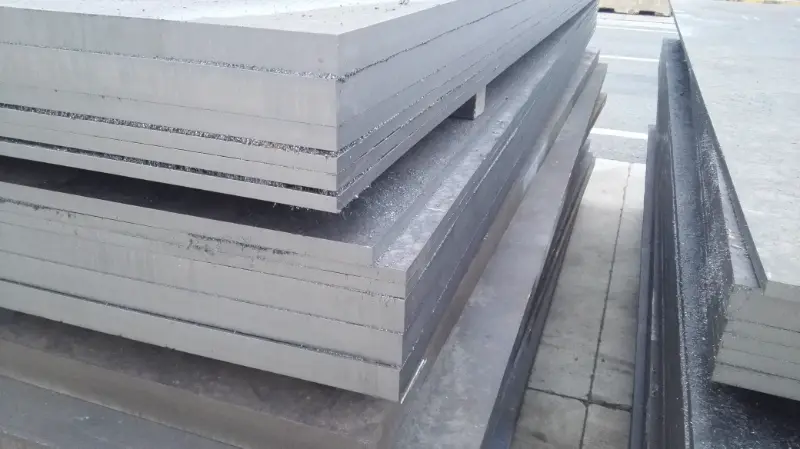
RINA Grade D40(DH40) Shipbuilding Steel Plate
RINA Grade D40 Shipbuilding Steel Plate – High-Strength Hull Structural Steel
RINA Grade D40 is a high-strength shipbuilding steel plate certified by the Italian Classification Society (RINA) with minimum yield strength 390 MPa, excellent weldability and low-temperature toughness for marine structures.
Cutting, welding, bending, forming, machining, cold and hot forming
- Phone : +8618037372205
- Email : [email protected]
- WhatsApp: Contact via Whtsapp
- WeChat: +8618037372205
RINA Grade D40 Shipbuilding Steel Plate Introduction
RINA Grade D40 (equivalent to RINA DH40) is a normalized or thermomechanically rolled high-strength hull structural steel defined by the RINA Rules for the Classification of Ships. It offers a minimum yield strength of 390 MPa, good tensile properties, and reliable impact toughness at -20 °C. Key features include:
- Suitable for primary and secondary hull structures, decks, and offshore components
- Fine-grained and fully killed steel with controlled microalloying (Nb, V, Ti) for strength and weldability
- Low carbon equivalent (Ceq ≤ 0.43) to avoid cold cracking during welding
- Meets strict through-thickness property requirements when specified (e.g., Z25/Z35)
RINA Grade D40 Shipbuilding Steel Plate Chemical Composition
Chemical composition limits according to RINA Rules for DH40/D40. Microalloying elements may be added in varying combinations to achieve the required strength and toughness. The maximum carbon equivalent (Ceq) is 0.43. When through-thickness (Z-grade) properties are required, sulfur content may be further restricted.
| Element | Specified Value (max / range) | Remarks |
|---|---|---|
| Carbon (C) | ≤ 0.18 | Ladle analysis |
| Silicon (Si) | ≤ 0.50 | - |
| Manganese (Mn) | 0.90 – 1.60 | - |
| Phosphorus (P) | ≤ 0.035 | - |
| Sulfur (S) | ≤ 0.035 | Lower for Z-grade (e.g., ≤0.008 for Z35) |
| Chromium (Cr) | ≤ 0.20 | - |
| Nickel (Ni) | ≤ 0.40 | - |
| Molybdenum (Mo) | ≤ 0.08 | - |
| Copper (Cu) | ≤ 0.35 | - |
| Aluminium (Al, total) | ≥ 0.015 | Acid-soluble; grain refining element |
| Niobium (Nb) | 0.02 – 0.05 | Optional microalloy |
| Vanadium (V) | 0.05 – 0.10 | Optional microalloy |
| Titanium (Ti) | ≤ 0.02 | Optional microalloy |
| Nitrogen (N) | ≤ 0.012 | If supplied, e.g., controlled rolling |
| Carbon Equivalent (Ceq) | ≤ 0.43 | Ceq = C + Mn/6 + (Cr+Mo+V)/5 + (Ni+Cu)/15 |
RINA Grade D40 Shipbuilding Steel Plate Thermal and Electrical Physical Properties
The following values are typical for normalized or thermomechanically rolled high-strength low-alloy carbon-manganese steel. Exact values depend on the final microstructure and temperature. These data can be used for engineering design and simulation.
| Property | Typical Value | Unit | Test Condition / Remarks |
|---|---|---|---|
| Density (ρ) | 7850 | kg/m³ | At room temperature |
| Elastic Modulus (E) | 200 – 210 | GPa | At 20 °C |
| Shear Modulus (G) | 78 – 82 | GPa | At 20 °C, calculated from E and ν |
| Poisson Ratio (ν) | 0.28 – 0.30 | — | Elastic range at room temperature |
| Thermal Expansion Coefficient (α) | 11.1 – 12.5 | 10⁻⁶ / K | 20 – 200 °C, mean linear coefficient |
| Thermal Conductivity (λ) | 45 – 52 | W/(m·K) | At 20 °C |
| Specific Heat Capacity (cp) | 460 – 500 | J/(kg·K) | At 20 °C |
| Electrical Resistivity (ρ_e) | 0.15 – 0.25 | Ω·mm²/m | At 20 °C |
RINA Grade D40 Shipbuilding Steel Plate Mechanical Properties
Mechanical properties depend on product thickness. Tests are performed in accordance with RINA requirements. Tensile specimens are taken in the transverse or longitudinal direction as agreed; impact specimens are longitudinal. Bending tests on plates are carried out to verify formability without cracking.
| Property | Specified Value | Unit | Test Condition |
|---|---|---|---|
| Yield Strength (ReH) | ≥ 390 | MPa | Thickness ≤ 50 mm |
| Yield Strength (ReH) | ≥ 370 | MPa | 50 mm < Thickness ≤ 100 mm |
| Yield Strength (ReH) | ≥ 350 | MPa | 100 mm < Thickness ≤ 150 mm |
| Tensile Strength (Rm) | 510 – 650 | MPa | Thickness ≤ 100 mm |
| Tensile Strength (Rm) | 470 – 610 | MPa | 100 mm < Thickness ≤ 150 mm |
| Elongation (A5) | ≥ 20 | % | Thickness ≤ 50 mm, L0=5.65√S0 (transverse) |
| Elongation (A5) | ≥ 19 | % | 50 mm < Thickness ≤ 70 mm |
| Elongation (A5) | ≥ 18 | % | 70 mm < Thickness ≤ 100 mm |
| Charpy Impact Energy (KV, longitudinal) | ≥ 41 | J | At -20 °C, thickness ≤ 50 mm |
| Charpy Impact Energy (KV, longitudinal) | ≥ 34 | J | At -20 °C, 50 mm < thickness ≤ 70 mm |
| Charpy Impact Energy (KV, longitudinal) | ≥ 27 | J | At -20 °C, 70 mm < thickness ≤ 100 mm |
| Bend Test (180° bend) | d = 4a | - | Thickness ≤ 25 mm |
| Bend Test (180° bend) | d = 5a | - | 25 mm < Thickness ≤ 50 mm |
RINA Grade D40 Shipbuilding Steel Plate Fully Equivalent Material Standards and Substitutable Grades
| Country / Region | Standard | Grade | Remarks |
|---|---|---|---|
| Europe | EN 10025-4 | S420M / S420ML | Thermomechanical rolled, similar strength and toughness |
| USA / ABS | ABS Rules | ABS Grade DH40 | Same yield class and -20 °C impact requirement |
| Norway / DNV | DNV Rules | DNV DH40 | Identical designation under IACS UR W28 |
| UK / LR | Lloyd's Register Rules | LR DH40 | Equivalent mechanical and chemical requirements |
| France / BV | Bureau Veritas Rules | BV DH40 | Equivalent high-strength hull steel |
| China / CCS | CCS Rules | CCS DH40 | Complies with IACS unified requirements |
| International | IACS UR W28 | DH40 (HS40) | Common specification recognized by all IACS members |
RINA Grade D40 Shipbuilding Steel Plate Application Introduction
RINA Grade D40 is specifically designed for welded ship and offshore structures requiring a minimum yield strength of 390 MPa and guaranteed notch toughness at -20 °C. It is suitable for both longitudinal and transverse strength members. Typical use includes:
- Primary hull structures: sheer strakes, bilge strakes, hatch coaming, deck stringer plates
- Secondary members: stiffeners, brackets, web frames
- Offshore platform topsides, jacket legs, and flare booms where moderate cold temperature toughness is needed
- Marine machinery foundations and lifting appliance structures
Product Applications: Ship hulls, decks, bulkheads, transverse and longitudinal frames, Offshore platform decks and module support beams, Tubular joints and node connectors for jackets, Barge and pontoon structures, Hatch covers and crane pedestals
Processed into products: Hull plates (bottom, side, deck), Sheer strake plates, stringer plates, and bilge keel plates, Welded T-joints, cruciform joints, and bracket assemblies, Machinery foundations, engine seatings, Windlass and mooring winch foundations, Flare boom and boat landing stiffeners
Application industries: Shipbuilding (commercial, naval, LNG carriers, bulk carriers, container ships), Offshore oil & gas (platforms, FPSO modules), Marine renewable energy (wind turbine foundations, tidal turbine structures), Heavy engineering (dock gates, lock gates, structural components in marine environment)
RINA Grade D40 Shipbuilding Steel Plate Comparable or Similar Alternative Materials
| Country / Region | Standard | Grade | Remarks |
|---|---|---|---|
| Italy / RINA | RINA Rules | RINA Grade D36 / DH36 | Yield strength 355 MPa; lower strength, good economy where 390 MPa not required |
| Italy / RINA | RINA Rules | RINA Grade E40 / EH40 | Same strength, but lower impact test temperature (-40 °C); for more severe service |
| Italy / RINA | RINA Rules | RINA Grade A40 | Same strength; impact test at 0 °C or none; less demanding toughness applications |
| Europe | EN 10025-4 | S460M / S460ML | Higher yield strength (460 MPa); may require adjusted welding procedures |
| Europe | EN 10025-3 | S420N / S420NL | Normalized condition; similar strength but different delivery condition |
Notes:
Special requirements: When through-thickness deformation (Z-grade) is required, specify Z25 or Z35 with improved sulfur levels and ultrasonic testing. Surface condition and tolerances shall meet RINA standard UT/MT requirements. Plates are normally delivered with shot blasting and shop primer. Welding should follow approved procedures with preheat/interpass temperatures calculated according to carbon equivalent and thickness. Post-weld heat treatment is generally not required.
- Share



