
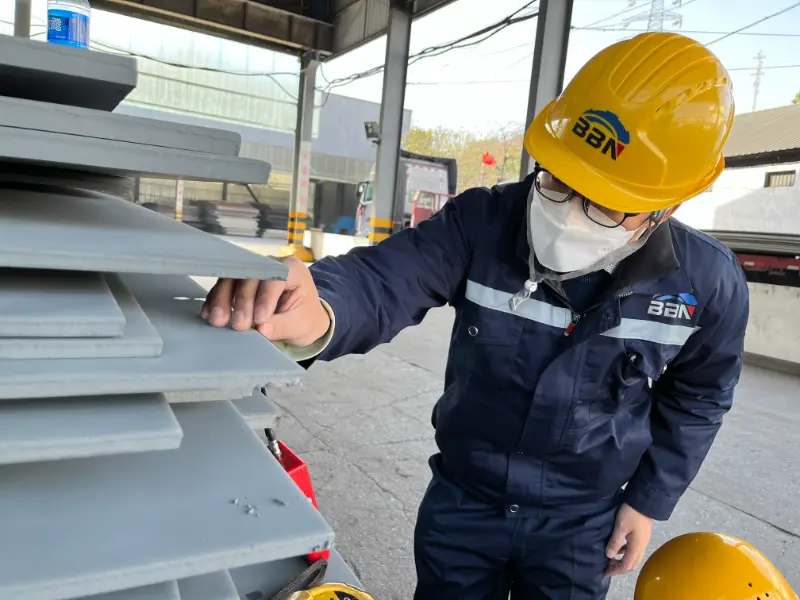
RINA Grade D Shipbuilding Steel
RINA Grade D Shipbuilding Steel: Composition, Properties, Equivalents & Applications
Complete datasheet for RINA Grade D shipbuilding steel plate: chemical composition, mechanical and physical properties, international equivalents, similar alternatives, and application guide. Compliant with RINA rules for normal strength hull structural steel.
Hot rolling, normalizing (N), thermo-mechanical control process (TMCP) as specified for thickness and toughness requirements
- Phone : +8618037372205
- Email : [email protected]
- WhatsApp: Contact via Whtsapp
- WeChat: +8618037372205
RINA Grade D Shipbuilding Steel Introduction
RINA Grade D is a normal strength hull structural steel governed by the Registro Italiano Navale (RINA) Rules for the Classification of Ships, Part D – Materials. It belongs to the group of ordinary-strength shipbuilding steels used for primary hull structures, where good weldability, reliable toughness, and moderate strength are essential. The steel is supplied in as-rolled, normalized, or thermo-mechanically controlled processed (TMCP) condition, depending on thickness and service requirements. Grade D is distinguished from lower grades by its guaranteed Charpy impact toughness at -20 °C, making it suitable for structural members exposed to low-temperature environments. Typical applications include shell plating, decks, bulkheads, and stiffeners in merchant ships, offshore platforms, and marine equipment. International equivalents under IACS Unified Requirement W11 make Grade D interchangeable across major classification societies.
RINA Grade D Shipbuilding Steel Chemical Composition
The ladle analysis limits for RINA Grade D according to RINA Part D, Chapter 3, Section 1, Table 3. Manganese content shall be at least 2.5 times the carbon content, practically controlled in the range 0.60–1.20 %. The steel is fully killed and aluminum-treated to ensure fine grain structure and good toughness. Residual elements such as copper, chromium, nickel, and molybdenum are typically kept low to maintain weldability.
| Element | Standard Value (max, %) | Remarks |
|---|---|---|
| Carbon (C) | ≤ 0.21 | Heat analysis |
| Manganese (Mn) | ≥ 2.5 × C (typically 0.60–1.20) | Lower limit derived from C content; practical range ensures strength and toughness |
| Silicon (Si) | ≤ 0.50 | Deoxidizer, contributes to strength |
| Phosphorus (P) | ≤ 0.035 | Controls brittleness |
| Sulfur (S) | ≤ 0.035 | Controls hot shortness |
| Aluminium (Als) | ≥ 0.015 (acid soluble) | Grain refining element, mandatory for fully killed steel |
RINA Grade D Shipbuilding Steel Thermal and Electrical Physical Properties
Physical property data for RINA Grade D steel are typical for normalized or hot-rolled carbon‑manganese structural steel and are not mandatory per the material specification. Values correspond to room temperature unless otherwise noted. These properties assist in design calculations for heat transfer, static and dynamic analysis, and electromagnetic compatibility.
| Property | Typical Value | Unit | Condition / Remarks |
|---|---|---|---|
| Density (ρ) | 7.85 | g/cm³ | At 20 °C |
| Young's Modulus (E) | 210 | GPa | At 20 °C, static tensile |
| Shear Modulus (G) | ~80.8 | GPa | Calculated from E and ν |
| Poisson's Ratio (ν) | 0.3 | – | Typical for structural steel |
| Thermal Expansion Coefficient (α) | 11.7 × 10⁻⁶ | 1/K | 20–100 °C range |
| Thermal Expansion Coefficient (α) | 12.5 × 10⁻⁶ | 1/K | 20–200 °C range |
| Thermal Expansion Coefficient (α) | 13.6 × 10⁻⁶ | 1/K | 20–400 °C range |
| Thermal Conductivity (λ) | 52 | W/(m·K) | At 20 °C |
| Specific Heat Capacity (cp) | 480 | J/(kg·K) | At 20 °C |
| Electrical Resistivity (ρ_e) | 0.15–0.20 | μΩ·m | At 20 °C, typical for mild steel |
RINA Grade D Shipbuilding Steel Mechanical Properties
Mechanical test results according to RINA Part D, Chapter 3, Section 1, Table 4. Transverse tensile properties are required for plates, while impact tests are performed in the longitudinal direction. Impact energy is guaranteed at -20 °C, distinguishing Grade D from lower service-temperature grades A and B. Bend tests are conducted to confirm formability without cracking. Values may vary with product thickness; the most commonly supplied thickness ranges are listed.
| Property | Value | Unit | Test Condition |
|---|---|---|---|
| Yield Strength (ReH) | ≥ 235 | MPa | Transverse, all thicknesses |
| Tensile Strength (Rm) | 400 – 520 | MPa | Transverse, all thicknesses |
| Elongation after fracture (A) | ≥ 22 | % | L₀ = 5.65√S₀, transverse, thickness ≤ 50 mm |
| Elongation after fracture (A) | ≥ 21 | % | L₀ = 5.65√S₀, transverse, 50 < thickness ≤ 70 mm |
| Elongation after fracture (A) | ≥ 20 | % | L₀ = 5.65√S₀, transverse, 70 < thickness ≤ 100 mm |
| Charpy V-notch impact energy (KV) | ≥ 27 | J | Longitudinal, -20 °C, thickness ≤ 50 mm |
| Charpy V-notch impact energy (KV) | ≥ 24 | J | Longitudinal, -20 °C, 50 < thickness ≤ 70 mm |
| Charpy V-notch impact energy (KV) | ≥ 20 | J | Longitudinal, -20 °C, 70 < thickness ≤ 100 mm |
| Bend test (180°) | d = 3a (thickness ≤ 25 mm) | – | Bend angle 180°, no cracks; d = bending mandrel diameter, a = specimen thickness |
| Bend test (180°) | d = 4a (thickness > 25 mm) | – | Bend angle 180°, no cracks |
RINA Grade D Shipbuilding Steel Full Equivalents – International Grade D Shipbuilding Steels
RINA Grade D is fully equivalent to ordinary-strength Grade D steels recognized by all IACS classification societies. These materials meet the same basic chemical and mechanical requirements, particularly the -20 °C Charpy impact toughness. Substitution among these grades is generally permitted under class approval.
| Country / Region | Standard / Rules | Grade | Remarks |
|---|---|---|---|
| International (IACS) | UR W11 Rev.7 | Grade D | Unified Requirement for normal strength hull structural steel |
| USA | ABS Rules Part 2, Chapter 1, Section 1 | Grade D | ABS ordinary-strength hull steel |
| France | BV Rules Pt.2, Ch.1, Sec.2 | Grade D | Identical chemical and mechanical criteria |
| China | CCS Rules Pt.2, Ch.1, Sec.3 | Grade D | CCS equivalent per IACS |
| Norway | DNV Rules Pt.2, Ch.2, Sec.1 | NV D | DNV ordinary-strength grade |
| UK | LR Rules Pt.2, Ch.1, Sec.2 | Grade D | Lloyd's Register hull steel |
| Germany | DNV GL Rules (merged) | DNV GL Grade D | Former GL Grade D now under DNV GL |
| Japan | NK Rules Pt.K, Ch.3, Sec.1 | Grade D | ClassNK general strength hull steel |
| South Korea | KR Rules Pt.2, Ch.1, Sec.2 | Grade D | Korean Register equivalent |
| Russia | RMRS Rules Pt.14, Sec.2 | Grade D | Russian Maritime Register of Shipping |
RINA Grade D Shipbuilding Steel Application Introduction
RINA Grade D shipbuilding steel plate is utilized across the maritime and offshore industries for structural applications demanding reliable mechanical performance at low service temperatures. Key advantages include good weldability, consistent toughness at -20 °C, and excellent forming characteristics. Typical end products and components range from large welded ship sections to individual stiffeners. Material selection should comply with classification society rule requirements for the specific structural location and thickness.
Product Applications: Shell plates and bottom plating, Deck plating and strength decks, Bulkheads (transverse and longitudinal), Webframes and girders, Stiffeners (flat bars, angles, bulb profiles), Hatch coamings and crane pedestals, Caissons and offshore modules
Processed into products: Hull outer shell plates (side, bottom, bilge), Longitudinal stiffeners (longitudinals, stringers), Deck beams and transverse frames, Floor plates and double-bottom structures, Bulkhead plates and corrugated bulkhead sections, Engine room structural members, Foundation plates for deck machinery
Application industries: Commercial shipbuilding (bulk carriers, tankers, container ships), Naval and defense marine structures, Offshore oil & gas platforms (jackets, decks, living quarters), Offshore wind turbine foundations (monopiles, transition pieces), Marine engineering and port machinery, Barges and inland waterway vessels
RINA Grade D Shipbuilding Steel Similar / Alternative Materials
These materials exhibit comparable chemical composition or strength level, but may differ in impact test temperature or minimum yield strength. They can be considered as substitutes depending on design requirements and class approval. Grade A and B are lower-toughness alternatives, while Grade E offers better low-temperature toughness. High-strength shipbuilding steels provide increased strength at a similar impact temperature.
| Country / Region | Standard / Rules | Grade | Remarks |
|---|---|---|---|
| International | IACS UR W11 | Grade A | Same strength, no impact test required or tested at +20 °C; lower toughness |
| International | IACS UR W11 | Grade B | Same strength, impact at 0 °C; less severe than -20 °C |
| International | IACS UR W11 | Grade E | Same strength, impact at -40 °C; superior low-temperature toughness |
| International | IACS UR W11 / UR W13 | DH32 | Higher yield strength (≥315 MPa), impact at -20 °C; can replace Grade D where strength governs |
| International | IACS UR W11 / UR W13 | DH36 | Higher strength (≥355 MPa), impact at -20 °C; weight saving possible |
| Europe | EN 10025-2 | S235J2+N | Structural steel with 235 MPa yield, impact at -20 °C; not ship-class certified but similar basic properties |
Notes:
Supply conditions: RINA Grade D plates are typically supplied with mill test certificates (3.1 or 3.2 according to EN 10204) verifying chemical analysis, tensile and impact properties. Welding: Standard welding consumables suitable for carbon-manganese steel (e.g., AWS A5.1 E7016/E7018, or submerged arc wire/flux combinations) are recommended. Preheating may be necessary for thicker plates in cold conditions. Further processing: The steel can be hot or cold formed; severe cold forming may require subsequent stress-relief treatment. Shot blasting and shop primer application are common practices before fabrication. Tolerances: Dimensional tolerances comply with the relevant RINA rules or EN 10029 for plates.
- Share



