
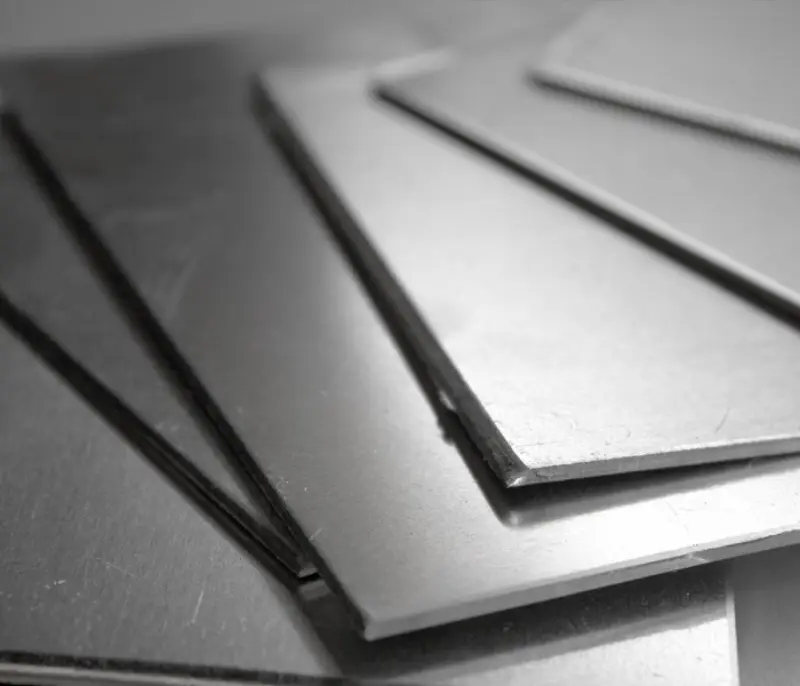
NK Grade D47 Shipbuilding Steel
NK Grade D47 Shipbuilding Steel - High-Strength DH47 Plate for Marine & Offshore Structures
Complete data sheet for NK Grade D47 (DH47) shipbuilding steel under Nippon Kaiji Kyokai (ClassNK) rules, covering chemical composition, mechanical and thermal properties, international equivalents, and application guidance.
Welding, hot forming (controlled), cold bending (with precautions), cutting (plasma/laser/flame), machining
- Phone : +8618037372205
- Email : [email protected]
- WhatsApp: Contact via Whtsapp
- WeChat: +8618037372205
NK Grade D47 Shipbuilding Steel Introduction
NK Grade D47 is a high-strength, low-temperature tough steel plate specifically developed for ship and offshore structural applications. Conforming to the Nippon Kaiji Kyokai (ClassNK) Part K rules and aligned with IACS UR W31, it offers a minimum yield strength of 460 MPa with excellent weldability and impact resistance at -20°C.
The designation D47 denotes a normalized, thermo-mechanically rolled, or quenched-and-tempered fine-grained steel with guaranteed notch toughness at -20°C (longitudinal 'D' condition).
It is widely used in:
- High-stress hull members such as sheer strakes, bilge strakes, and hatch coamings
- Container ship and bulk carrier structures
- Offshore platforms, jack-up legs, and renewable energy foundations
NK Grade D47 Shipbuilding Steel Chemical Composition
Chemical composition according to NK Part K and IACS UR W31 for Grade D47 high-strength steels. The steel is fully killed and fine-grain treated with Al and/or microalloying elements. Values are maximum unless otherwise stated.
| Element | Value (max, unless range) | Remarks |
|---|---|---|
| C | 0.18% | – |
| Si | 0.10 – 0.55% | – |
| Mn | 0.90 – 1.60% | Can be higher depending on thickness and deoxidation practice |
| P | 0.025% | – |
| S | 0.025% | – |
| Cu | 0.50% | – |
| Cr | 0.25% | – |
| Ni | 0.80% | – |
| Mo | 0.50% | – |
| Nb | 0.02 – 0.05% | As grain refiner |
| V | 0.05 – 0.10% | Combined addition with Nb/Ti is common |
| Ti | 0.02% | – |
| Al (acid soluble) | 0.015% min | Required for fine-grain practice |
| N | 0.012% | – |
NK Grade D47 Shipbuilding Steel Thermal and Electrical Physical Properties
The following physical properties are typical for high-strength steel plates at room temperature unless different temperature indicated. They can be used for engineering calculations but are not mandatory per NK rules.
| Property | Typical Value | Unit | Test Conditions |
|---|---|---|---|
| Density (ρ) | 7.85 | g/cm³ | 20°C |
| Modulus of Elasticity (E) | 205 | GPa | 20°C |
| Shear Modulus (G) | 80 | GPa | Calculated for ν=0.3 |
| Poisson's Ratio (ν) | 0.30 | — | 20°C |
| Thermal Expansion Coefficient (α) | 11.8 | 10⁻⁶/K | 20–100°C |
| Thermal Expansion Coefficient (α) | 12.6 | 10⁻⁶/K | 20–200°C |
| Thermal Conductivity (λ) | 50 | W/(m·K) | 20°C |
| Specific Heat Capacity (cp) | 460 | J/(kg·K) | 20°C |
| Electrical Resistivity (ρe) | 0.22 | Ω·mm²/m | 20°C |
NK Grade D47 Shipbuilding Steel Mechanical Properties
Mechanical properties are based on NK Rules for plates up to 100 mm thickness. Tensile and impact tests are performed in the longitudinal direction at specified temperatures. Note: For thicknesses >50 mm, elongation values reduce by 1% for every additional 25 mm, with a minimum of 14%.
| Property | Required Value | Unit | Test Conditions |
|---|---|---|---|
| Yield Strength (ReH) min. | 460 | MPa | t ≤ 100 mm |
| Tensile Strength (Rm) | 570 – 720 | MPa | t ≤ 100 mm |
| Elongation (A5) min. | 17 | % | t ≤ 50 mm, gauge length L0=5.65√S0 |
| Elongation (A5) min. | 16 | % | 50 < t ≤ 70 mm |
| Elongation (A5) min. | 16 | % | 70 < t ≤ 100 mm |
| Bending Test | D = 3t | — | Bend angle 180°; applicable up to t ≤ 25 mm |
| Charpy V‑notch Impact Energy (KV) min., longitudinal | 47 | J | Test temperature -20°C, t ≤ 50 mm |
| Charpy V‑notch Impact Energy (KV) min., longitudinal | 47 | J | Test temperature -20°C, 50 < t ≤ 70 mm |
| Charpy V‑notch Impact Energy (KV) min., longitudinal | 47 | J | Test temperature -20°C, 70 < t ≤ 100 mm |
NK Grade D47 Shipbuilding Steel Exact Equivalent Material Standards and Substitute Grades
| Country/Region | Standard | Grade | Remarks |
|---|---|---|---|
| International (IACS) | UR W31 | DH47 | Direct technical equivalence; adopted by all IACS members |
| Japan | NK Part K | KD47 (syn. DH47) | Original class designation, D denoting -20°C impact |
| USA | ABS Rules | ABS DH47 | American Bureau of Shipping, same toughness class |
| Norway/Germany | DNV Rules | DNV DH47 (formerly NV D47) | Det Norske Veritas, fully equivalent |
| UK | Lloyd's Register Rules | LR DH47 | Certificate with -20°C Charpy guarantee |
| France | Bureau Veritas Rules | BV DH47 | Equivalent in all technical delivery conditions |
| China | CCS Rules | CCS DH47 | China Classification Society, identical requirements |
| Korea | KR Rules | KR DH47 | Korean Register, equivalent material |
| Italy | RINA Rules | RINA DH47 | Same mechanical and chemical envelope |
| Russia | RS Rules | RS DH47 (D47) | Russian Maritime Register of Shipping, accepted substitute |
NK Grade D47 Shipbuilding Steel Application Introduction
NK Grade D47 is designed for critical structural components exposed to high static and dynamic loads, particularly in cold-water or winter service conditions where good low-temperature toughness is required. Its typical applications include:
Product Applications: Hull plates and profiles for ice-classed vessels, Bottom and side shell plating of ultra-large container ships, Hatch coamings and upper deck strakes, Jack-up leg chords and rack plates, Brackets and stiffeners in high-stress areas
Processed into products: Transverse bulkhead plates (lower part), Sheer strake and stringer plates, Bilge keel connections, Main engine bed plate girders, Bollard and towing foundation plates, Offshore crane pedestal inserts
Application industries: Shipbuilding (container vessels, bulk carriers, tankers, LNG carriers), Offshore oil & gas (topside modules, flare booms, living quarters), Offshore renewable energy (wind turbine jacket foundations, transition pieces), Marine lifting equipment (crane pedestals, heavy-lift vessel structures), Naval and defence (special high-strength hulls)
NK Grade D47 Shipbuilding Steel Similar / Comparable Material Substitutes
| Country/Region | Standard | Grade | Remarks |
|---|---|---|---|
| Japan | NK Part K | AH47, EH47, FH47 | Same strength but different impact temperatures (0, -40, -60°C) |
| Europe | EN 10025-4 | S460M/ML | Thermomechanical rolled, min. 460 MPa yield, structural carbon steel (not specifically marine) |
| Europe | EN 10225 | S460G2+M | Offshore structural steel with similar strength and toughness |
| USA | ASTM A131 / A131M | DH36, DH40 | Lower strength shipbuilding steel (355, 390 MPa); DH47 is a direct upgrade |
| China | GB/T 712 | DH460 | Chinese shipbuilding steel grade, close mechanical properties |
| International | API Spec 2W | Grade 60 | Steel for offshore structures with YS ≥ 415 MPa; suitable for less demanding parts |
Notes:
Welding considerations: Low heat input consumables should be used to preserve the fine-grained structure. Preheating (typically 75–150°C) is recommended for thicknesses above 30 mm. Post-weld heat treatment is usually not required.
Certification: Material must be tested in the presence of a ClassNK surveyor, or with recognized mill certification according to NK approved manufacturing procedures. Ultrasonic testing per ASTM A578 or equivalent may be required for thickness ≥ 50 mm.
Additional delivery conditions: Can be ordered with normalizing, TMCP, or QT, as stated in the contract. The steel is supplied with shot blasting and shop primer unless otherwise agreed.
- Share



