
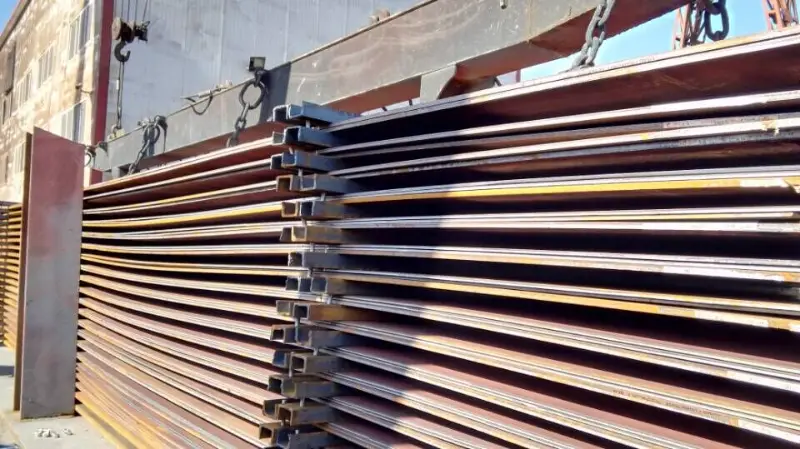
GL Grade E420 Shipbuilding Steel Plate
GL Grade E420 Shipbuilding Steel Plate - High Strength Marine Structural Steel
Detailed material data for GL Grade E420 shipbuilding steel plate: chemical composition, mechanical properties, thermal & electrical performance, international equivalents, and application guidelines for marine and offshore structures.
Hot rolling, normalizing, thermo-mechanical controlled processing (TMCP), quenching and tempering (optional), welding, forming, machining
- Phone : +8618037372205
- Email : [email protected]
- WhatsApp: Contact via Whtsapp
- WeChat: +8618037372205
GL Grade E420 Shipbuilding Steel Plate Introduction
GL Grade E420 is a high-strength structural steel plate certified by Germanischer Lloyd (now part of DNV GL) for shipbuilding and offshore applications. It belongs to the 420 MPa minimum yield strength category, designated with the "E" indicating stringent impact toughness tested at -40°C. Produced under the GL Rules or IACS Unified Requirements, this steel offers an excellent balance of strength, weldability, and low-temperature toughness. Key features:
- Minimum yield strength of 420 MPa in thicknesses up to 50 mm
- Good ductility with minimum 18% elongation
- Reliable notch toughness at -40°C for Arctic and cold-water service
- Controlled chemistry with low carbon equivalent to ensure superior weldability
- Available in normalized or thermo-mechanically controlled processed (TMCP) conditions
It is widely used for hull structures, decks, and critical components in shipbuilding and marine engineering.
GL Grade E420 Shipbuilding Steel Plate Chemical Composition
The chemical composition of GL Grade E420 is carefully controlled to meet strength, toughness, and weldability requirements. The steel is fully killed and fine grain treated. Limits follow the IACS UR W31 standard. Microalloying elements like Nb, V, and Ti are used for grain refinement and precipitation strengthening. The carbon equivalent (CEV) is typically restricted to ≤0.43% for good weldability.
| Element | Standard Value (%) | Remarks |
|---|---|---|
| Carbon (C) | ≤ 0.21 | Max |
| Silicon (Si) | ≤ 0.55 | Max, deoxidizer |
| Manganese (Mn) | 0.90 – 1.65 | Range |
| Phosphorus (P) | ≤ 0.030 | Max |
| Sulfur (S) | ≤ 0.030 | Max |
| Aluminum (Al, acid soluble) | ≥ 0.015 | Min, fine grain (total Al ≥ 0.020 typical) |
| Niobium (Nb) | 0.02 – 0.05 | Grain refiner / strengthening |
| Vanadium (V) | 0.05 – 0.10 | Optional microalloy |
| Titanium (Ti) | ≤ 0.02 | Optional grain refiner |
| Copper (Cu) | ≤ 0.35 | Max, residual |
| Chromium (Cr) | ≤ 0.20 | Max, residual |
| Nickel (Ni) | ≤ 0.40 | Max, residual |
| Molybdenum (Mo) | ≤ 0.08 | Max, residual |
| Nitrogen (N) | ≤ 0.012 | Max, if not bound by Ti/Al |
GL Grade E420 Shipbuilding Steel Plate Thermal and Electrical Physical Properties
The following physical properties are typical for high-strength low-alloy shipbuilding steel of this grade at room temperature unless otherwise noted. Actual values may vary slightly depending on exact composition and heat treatment. These data are useful for design calculations and simulation.
| Property | Typical Value | Unit | Test Condition / Remarks |
|---|---|---|---|
| Density (ρ) | 7850 | kg/m³ | Room temperature |
| Modulus of Elasticity (E) | 205 | GPa | 20°C |
| Shear Modulus (G) | 80 | GPa | 20°C, estimated from E & v |
| Poisson's Ratio (ν) | 0.29 | - | Room temperature |
| Thermal Expansion Coefficient (α) | 12.0 | 10⁻⁶/K | 20 – 100°C |
| Thermal Expansion Coefficient (α) | 13.0 | 10⁻⁶/K | 20 – 200°C |
| Thermal Conductivity (λ) | 51.9 | W/(m·K) | At 100°C |
| Thermal Conductivity (λ) | 47.5 | W/(m·K) | At 200°C |
| Specific Heat Capacity (cp) | 486 | J/(kg·K) | At 100°C |
| Electrical Resistivity (ρₑ) | 0.18 | μΩ·m | 20°C |
GL Grade E420 Shipbuilding Steel Plate Mechanical Properties
Mechanical properties for GL E420 plates are specified in the delivery condition. Tensile testing is performed on transverse specimens unless otherwise agreed. Impact tests are carried out on Charpy V-notch specimens at -40°C. Values depend on plate thickness; listed below are the minimum requirements according to GL Rules and IACS UR W31.
| Property | Requirement | Unit | Test Condition / Thickness |
|---|---|---|---|
| Yield Strength (ReH) | ≥ 420 | MPa | t ≤ 50 mm |
| Yield Strength (ReH) | ≥ 400 | MPa | 50 < t ≤ 70 mm |
| Yield Strength (ReH) | ≥ 390 | MPa | 70 < t ≤ 100 mm |
| Tensile Strength (Rm) | 530 – 680 | MPa | All thicknesses up to 100 mm |
| Elongation (A5) | ≥ 18 | % | t ≤ 50 mm, gauge length L0 = 5.65√S0 |
| Elongation (A5) | ≥ 18 | % | 50 < t ≤ 70 mm |
| Elongation (A5) | ≥ 17 | % | 70 < t ≤ 100 mm |
| Bend Test (180°) | D = 3a | - | a = specimen thickness; no cracks |
| Impact Energy (KV, longitudinal) | ≥ 41 (KV2 avg.) / ≥ 28 (individual) | J | -40°C, t ≤ 50 mm, Charpy V-notch |
| Impact Energy (KV, longitudinal) | ≥ 41 (KV2 avg.) / ≥ 28 (individual) | J | -40°C, 50 < t ≤ 70 mm |
| Impact Energy (KV, longitudinal) | ≥ 41 (KV2 avg.) / ≥ 28 (individual) | J | -40°C, 70 < t ≤ 100 mm |
| Impact Energy (KV, transverse) | ≥ 27 (KV2 avg.) / ≥ 19 (individual) | J | -40°C, t ≤ 50 mm, optional |
GL Grade E420 Shipbuilding Steel Plate Fully Equivalent Material Standards and Substitute Grades
| Country/Region | Standard | Grade | Remarks |
|---|---|---|---|
| International (IACS) | IACS UR W31 | EH420 | Identical strength and toughness requirements |
| Germany / Europe | GL Rules (now DNV GL) | E420 | Original GL designation; fully equivalent |
| United States | ABS Rules | EH420 | American Bureau of Shipping equivalent |
| Norway / Germany | DNV Rules (DNV GL) | E420 / NV E420 | Det Norske Veritas equivalent |
| United Kingdom | Lloyd's Register Rules | EH420 | LR equivalent |
| France | Bureau Veritas Rules | EH420 | BV equivalent |
| Japan | ClassNK Rules | KE420 | Nippon Kaiji Kyokai equivalent |
| China | CCS Rules | EH420 | China Classification Society equivalent |
| Italy | RINA Rules | EH420 | Registro Italiano Navale equivalent |
GL Grade E420 Shipbuilding Steel Plate Application Introduction
GL Grade E420 is primarily used in the construction of seagoing vessels and offshore structures where high strength and excellent low-temperature toughness are critical. It is suitable for highly stressed hull components exposed to dynamic loads and harsh marine environments. The steel can be fabricated by welding, cutting, and forming processes common in shipyards.
Product Applications: Hull girder plates (bottom, side, deck plating), Longitudinal and transverse bulkheads, Frame webs and flanges, Hatch coamings and deck reinforcements, Offshore modules and jacket legs, Wind tower transition pieces (marine)
Processed into products: Shell plates (outer hull panels), Stiffeners (flat bars, bulb profiles, angles), Girders and webs in main structural frames, Brackets and connection plates, Deck stringer plates, Rudder horn structures, Foundation plates for heavy machinery
Application industries: Shipbuilding (commercial, naval, cruise ships), Offshore oil & gas platforms (jack-ups, semisubmersibles), Marine renewable energy (wind turbine foundations), Arctic and ice-class vessels (icebreakers, LNG carriers), Port and harbor structures (floating docks, crane structures)
GL Grade E420 Shipbuilding Steel Plate Similar / Alternative Materials with Comparable Performance
| Country/Region | Standard | Grade | Remarks |
|---|---|---|---|
| Europe | EN 10025-4 | S420ML | Thermo-mechanically rolled; min. yield 420 MPa, impact at -50°C; may need supplementary approval for shipbuilding |
| Europe | EN 10025-4 | S420N | Normalized; impact at -20°C; lower toughness level than E420 |
| United States | ASTM A572/A572M | Grade 60 [415] | Yield strength 415 MPa; charpy toughness to be agreed upon; not direct substitute without certification |
| China | GB/T 1591 | Q420D / Q420E | HSLA steel; Q420E offers -40°C impact; mechanical properties close but require classification society endorsement |
| Russia | GOST 5520 | РС420 or 09Г2С-12 | Similar yield class; used in shipbuilding with appropriate certification |
Notes:
Delivery condition: Plates are typically supplied in normalized or TMCP condition. Ultrasonic testing according to GL Rules may be specified. Welding: Due to controlled carbon equivalent (CEV ≤0.43), the material exhibits good weldability using low-hydrogen processes. Preheating may be required for thick sections in cold conditions. Certification: Material is stamped with the GL mark and provided with 3.1 or 3.2 certificates per EN 10204. For marine applications, compliance with the latest IACS UR W31 and GL/DNV GL rules is mandatory.
- Share



