
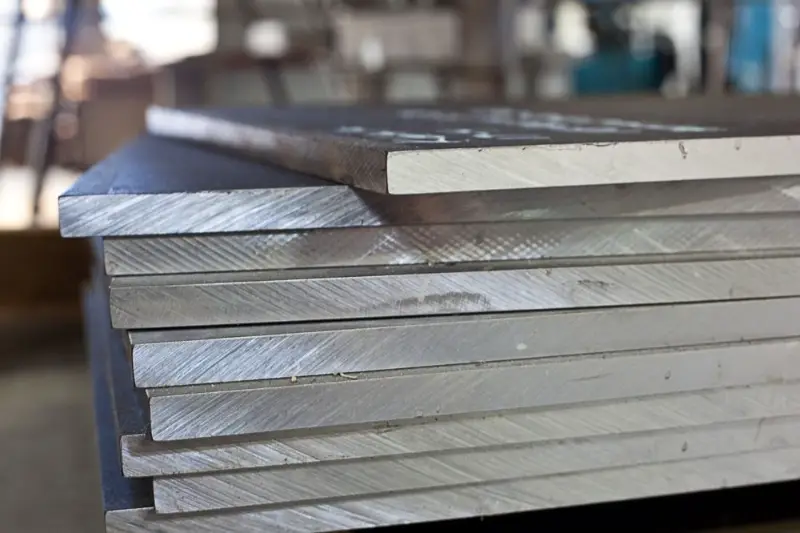
DNV Grade E500 Shipbuilding Steel
DNV Grade E500 Shipbuilding Steel Plate: Ultra-High Strength, Low-Temperature Toughness for Extreme Marine Environments
Explore DNV E500 steel plate: quenched and tempered, minimum 500 MPa yield, excellent -40°C impact toughness, ideal for ship hulls and offshore structures. Chemical composition, mechanical properties, thermal data, and international equivalents.
Cutting, welding (SMAW, SAW, GMAW, FCAW), cold forming, machining, bending
- Phone : +8618037372205
- Email : [email protected]
- WhatsApp: Contact via Whtsapp
- WeChat: +8618037372205
DNV Grade E500 Shipbuilding Steel Introduction
DNV Grade E500 is a quenched and tempered (Q&T) ultra-high strength structural steel plate classified under Det Norske Veritas (DNV) rules for shipbuilding and offshore applications. With a minimum yield strength of 500 MPa and guaranteed impact toughness at -40°C, this grade is engineered for critical structural members in hulls, decks, and marine equipment operating in low-temperature and high-stress environments. Key characteristics:
- Exceptional strength-to-weight ratio, enabling lighter designs
- Excellent weldability with proper preheating and consumables
- Superior resistance to brittle fracture at cryogenic temperatures
- Good formability and through-thickness properties
It is commonly supplied in normalized or quenched and tempered condition, with thicknesses up to 150 mm depending on shipyard and class approval. Regulatory compliance with IACS UR W11 and DNV-OS-B101 ensures consistent quality for ship registration.
DNV Grade E500 Shipbuilding Steel Chemical Composition
The chemical composition of DNV E500 is strictly controlled to achieve high strength and excellent low-temperature toughness. Alloying elements such as manganese, chromium, nickel, and molybdenum are added to enhance hardenability. Microalloying elements (Nb, V, Ti) refine the grain structure. Phosphorus and sulfur are kept at very low levels to ensure cleanliness and resistance to embrittlement.
- Carbon equivalent (CEV) is limited to maintain weldability.
- Aluminum is used as a deoxidizer and grain refiner.
| Chemical Element | Normative Value (%) | Remarks |
|---|---|---|
| Carbon (C) | ≤ 0.20 | Ladle analysis |
| Silicon (Si) | 0.10 – 0.55 | Killed steel practice |
| Manganese (Mn) | 0.70 – 1.70 | May be adjusted for thick plates |
| Phosphorus (P) | ≤ 0.025 | Low P for toughness |
| Sulfur (S) | ≤ 0.025 | Low S for through-thickness properties |
| Chromium (Cr) | ≤ 0.30 | Optional; residual or intentionally added |
| Nickel (Ni) | ≤ 0.80 | Improves low-temperature toughness |
| Molybdenum (Mo) | ≤ 0.20 | Enhances hardenability |
| Copper (Cu) | ≤ 0.35 | Residual or added for corrosion resistance |
| Niobium (Nb) | 0.02 – 0.05 | Microalloying for grain refinement |
| Vanadium (V) | 0.05 – 0.10 | Strength via precipitation hardening |
| Titanium (Ti) | ≤ 0.05 | Grain refinement and nitrogen fixation |
| Aluminum (Al) | ≥ 0.020 | Total aluminum, fully killed |
| Nitrogen (N) | ≤ 0.009 | If not fixed by Ti/Al |
DNV Grade E500 Shipbuilding Steel Thermal and Electrical Physical Properties
The following data represent typical physical properties for quenched and tempered high-strength low-alloy steel similar to E500. Actual values may vary slightly with exact composition and heat treatment. These properties are essential for thermal stress analysis and electrical design.
- Density used for weight calculations.
- Thermal conductivity aids in welding preheat estimation.
| Property | Typical Value | Unit | Test Condition / Remarks |
|---|---|---|---|
| Density (ρ) | 7.85 | g/cm³ | Room temperature |
| Elastic Modulus (E) | 210 | GPa | Tensile modulus at 20°C |
| Shear Modulus (G) | 81 | GPa | Calculated from E and Poisson ratio |
| Poisson's Ratio (ν) | 0.3 | - | Within elastic range |
| Thermal Expansion Coefficient (α) | 11.5 × 10⁻⁶ | K⁻¹ | 20 – 100°C |
| Thermal Expansion Coefficient (α) | 12.5 × 10⁻⁶ | K⁻¹ | 20 – 200°C |
| Thermal Expansion Coefficient (α) | 13.2 × 10⁻⁶ | K⁻¹ | 20 – 300°C |
| Thermal Conductivity (λ) | 36 | W/(m·K) | At 20°C |
| Thermal Conductivity (λ) | 34 | W/(m·K) | At 200°C |
| Thermal Conductivity (λ) | 32 | W/(m·K) | At 300°C |
| Specific Heat Capacity (c) | 460 | J/(kg·K) | 20 – 100°C |
| Specific Heat Capacity (c) | 490 | J/(kg·K) | 200°C |
| Specific Heat Capacity (c) | 520 | J/(kg·K) | 300°C |
| Electrical Resistivity (ρ_e) | 0.25 × 10⁻⁶ | Ω·m | At 20°C |
DNV Grade E500 Shipbuilding Steel Mechanical Properties
Mechanical properties are determined on specimens taken from plates in the transverse direction and conform to DNV requirements. The high yield strength and good elongation balance provide safety margins in design. Impact testing at -40°C ensures ductile behavior in cold climates.
- Thickness range affects minimum elongation and impact energy requirements.
- Bend test is performed to evaluate forming quality.
| Property | Requirement Value | Unit | Test Condition / Remarks |
|---|---|---|---|
| Yield Strength (ReH) | ≥ 500 | MPa | 0.2% offset, t ≤ 150 mm |
| Tensile Strength (Rm) | 610 – 770 | MPa | t ≤ 100 mm; for t > 100 mm, Rm min 580 MPa |
| Elongation (A5) | ≥ 16 | % | Gauge length 5.65√S₀, transverse |
| Elongation (A200) | ≥ 17 | % | Gauge length 200 mm, transverse |
| Bend Test (Mandrel diameter) | 3t (t ≤ 25 mm); 4t (t > 25 mm) | - | 180° bending, no cracks |
| Charpy Impact (KV₂), -40°C | ≥ 27 (average), ≥ 20 (single) | J | Longitudinal, t ≤ 50 mm; for t > 50 mm reduced values apply |
| Charpy Impact (KV₂), -40°C | ≥ 34 (average), ≥ 24 (single) | J | Transverse, t ≤ 50 mm |
| Charpy Impact (KV₂), -40°C | ≥ 27 (average), ≥ 20 (single) | J | Longitudinal, 50 < t ≤ 70 mm |
DNV Grade E500 Shipbuilding Steel Fully Equivalent Material Standards and Replaceable Grades
| Country / Region | Standard | Grade | Remarks |
|---|---|---|---|
| International | IACS UR W11 | EH500 | Common basis for class societies |
| USA | ABS | EQ51 | American Bureau of Shipping, identical strength and toughness |
| UK | LR | LF500 | Lloyd's Register, quenched and tempered |
| France | BV | E500 | Bureau Veritas, direct equivalent |
| China | CCS | E500 | China Classification Society |
| Japan | NK (ClassNK) | KE500 | Nippon Kaiji Kyokai |
| Italy | RINA | E500 | Registro Italiano Navale |
| Russia | RS | E500 | Russian Maritime Register of Shipping |
DNV Grade E500 Shipbuilding Steel Application Introduction
DNV E500 steel is specifically developed for heavy-duty marine and offshore structures where high strength combined with weight reduction is critical. Its guaranteed low-temperature toughness makes it suitable for Arctic and ice-class vessels. Typical applications focus on primary members subjected to extreme wave, slamming, and fatigue loads. Processing considerations:
- Preheat and interpass temperature control are required during welding to avoid hydrogen cracking.
- Post-weld heat treatment may be applied for stress relief but must be carefully controlled to avoid strength loss.
- The steel can be cold formed within specified bending radius limits.
Product Applications: Ship hull plates (external plating, bilge strakes, sheer strakes), Deck stringers, hatch coamings, and bulkhead stiffeners, Offshore platform legs, spud cans, and barge bumpers, Heavy-lift crane structures and pedestals, Pressure vessels for cryogenic service (with specific design approval)
Processed into products: Main deck plates and longitudinal stiffeners, Ice belt plating in ice-class vessels, Transverse web frames and girders, Fatigue-critical brackets and cutouts, Weld buildup zones at slamming points, Pin-jointed members in jack-up legs
Application industries: Shipbuilding (container ships, bulk carriers, tankers, cruise vessels), Offshore oil and gas (jack-up rigs, semisubmersibles, FPSO modules), Marine and heavy lifting equipment (crane booms, lifting yokes), Naval defense (hull structures, deck components), Bridges and civil engineering (heavy trusses, movable bridges)
DNV Grade E500 Shipbuilding Steel Similar / Alternative Materials Recommendation
| Country / Region | Standard | Grade | Remarks & Comparison |
|---|---|---|---|
| EU | EN 10025-6 | S500Q / S500QL / S500QL1 | Quenched and tempered structural steel, similar strength but different impact temperature (Q: -20°C, QL: -40°C, QL1: -60°C). Check CEV and thickness. |
| USA | ASTM A514 / A517 | Grade S | 100 ksi min yield (690 MPa) plate, comparable but higher strength. Requires careful welding. |
| USA | ASTM A710 / A710M | Grade A Class 3 | Age-hardenable low-carbon Cu-Ni-Cr-Mo steel, yield ≥515 MPa, good toughness at low temperature. |
| Japan | JIS G 3128 | SHY685 | High yield strength steel for welded structures, 685 N/mm² class, similar to E500 but requires verification. |
| China | GB/T 712 | EH500 | Chinese shipbuilding steel EH500, equivalent to IACS EH500, can substitute if class approval obtained. |
Notes:
Additional requirements:
- DNV E500 may be ordered with through-thickness (Z-quality) properties per DNV rules for improved lamellar tearing resistance, designated as E500 Z25 or Z35.
- Ultrasonic testing per class rules is often mandatory for primary structural members.
- For thicknesses above 70 mm, the specified yield and impact properties may be degraded, and a design factor reduction could apply; always confirm with the latest DNV-OS-B101.
- Welding consumables must be matched to the base metal: use low-hydrogen electrodes of AWS A5.5 E11018-G or equivalent to achieve overmatching strength.
- This steel is not intended for service above 400°C due to loss of temper.
- Share



