
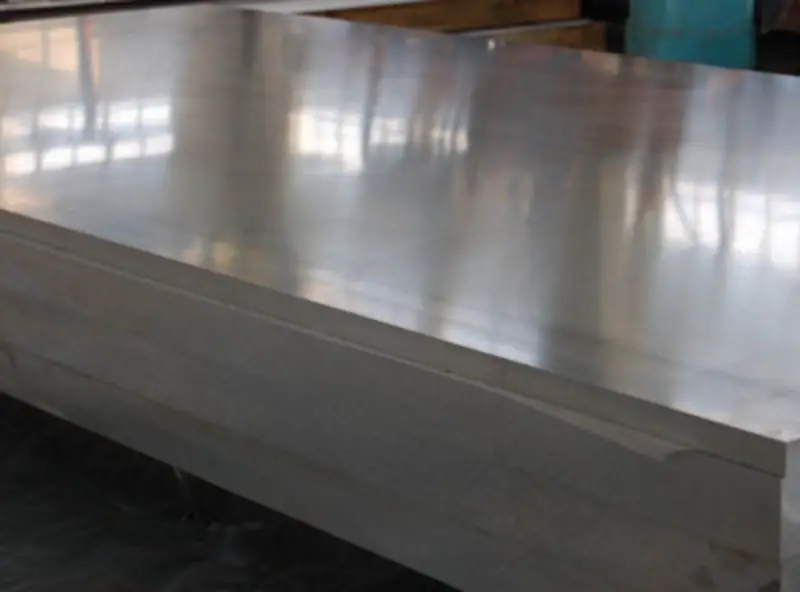
CCS Grade DQ70 Shipbuilding Steel Plate
CCS Grade DQ70 High Strength Quenched and Tempered Shipbuilding Steel Plate
Comprehensive material data for CCS Grade DQ70 shipbuilding steel plate, including chemical composition, mechanical properties, physical properties, and international equivalents.
Welding, cutting, forming, machining
- Phone : +8618037372205
- Email : [email protected]
- WhatsApp: Contact via Whtsapp
- WeChat: +8618037372205
CCS Grade DQ70 Shipbuilding Steel Plate Introduction
CCS Grade DQ70 is a high-strength quenched and tempered shipbuilding structural steel plate certified by the China Classification Society (CCS). It belongs to the 690 MPa yield strength class and offers excellent combination of strength, toughness, and weldability. Typical applications include critical structural components of large ships, offshore platforms, and marine engineering equipment subjected to high stress and low-temperature environments. The steel is produced by quenching and tempering heat treatment to achieve a fine-grained tempered martensite/bainite microstructure. Minimum yield strength is 690 MPa, tensile strength ranges 770–940 MPa, with Charpy impact testing down to -40°C to ensure notch toughness. It is typically supplied in normalized or quenched and tempered condition.
CCS Grade DQ70 Shipbuilding Steel Plate Chemical Composition
The ladle analysis shall comply with CCS Rules. The steel is microalloyed with Nb, V, Ti, and Al for grain refinement and precipitation strengthening. Maximum limits for P and S are strictly controlled for low-temperature toughness. The composition ensures adequate hardenability for through-thickness properties after quenching and tempering.
| Element | Standard Value (max unless range) | Remarks |
|---|---|---|
| Carbon (C) | ≤0.20 | |
| Silicon (Si) | ≤0.55 | |
| Manganese (Mn) | 0.70–1.60 | May be adjusted for thickness |
| Phosphorus (P) | ≤0.025 | |
| Sulfur (S) | ≤0.025 | |
| Chromium (Cr) | ≤1.50 | |
| Nickel (Ni) | ≤2.00 | Allow higher for thicker plates |
| Molybdenum (Mo) | ≤0.70 | |
| Copper (Cu) | ≤0.50 | |
| Niobium (Nb) | 0.02–0.05 | Microalloying element |
| Vanadium (V) | 0.05–0.10 | Microalloying element |
| Titanium (Ti) | ≤0.05 | Microalloying element |
| Aluminum (Al) | ≥0.015 total | Grain refining |
| Boron (B) | ≤0.005 | If used |
| Nitrogen (N) | ≤0.012 |
CCS Grade DQ70 Shipbuilding Steel Plate Physical Properties
The following physical properties are typical for DQ70 grade steel in the quenched and tempered condition. They may vary slightly with composition and heat treatment parameters. These values are intended for engineering calculations and are not mandatory requirements of the CCS specification.
| Property | Typical Value | Unit | Test Condition |
|---|---|---|---|
| Density (ρ) | 7850 | kg/m³ | 20 °C |
| Modulus of Elasticity (E) | 206 | GPa | 20 °C |
| Shear Modulus (G) | 80 | GPa | 20 °C |
| Poisson's Ratio (ν) | 0.30 | - | 20 °C |
| Thermal Expansion Coefficient (α) | 11.5 | ×10⁻⁶/K | 20–100 °C |
| Thermal Expansion Coefficient (α) | 12.3 | ×10⁻⁶/K | 20–200 °C |
| Thermal Expansion Coefficient (α) | 12.9 | ×10⁻⁶/K | 20–300 °C |
| Thermal Conductivity (λ) | 38 | W/(m·K) | 20 °C |
| Thermal Conductivity (λ) | 37 | W/(m·K) | 100 °C |
| Specific Heat Capacity | 465 | J/(kg·K) | 20 °C |
| Electrical Resistivity (ρ_e) | 0.25 | μΩ·m | 20 °C |
CCS Grade DQ70 Shipbuilding Steel Plate Mechanical Properties
Mechanical properties are based on transverse test specimens unless otherwise specified. The values apply for plate thickness ≤50 mm. For thicker plates, the yield strength may be slightly reduced. Charpy V-notch impact energy is tested at -40°C. Bend test diameter = 3t (t = specimen thickness) for 180° bending.
| Property | Standard Required Value | Unit | Test Condition / Remarks |
|---|---|---|---|
| Yield Strength (ReH) | ≥690 | MPa | Thickness ≤50 mm, transverse |
| Yield Strength (ReH) | ≥670 | MPa | Thickness 50–70 mm |
| Yield Strength (ReH) | ≥640 | MPa | Thickness 70–100 mm |
| Tensile Strength (Rm) | 770–940 | MPa | Thickness ≤50 mm |
| Tensile Strength (Rm) | 750–920 | MPa | Thickness 50–70 mm |
| Tensile Strength (Rm) | 730–900 | MPa | Thickness 70–100 mm |
| Elongation (A) | ≥14 | % | Gauge length 5.65√S0, transverse |
| Bend Test (180°) | d=3a | - | No cracks, d = mandrel diameter, a = specimen thickness |
| Charpy Impact Energy (KV) | ≥46 (longitudinal) | J | -40°C |
| Charpy Impact Energy (KV) | ≥27 (transverse) | J | -40°C |
CCS Grade DQ70 Shipbuilding Steel Plate Exact Equivalent Material Standards and Replacement Grades
| Country/Region | Standard | Grade | Remarks |
|---|---|---|---|
| International (IACS) | UR W31 | High Strength QT Steel YS≥690 | Corresponds to DQ70 |
| USA (American Bureau of Shipping) | ABS Rules | DQ70 | Identical grade designation |
| Norway/Germany (DNV) | DNV Rules | E690 | Same strength class |
| UK (Lloyd's Register) | LR Rules | DQ70 | Same strength class |
| France (Bureau Veritas) | BV Rules | D690 | Same strength class |
| Italy (RINA) | RINA Rules | D70 | Same strength class |
| Korea (Korean Register) | KR Rules | DQ70 | Same strength class |
| Japan (ClassNK) | NK Rules | KD70E | Same strength class |
| Europe | EN 10025-6 | S690Q | Chemical composition may need adjustment |
CCS Grade DQ70 Shipbuilding Steel Plate Application Introduction
CCS DQ70 steel is designed for heavy-duty marine and offshore applications where high strength-to-weight ratio, excellent low-temperature toughness, and good weldability are required. The combination of 690 MPa yield strength and guaranteed impact energy at -40°C makes it ideal for dynamically loaded structures in harsh environments. It can be fabricated by conventional welding processes with low-hydrogen electrodes and preheat control. Forming and machining are possible but require adequate power due to the material's high strength.
Product Applications: Container ships (ultra-large), Semi-submersible drilling rigs, Jack-up rig legs and chords, FPSO modules, Submarine pressure hulls, Heavy-lift crane booms, Offshore wind turbine foundations (monopiles, jackets)
Processed into products: Main deck plates of large vessels, Bottom and side shell plates of ice-strengthened ships, Column and bracing members of offshore structures, A-frame structures of pipelay vessels, Transition pieces and nodes in jackets, Crane pedestals and bearing rings, Pressure vessel integral supports and lifting trunnions
Application industries: Shipbuilding, Offshore Oil & Gas, Marine Engineering, Heavy Engineering, Pressure Vessels
CCS Grade DQ70 Shipbuilding Steel Plate Similar or Comparable Alternative Materials
| Country/Region | Standard | Grade | Remarks |
|---|---|---|---|
| USA | ASTM A514 | Grade Q | Quenched & tempered, YS≥690 MPa, thicker plates may have lower toughness |
| Europe | EN 10025-6 | S690QL | Lower sulfur and controlled rolling, comparable properties |
| China | GB/T 16270 | Q690CFD | High strength structural steel, similar delivery condition |
| Japan | JIS G 3128 | SHY 685 | High yield strength steel for welded structures, similar strength |
| International | ISO 19902 | 820 MPa class steel | Offshore structure steel with similar mechanical requirements |
Notes:
- For thicknesses above 100 mm, supplementary requirements for through-thickness properties (Z-grade) must be agreed upon to minimize lamellar tearing risk.
- Preheating before welding (typically 100–200°C) is recommended depending on plate thickness and ambient conditions.
- Post-weld heat treatment is generally not required for this grade but may be applied for stress relief of heavy sections; however, caution is needed to avoid loss of strength.
- Ultrasonic testing per CCS rules is usually mandatory for thickness ≥40 mm.
- Surface condition: plates shall be free from harmful defects and may be supplied with primer coating if specified.
- Share



