
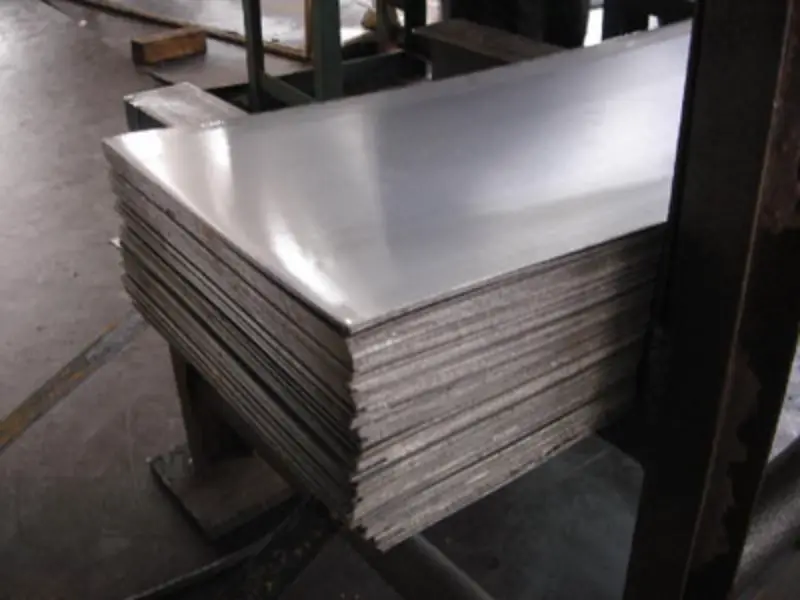
DNV Grade A500 Shipbuilding Steel Plate
DNV Grade A500 Shipbuilding Steel Plate: High-Strength Marine Structural Steel
Comprehensive data on DNV Grade A500 shipbuilding steel plate, including chemical composition, mechanical properties, and physical properties. Find equivalent grades and application guidance for marine structures.
Welding, bending, flame cutting, cold forming, machining
- Phone : +8618037372205
- Email : [email protected]
- WhatsApp: Contact via Whtsapp
- WeChat: +8618037372205
DNV Grade A500 Shipbuilding Steel Plate Introduction
DNV Grade A500 is a high-strength shipbuilding steel plate certified by DNV (Det Norske Veritas). It is a quenched and tempered structural steel with a minimum specified yield strength of 500 MPa, designed for demanding marine and offshore applications. The steel exhibits excellent weldability, good toughness at low temperatures, and high resistance to brittle fracture, making it suitable for critical hull and structural components. It complies with the strict requirements of DNV rules for metallic materials, ensuring reliability under harsh sea conditions. Typical delivery condition is quenched and tempered (Q+T), which provides a fine-grained microstructure and uniform mechanical properties. This grade is often used in combination with classification society certifications for shipbuilding and offshore engineering projects worldwide.
DNV Grade A500 Shipbuilding Steel Plate Chemical Composition
The chemical composition is controlled to ensure adequate hardenability, weldability, and toughness. The steel is fully killed and grain-refined. Carbon equivalent (CEV) is restricted to guarantee crack-free welding. All values are weight percentages as per DNV rule requirements for grade A500.
| Element | Requirement (max unless range given) | Remarks |
|---|---|---|
| C | ≤ 0.18 | |
| Si | ≤ 0.55 | |
| Mn | ≤ 1.70 | High Mn for strength and toughness |
| P | ≤ 0.025 | |
| S | ≤ 0.025 | |
| Cr | ≤ 0.20 | |
| Ni | ≤ 0.30 | |
| Mo | ≤ 0.08 | |
| Cu | ≤ 0.35 | |
| V | ≤ 0.05 | Microalloying element |
| Nb | ≤ 0.05 | Microalloying element |
| Ti | ≤ 0.02 | Grain refinement |
| Al (total) | ≥ 0.020 | Grain refinement, deoxidation |
| N | ≤ 0.012 | |
| CEV | Typically ≤ 0.43 | Carbon equivalent, for thickness ≤ 50 mm |
DNV Grade A500 Shipbuilding Steel Plate Physical Properties
These physical properties are typical for quenched and tempered high-strength shipbuilding steel at room temperature unless otherwise indicated. Actual values may vary slightly with specific production parameters. They are useful for design calculations involving weight, thermal stress, and electrical conductivity.
| Property | Typical Value | Unit | Test Condition / Remarks |
|---|---|---|---|
| Density (ρ) | 7850 | kg/m³ | 20 °C |
| Modulus of elasticity (E) | 200 – 210 | GPa | Ambient temperature |
| Shear modulus (G) | approx. 80 | GPa | |
| Poisson's ratio (ν) | 0.3 | — | |
| Thermal expansion coefficient (α) | 10.5 – 12.5 × 10⁻⁶ | K⁻¹ | 20 – 100 °C |
| Thermal conductivity (λ) | 45 – 50 | W/(m·K) | 20 °C |
| Specific heat capacity (c) | 460 – 480 | J/(kg·K) | 20 °C |
| Electrical resistivity (ρe) | 0.20 – 0.25 | μΩ·m | 20 °C |
DNV Grade A500 Shipbuilding Steel Plate Mechanical Properties
Mechanical properties are determined in accordance with DNV testing procedures on transverse test pieces taken from plate material. The steel must meet minimum requirements for yield strength, tensile strength, elongation, bending, and impact toughness. Values apply to thickness ≤ 50 mm in the quenched and tempered condition. Impact testing is performed at 0°C (Grade A).
| Property | Specified Value | Unit | Test Condition |
|---|---|---|---|
| Yield strength (ReH) | ≥ 500 | MPa | Transverse, ambient temperature |
| Tensile strength (Rm) | 610 – 770 | MPa | Transverse, ambient temperature |
| Elongation (A) | ≥ 16 | % | L0 = 5.65√S0, transverse |
| Bend test (mandrel diameter) | No cracks or defects; mandrel diameter = 3 × t | — | 180° bend, t = plate thickness, ambient |
| Impact absorbed energy (KV2) | ≥ 34 | J | 0 °C, transverse, V-notch |
DNV Grade A500 Shipbuilding Steel Plate Exact Equivalent Material Standards & Substitute Grades
| Classification Society | Standard | Grade | Remarks |
|---|---|---|---|
| ABS (American Bureau of Shipping) | ABS Rules for Materials and Welding (Part 2) | ABS A500 | Identical minimum requirements for chemistry and mechanical properties; subject to ABS certification. |
| LR (Lloyd's Register) | LR Rules for the Manufacture, Testing and Certification of Materials | LR A500 | Equivalent grade under Lloyd's Register; may have slight differences in test acceptance criteria. |
| BV (Bureau Veritas) | BV Rules on Materials and Welding | BV A500 | BV equivalent with same yield and tensile requirements. |
| CCS (China Classification Society) | CCS Rules for Materials and Welding | CCS A500 | Recognised equivalent; widely used in Chinese shipyards. |
| NK (Nippon Kaiji Kyokai) | NK Rules for the Survey and Construction of Steel Ships | NK A500 | ClassNK equivalent. |
| RINA (Registro Italiano Navale) | RINA Rules for the Classification of Ships | RINA A500 | RINA equivalent, aligned with IACS UR W11. |
| KR (Korean Register) | KR Rules for the Classification of Steel Ships | KR A500 | KR equivalent grade. |
DNV Grade A500 Shipbuilding Steel Plate Application Introduction
DNV Grade A500 is specifically tailored for severe marine environments, where high strength, excellent weldability, and fracture toughness are mandatory. It is commonly supplied with DNV material certificates (3.2) and fulfills the strict requirements of IACS unified requirements. The steel is used both as-received and after forming processes. Suitable joining methods include submerged arc welding, gas metal arc welding, and shielded metal arc welding with appropriate pre-heating and interpass temperature control.
Product Applications: Hull plates for container ships, bulk carriers, tankers, Deck plating and strength decks, Bulkheads and watertight doors, Offshore platform legs and bracings, Jack-up rig components, Heavy-lift crane booms and offshore pedestal cranes
Processed into products: Longitudinal and transverse stiffeners, Web frames and stringers, Rudder horns and rudder stocks, Hatch coamings and covers, Mooring bitts and fairleads, Foundation plates for winches and machinery, Heavy-duty brackets and connections
Application industries: Shipbuilding, Offshore Oil & Gas, Marine Engineering, Heavy Construction, Port & Harbor Equipment
DNV Grade A500 Shipbuilding Steel Plate Similar / Alternative Materials Recommendation
| Standard | Grade | Country/Region | Remarks |
|---|---|---|---|
| EN 10025-6 | S500Q / S500QL / S500QL1 | European Union | Quenched and tempered structural steel with min. ReH 500 MPa. Similar strength, but classification society approval may be required for marine use. |
| ASTM A514 / A514M | Grade Q | USA | High-yield quenched and tempered alloy steel plate. Yield strength ≥ 690 MPa in thinner sections; 500 MPa class achieved with suitable heat treatment. Not directly certified by DNV. |
| JIS G 3128 | SHY 685 (or SHY 685N) | Japan | High strength steel for welded structures. 685 MPa class; equivalent to 500 MPa class not directly available but shows similar weldability. |
| ISO 4950-3 | S500QL | International | Quenched and tempered structural steel with min. 500 MPa yield. Good match, but need separate DNV certification. |
Notes:
All supplied plates must be marked with the DNV stamp and heat number. Material testing is typically witnessed by a DNV surveyor. Weldability is guaranteed through controlled carbon equivalent and low impurity levels. Users should follow approved welding procedures for quenched and tempered steels to maintain the mechanical properties in the heat-affected zone. For thickness > 50 mm, some property reductions may apply; consult the standard for exact values.
- Share



