
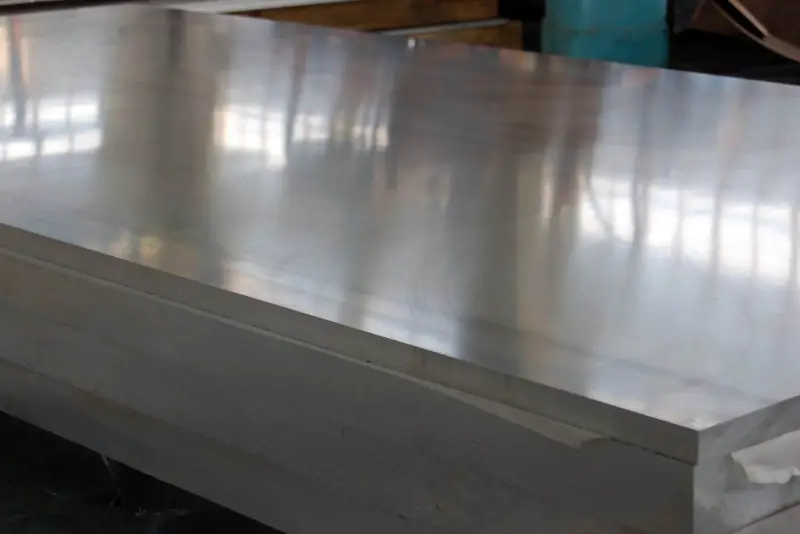
LR Grade AH62 Shipbuilding Steel Plate
LR Grade AH62 Shipbuilding Steel Plate - High-Strength Marine Structural Steel
Comprehensive material data for LR Grade AH62 shipbuilding steel plate, including chemical composition, mechanical properties, physical properties and international equivalents.
Hot rolling, controlled rolling, thermomechanical controlled processing (TMCP), normalizing rolling, quenched and tempered (Q&T is optional; TMCP is the common delivery condition)
- Phone : +8618037372205
- Email : [email protected]
- WhatsApp: Contact via Whtsapp
- WeChat: +8618037372205
LR Grade AH62 Shipbuilding Steel Plate Introduction
LR Grade AH62 is a high-strength shipbuilding structural steel plate complying with Lloyd's Register (LR) rules. It designates a minimum yield strength of 620 MPa and is typically supplied in the thermomechanical controlled processed (TMCP) or quenched and tempered condition.
- Superior strength-to-weight ratio for large marine structures
- Excellent weldability and low-temperature toughness
- Impact tested at 0°C (AH series) with minimum 41 J longitudinal energy
This grade is used in critical hull members, offshore platforms, and heavy-load ship components.
LR Grade AH62 Shipbuilding Steel Plate Chemical Composition
The chemical composition conforms to LR rules for Grade AH62 high-strength hull structural steel. Elements like Nb, V, Ti are typically added singly or in combination to guarantee strength and toughness. Maxima apply unless stated otherwise. Note: All values are maximum unless a range is given.
| Element | Specified Value (max, %) | Remarks |
|---|---|---|
| C | 0.20 | For plate/section products; lower carbon equivalent restricts thickness through Ceq formulae |
| Si | 0.10 – 0.55 | Ingot/deoxidizing element; some specifications allow up to 0.50 max |
| Mn | 0.90 – 1.70 | May be increased to meet mechanical properties under agreed conditions |
| P | 0.025 | Phosphorus – strict limit for toughness |
| S | 0.025 | Sulfur – low level to avoid hot cracking |
| Al (total) | ≥ 0.020 | Acid-soluble aluminum required for fine grain practice |
| Nb | 0.02 – 0.05 | Microalloying element, singly or combined with V/Ti |
| V | 0.05 – 0.10 | Alternative/additional microalloying element |
| Ti | 0.01 – 0.02 | For sulfide shape control and grain refinement; typical ≤0.02 |
| Cu | ≤ 0.35 | Residual element; may increase atmospheric corrosion resistance |
| Cr | ≤ 0.20 | Residual alloying element; no intentional addition |
| Ni | ≤ 0.40 | Residual; higher values allowed by agreement for improved toughness |
| Mo | ≤ 0.08 | Residual; trace element |
| N | ≤ 0.012 | Nitrogen limit; higher values may be allowed if microalloying additions exist |
| Ceq* | ≤ 0.45 – 0.60 | Carbon equivalent (C + Mn/6 + (Cr+Mo+V)/5 + (Ni+Cu)/15); depends on thickness |
LR Grade AH62 Shipbuilding Steel Plate Physical, Thermal and Electrical Properties
These physical properties represent typical values for normalized/quenched and tempered or TMCP high‑strength shipbuilding steel. They are not mandatory requirements but useful for design calculations.
- Density may vary slightly depending on alloy content.
- Thermal properties are considered at room temperature unless otherwise noted.
| Property | Typical Value | Unit | Conditions / Remarks |
|---|---|---|---|
| Density (ρ) | 7.85 | g/cm³ | At 20°C; typical for low‑alloy steel |
| Elastic modulus (E) | 205 | GPa | At 20°C; slight decrease with temperature |
| Shear modulus (G) | 80 | GPa | Estimated from E and Poisson's ratio (G=E/[2(1+ν)]) |
| Poisson's ratio (ν) | 0.3 | - | Room temperature; consistent with most structural steels |
| Coefficient of thermal expansion (α) | 11.5 | 10⁻⁶/K | Temperature range 20–100°C; varies to approx. 13.5 at 300°C |
| Thermal conductivity (λ) | 42 – 48 | W/(m·K) | At 20°C; decreases with increasing alloying, typically ~42 at 20°C, ~38 at 300°C |
| Specific heat capacity (cp) | 460 – 480 | J/(kg·K) | At room temperature; increases to ~550 J/(kg·K) at elevated temperatures |
| Electrical resistivity (ρ_e) | 0.18 – 0.22 | µΩ·m | At 20°C for typical low‑alloy steel |
LR Grade AH62 Shipbuilding Steel Plate Mechanical Properties
The following mechanical properties are specified in LR rules for Grade AH62. The values are the minimum required for acceptance unless indicated as a range. Testing is usually carried out on specimens taken from the final product in transverse direction.
- Yield strength ReH minimum 620 MPa for thickness ≤ 50 mm; above 50 mm refer to agreed specifications.
- Elongation based on proportional gauge length L0=5.65√S0
| Property | Required Value | Unit | Test Conditions |
|---|---|---|---|
| Yield Strength (ReH, min) | 620 | MPa | Thickness ≤ 50 mm, transverse sample |
| Yield Strength (ReH, min) | 590 | MPa | Thickness > 50 ≤ 100 mm (guideline; subject to agreement) |
| Tensile Strength (Rm) | 720 – 890 | MPa | Transverse test piece, thickness ≤ 50 mm |
| Tensile Strength (Rm) | 700 – 870 | MPa | Transverse test piece, thickness > 50 ≤ 100 mm |
| Elongation after fracture (A%), min | 14 | % | Longitudinal, gauge length 5.65√S0; transverse elongation reduction typically 2% lower |
| Elongation after fracture (A%), min | 12 | % | Transverse, gauge length 5.65√S0 |
| Bend test (bend angle 180°) | No cracks | - | Bend diameter d = 3a (a = specimen thickness) for plates ≤ 25 mm |
| Bend test | No cracks | - | Bend diameter d = 4a for thickness 25–40 mm |
| Bend test | No cracks | - | Bend diameter d = 5a for thickness 40–50 mm |
| Charpy V‑notch impact energy (KV, min) | 41 (longitudinal) | J | Test temperature 0°C (AH series); average of 3, one individual min 70% of average |
| Charpy V‑notch impact energy (KV) | 27 (transverse) | J | Test temperature 0°C; transverse value may be required by agreement |
LR Grade AH62 Shipbuilding Steel Plate Fully Equivalent Materials – International Standards and Alternative Grades
| Country / Region | Standard / Society | Equivalent Grade | Remarks |
|---|---|---|---|
| International | American Bureau of Shipping (ABS) | ABS AH620 | Identical strength and toughness requirement, TMCP delivery |
| Norway / Germany | DNV (Det Norske Veritas) | DNV NV A620 | Same yield/tensile class, impact at 0°C |
| France | Bureau Veritas (BV) | BV A620 | LR AH62 fully matches BV A620 specification |
| China | CCS (China Classification Society) | CCS AH620 | Direct analogue in CCS Rules for ships |
| Japan | ClassNK (Nippon Kaiji Kyokai) | NK KA62 / NK AH620 | Grade designation KA62 in NK format |
| Italy | RINA (Registro Italiano Navale) | RINA AH620 | Corresponding high‑strength hull steel |
| Korea | Korean Register (KR) | KR AH620 | KRS rules align with LR for AH620 classification |
LR Grade AH62 Shipbuilding Steel Plate Application Introduction
LR Grade AH62 is designed for weight‑critical heavy‑duty marine structures where high strength allows thinner sections, reducing structural weight and fabrication costs. Typical applications include:
Product Applications: Hull plate and shell plating for high‑stress zones (deck strake, sheer strake, bottom shell, bilge), Longitudinal stiffeners and transverse frames, Hatch coaming and crane pedestal structures, Offshore module support beams, Leg chords and rack plates for self‑elevating platforms
Processed into products: Main deck and strength‑deck plates (>40 mm thickness in fatigue‑critical regions), Webs and flanges of longitudinal‑stiffened panels, Bulb profiles and T‑bars used in deck and bottom grillages, Bracket plates and connection gussets, Bottom plating in way of heavy cargo or slamming loads, Structural parts of drill‑floor and cantilever structures on jack‑up units
Application industries: Commercial shipbuilding (container ships, bulk carriers, tankers, cruise vessels), Naval and defense marine structures, Offshore oil & gas platforms (jack‑up rigs, semi‑submersibles, FPSOs), Offshore wind turbine substructures (transition pieces, foundations), Heavy lifting and load‑out barges
LR Grade AH62 Shipbuilding Steel Plate Similar / Alternative High-Strength Shipbuilding Grades
| Country / Region | Standard/Grade | Close Alternative | Remarks |
|---|---|---|---|
| All IACS members | LR/DNV/ABS etc. AH550 | AH550 (min YS 550 MPa) | Lower strength level, may be used where less strength is sufficient; better formability |
| All IACS members | LR/DNV/ABS etc. AH690 | AH690 (min YS 690 MPa) | Higher strength level; more sensitive to welding procedures and heat input limitations |
| All IACS members | LR/DNV/ABS etc. DH620 | DH620 | Same strength, but impact tested at -20°C; suitable for colder structural applications |
| All IACS members | LR/DNV/ABS etc. EH620 | EH620 | Impact test at -40°C; for very low temperature service such as ice‑class vessels |
| EN Europe | EN 10025‑6 | S690QL/S690Q | Quenched and tempered structural steel, YS ≥690 MPa, not identical as classification but chemically and mechanically close; requires evaluated weldability |
Notes:
- Carbon equivalent (Ceq) limits must be agreed between the steelmaker and customer to ensure weldability; typical Ceq ≤ 0.45% for thin plates and ≤ 0.60% for thicker plates depending on geometry and welding procedure.
- Supplementary impact testing at lower temperatures (‑20°C, ‑40°C) can be specified, changing the designation to DH62 or EH62 respectively (approach to class).
- Dimensional tolerances and flatness requirements follow LR rules, typically EN 10029 or equivalent.
- Plates are usually ultrasonically tested according to class requirements (e.g., EN 10160 S2/E2).
- Before use in fatigue‑prone details, additional toughness and CTOD testing may be required.
- Preheating and post‑weld heat treatment must be carried out in accordance with approved welding procedures to avoid hydrogen‑induced cracking.
- Share



