
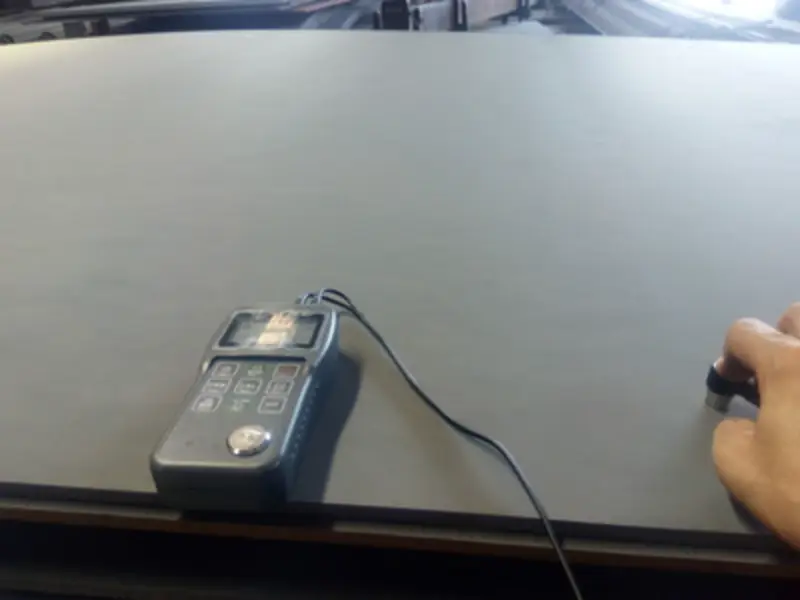
05CuPCrNi Weathering Steel
05CuPCrNi Weather Resistant Steel Plate | TB/T 1979 Standard Overview
Comprehensive technical data for 05CuPCrNi weather resistant steel plate according to China TB/T 1979 standard. Includes chemical composition, mechanical properties, physical data, equivalent grades and application guide.
Hot rolling, normalizing, cold forming, welding, shearing
- Phone : +8618037372205
- Email : [email protected]
- WhatsApp: Contact via Whtsapp
- WeChat: +8618037372205
05CuPCrNi Weathering Steel Introduction
05CuPCrNi is a high-phosphorus copper-chromium-nickel weather resistant structural steel specified in the Chinese standard TB/T 1979-2003 for atmospheric corrosion resistant steel for railway rolling stock. It is primarily designed to provide enhanced resistance to atmospheric corrosion by forming a dense, protective oxide layer under cyclic wet-dry conditions. Typical characteristics include:
- Excellent atmospheric corrosion resistance, 2 to 5 times that of plain carbon steel
- Good weldability and cold forming performance, suitable for uncoated and unpainted applications
- Reliable low-temperature toughness down to -40°C
- Supplied in hot-rolled or normalized condition
This grade is widely used in railway freight car bodies, containers, building cladding and steel structures exposed to the weather without protective painting. Its chemical composition is tailored with controlled Cu, Cr, Ni and P to promote a stable patina.
05CuPCrNi Weathering Steel Chemical Composition
The chemical composition of 05CuPCrNi is specifically balanced to combine atmospheric corrosion resistance with adequate strength and weldability. Phosphorus is intentionally retained as a key alloying element for patina formation, while sulfur is kept very low to maintain toughness. Note: Values are according to TB/T 1979-2003; single values are maximum unless a range is given.
| Element | Specified Value (wt.%) | Remarks |
|---|---|---|
| Carbon (C) | ≤ 0.09 | Key for strength and weldability |
| Silicon (Si) | 0.25 – 0.50 | Deoxidizer, influences flow during welding |
| Manganese (Mn) | 0.20 – 0.50 | Improves strength and counteracts sulfur hot shortness |
| Phosphorus (P) | 0.07 – 0.12 | Essential for weather resistance; forms adherent patina |
| Sulfur (S) | ≤ 0.020 | Strictly limited for toughness and weld quality |
| Copper (Cu) | 0.25 – 0.50 | Primary element for corrosion resistance |
| Chromium (Cr) | 0.30 – 0.60 | Enhances passivity and patina stability |
| Nickel (Ni) | ≤ 0.50 | Adds toughness and further improves atmospheric corrosion resistance |
| Others (e.g. Nb, V) | Not intentionally added | Standard does not require micro-alloying; residual elements may be present |
05CuPCrNi Weathering Steel Physical Properties
The physical data below represent typical values for 05CuPCrNi weather resistant steel. These are not mandatory within TB/T 1979 but are useful for engineering design, thermal analysis and electrical applications. Slight variations may occur depending on supply condition and thickness.
| Property | Typical Value | Unit | Condition / Reference |
|---|---|---|---|
| Density (ρ) | 7.85 | g/cm³ | At 20°C |
| Modulus of Elasticity (E) | 200 | GPa | Tensile modulus; typical for structural steel |
| Shear Modulus (G) | 80 | GPa | Approximated from E and ν |
| Poisson's Ratio (ν) | 0.3 | — | Within elastic range |
| Thermal Expansion Coefficient (α) | 11.6 (20-100°C), 12.3 (20-200°C), 13.0 (20-400°C) | 10⁻⁶/K | Mean coefficient; values depend on temperature interval |
| Thermal Conductivity (λ) | 50 (at 20°C), 45 (at 200°C), 38 (at 400°C) | W/(m·K) | Decreases with temperature |
| Specific Heat Capacity (c) | 460 – 480 | J/(kg·K) | Near 20°C; increases slightly with temperature |
| Electrical Resistivity (ρe) | 0.20 – 0.25 | μΩ·m | At 20°C; typical for low-alloy steel |
05CuPCrNi Weathering Steel Mechanical Properties
Mechanical properties are guaranteed for plates and strips in hot-rolled or normalized condition. The steel demonstrates good strength and ductility with reliable low-temperature impact energy. Requirements apply to transverse test pieces unless otherwise agreed. Bending: 180° bend test over a former with diameter = 1×plate thickness (1a) must show no cracks. Impact: Charpy V-notch impact energy is verified at -40°C for railway applications.
| Property | Required Value | Unit | Test Condition / Remarks |
|---|---|---|---|
| Yield Strength (ReH / ReL) | ≥ 345 | MPa | All thicknesses; if yield point is not pronounced, 0.2% proof stress (Rp0.2) applies |
| Tensile Strength (Rm) | ≥ 480 | MPa | Minimum |
| Elongation after fracture (A) | ≥ 22 | % | Gauge length 5.65√So (e.g. 50mm for 10mm thick); longitudinal direction |
| Bend Test (180°) | No cracks | — | Bend diameter = 1a (a = specimen thickness); room temperature |
| Impact energy (KV2) | ≥ 27 | J | Charpy V-notch, -40°C, longitudinal direction; average of three tests |
| Hardness (HBW) | ~ 140 – 170 | HBW | Typical value for reference; not a mandatory requirement |
05CuPCrNi Weathering Steel Exact Equivalent Standards and Replaceable Grades
| Country / Region | Standard | Grade | Remarks |
|---|---|---|---|
| China | TB/T 1979 | 05CuPCrNi | Original specification; definitive standard |
| China | Q/ASB 165 (Angang standard) | 05CuPCrNi | Identical; former company standard for weather resistant strip |
| International | — | — | No other national or international standard registers a chemically identical grade with the P range 0.07-0.12%. Other standards use different P levels or alloy designs. |
05CuPCrNi Weathering Steel Application Introduction
05CuPCrNi steel is engineered for unpainted outdoor service where its self-passivating rust layer eliminates the need for painting and reduces lifecycle maintenance. In railway applications it meets the rigorous low-temperature toughness requirements of rolling stock operating in harsh environments. Key application guidelines:
- Allows thickness reduction compared to carbon steel due to superior corrosion resistance
- Welding can be performed with matching or low-alloy weathering consumables, ensuring joint durability
- Pre-treatment (e.g., blast cleaning) accelerates uniform patina formation in architectural uses
Product Applications: Open-top freight car bodies (gondola cars), Covered hopper car bodies, ISO freight containers, Weathering steel bridge girders and pylons, Corrugated roof and wall sheets, Pole-line hardware and transmission towers
Processed into products: Side walls, end walls and floor plates of railway wagons, Cold-formed C- and Z-section profiles for container frames, Bent and welded box-type structural members, Shear connectors and cover plates in composite bridges, Stamped door panels and roof arches, Laser-cut and bent parts for architectural cladding panels
Application industries: Railway rolling stock manufacturing, Container production (dry cargo and special containers), Steel construction and bridge building, Architectural facades and roofing, Mining and material handling equipment
05CuPCrNi Weathering Steel Closely Related or Similar Substitute Materials
| Country / Region | Standard | Grade | Remarks |
|---|---|---|---|
| China | GB/T 4171 | Q355GNH (or Q345GNH) | Similar corrosion resistance; P: 0.07-0.15%, Cr: 0.30-0.60%, Ni ≤0.50%; minimum yield 355 MPa. Not identical in P range but often interchangeable in structural usages. |
| China | TB/T 1979 | 09CuPCrNi-A / 09CuPCrNi-B | Sister grade from same standard; C ≤0.12%, P 0.07-0.12%, but with higher Mn and slight Ni differences. Strength levels comparable. |
| Japan | JIS G 3125 | SPA-H | High-phosphorus weathering steel; C ≤0.12%, P 0.07-0.15%, Cr 0.30-0.60%, Cu 0.25-0.55%, Ni ≤0.65%; similar corrosion concept but not identical. |
| USA | ASTM A606 / A606M | Type 4 | High-phosphorus, low-alloy weather resistant steel with P range 0.07-0.15%. Mechanical properties differ – min YS 345 MPa, TS 480 MPa. May be considered for non-railway applications. |
| Europe | EN 10025-5 | S355J2W (+N) | Weathering steel with P ≤0.15% but max is higher; Cr 0.30-0.80%, Ni ≤0.65%. Requires Charpy at -20°C vs -40°C. Can substitute with design adjustment. |
Notes:
Additional information:
- Typical supply thickness: 1.6 mm to 16 mm (hot-rolled), often used in 2.0~6.0 mm for vehicle bodies.
- Patina formation: The protective rust layer (dark brown to violet) stabilises after 6–18 months of natural exposure, depending on climate. Avoid prolonged ponding of water and de-icing salts to maintain optimal life.
- Weldability: Preheating is generally not required for thicknesses below 30 mm; interpass temperature should be controlled below 250°C. Use AWS E7018-W1 type electrodes for shield metal arc welding.
- Unlike traditional COR-TEN A, 05CuPCrNi does not require a minimum atmospheric corrosivity index; its balanced Cu-Cr-Ni addition ensures robust performance even in moderate industrial atmospheres.
- Share



