
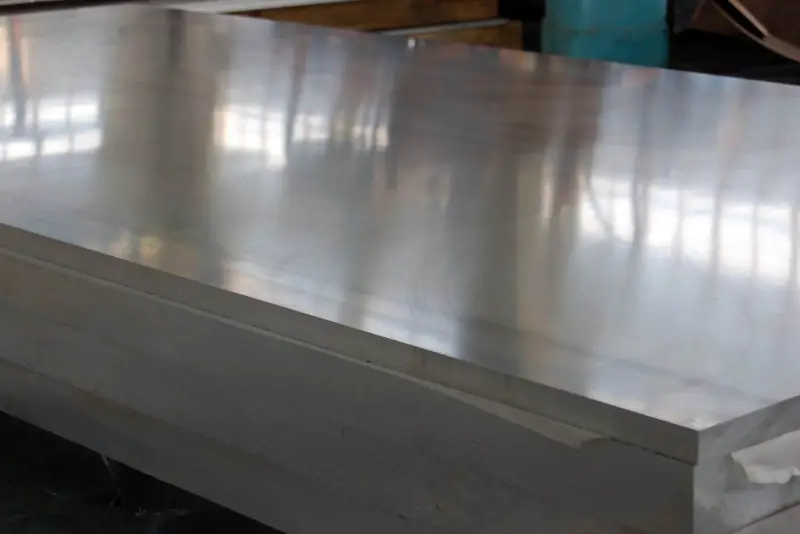
S960QL Ultra-High Strength Quenched and Tempered Steel
S960QL Ultra-High Strength Quenched and Tempered Steel for Heavy-Duty Structures
Comprehensive technical data for S960QL steel plate: chemical composition, mechanical and physical properties, international equivalents, and application guidelines.
Hot rolling followed by quenching and tempering; can be cold formed, cut, and welded under controlled procedures
- Phone : +8618037372205
- Email : [email protected]
- WhatsApp: Contact via Whtsapp
- WeChat: +8618037372205
S960QL Ultra-High Strength Quenched and Tempered Steel Introduction
S960QL is a quenched and tempered, weldable fine-grain structural steel with a minimum yield strength of 960 MPa in delivery condition. Governed by EN 10025-6, it belongs to the high-strength low-alloy (HSLA) category and is designed for demanding load-bearing applications. The 'Q' denotes quenching and tempering, while 'L' specifies Charpy impact testing at -40 °C with a minimum energy of 27 J. This grade offers an excellent combination of high strength, adequate toughness, and good weldability when proper procedures are followed. Typical applications include mobile crane booms, heavy transport equipment, offshore structures, and machinery components. The steel is supplied with low sulfur and phosphorus levels, controlled hardenability elements, and fine-grain practice to ensure consistent mechanical properties across thicknesses up to 150 mm. Its high strength-to-weight ratio enables lighter designs without compromising structural integrity.
S960QL Ultra-High Strength Quenched and Tempered Steel Chemical Composition
The chemical composition of S960QL is carefully balanced to achieve high strength after quenching and tempering while ensuring adequate weldability and low-temperature toughness. Maximum limits are specified for residual elements, and optional additions of grain-refining elements are permitted. A carbon equivalent value (CEV) is often controlled to prevent weld cracking.
| Element | Standard Value (max %) | Remarks |
|---|---|---|
| C | 0.20 | Max |
| Si | 0.80 | Max |
| Mn | 1.70 | Max |
| P | 0.020 | Max |
| S | 0.010 | Max |
| Cr | 1.50 | Max |
| Mo | 0.70 | Max |
| Ni | 2.00 | Max |
| V | 0.12 | Max |
| Ti | 0.05 | Max |
| B | 0.005 | Max |
| Nb | 0.06 | Max |
| N | 0.015 | Max |
| Al total | ≥0.018 | Minimum for fine-grain practice |
S960QL Ultra-High Strength Quenched and Tempered Steel Physical Properties
Physical properties for S960QL are representative of low-alloy quenched and tempered steels. These values are provided for design calculations and may vary slightly with composition and heat treatment. Data are based on standard engineering references for similar steel grades.
| Property | Typical Value | Unit | Test Conditions |
|---|---|---|---|
| Density, ρ | 7850 | kg/m³ | 20 °C |
| Modulus of elasticity, E | 210 | GPa | 20 °C |
| Shear modulus, G | 81 | GPa | 20 °C |
| Poisson's ratio, ν | 0.3 | — | 20 °C |
| Thermal expansion coefficient, α | 11.1 × 10⁻⁶ | K⁻¹ | 20 – 100 °C |
| Thermal expansion coefficient, α | 12.5 × 10⁻⁶ | K⁻¹ | 20 – 300 °C |
| Thermal conductivity, λ | 38 | W/(m·K) | 20 °C |
| Specific heat capacity, cp | 460 | J/(kg·K) | 20 °C |
| Electrical resistivity, ρe | 0.23 × 10⁻⁶ | Ω·m | 20 °C |
S960QL Ultra-High Strength Quenched and Tempered Steel Mechanical Properties
Mechanical properties are dependent on product thickness. Values are based on transverse test specimens unless otherwise agreed. Higher thicknesses may exhibit slightly reduced strength and elongation. The supplied condition guarantees these minimum values after appropriate heat treatment.
| Property | Standard Requirement | Unit | Test Conditions / Thickness |
|---|---|---|---|
| Yield strength, ReH | ≥960 | MPa | t ≤ 50 mm |
| Yield strength, ReH | ≥890 | MPa | 50 < t ≤ 100 mm |
| Yield strength, ReH | ≥830 | MPa | 100 < t ≤ 150 mm |
| Tensile strength, Rm | 980 – 1150 | MPa | t ≤ 50 mm |
| Tensile strength, Rm | 950 – 1150 | MPa | 50 < t ≤ 100 mm |
| Tensile strength, Rm | 880 – 1100 | MPa | 100 < t ≤ 150 mm |
| Elongation, A5 (L0=5.65√S0) | ≥10 | % | t ≤ 50 mm |
| Elongation, A5 | ≥9 | % | 50 < t ≤ 100 mm |
| Elongation, A5 | ≥8 | % | 100 < t ≤ 150 mm |
| Charpy V-notch impact, KV | ≥27 | J | at -40 °C, longitudinal |
| Bend test (mandrel diameter) | 3t | — | t = specimen thickness, 180° bend |
S960QL Ultra-High Strength Quenched and Tempered Steel Fully Equivalent Material Standards and Substitute Grades
| Country/Region | Standard | Grade | Remarks |
|---|---|---|---|
| Europe | EN 10025-6:2019 | S960QL (1.8933) | Original standard |
| International | ISO 4950-3:1995 | S960QL | Identical technical delivery conditions |
| Germany | DIN EN 10025-6 | S960QL | Adopts EN |
| UK | BS EN 10025-6 | S960QL | Adopts EN |
| France | NF EN 10025-6 | S960QL | Adopts EN |
| Italy | UNI EN 10025-6 | S960QL | Adopts EN |
| Spain | UNE EN 10025-6 | S960QL | Adopts EN |
| Sweden | SS-EN 10025-6 | S960QL | Adopts EN |
| China | GB/T 16270 | Q960E | Similar counterpart, but not identical; verify impact requirements |
S960QL Ultra-High Strength Quenched and Tempered Steel Application Introduction
S960QL is engineered for applications where high static and dynamic loads demand exceptional strength-to-weight ratios. Its low-temperature toughness makes it suitable for arctic environments. Fabrication requires adherence to welding guidelines (preheat and low-hydrogen processes) and careful consideration of cold forming limits. Fatigue design is critical in moving structures. Typical uses span heavy lifting, transportation, and energy sectors.
Product Applications: Welded box sections and built-up girders, Crane lattice booms and telescopic booms, Structural support frames for heavy equipment, Pressure vessels and storage tanks (when design codes permit), Fatigue-critical components in bridges
Processed into products: Boom segments and chord members for mobile cranes, Pinned connections and gusset plates, High-strength fasteners and tension rods, Weld-in attachments for lifting beams, Transition rings in wind turbine towers
Application industries: Heavy lifting and transport (mobile cranes, crawler cranes, truck-mounted cranes), Civil engineering and structural (bridges, high-rise buildings, stadiums), Offshore and marine (platform structures, deck components, wind turbine foundations), Mining and earthmoving (excavator booms, shovel components, dump truck bodies), Defense and security (armor components, naval structures – subject to additional specifications)
S960QL Ultra-High Strength Quenched and Tempered Steel Similar or Closely Related Substitute Materials
| Country/Region | Standard | Grade | Remarks |
|---|---|---|---|
| Europe | EN 10025-6 | S960Q | Same strength, but impact test at 0 °C instead of -40 °C |
| Europe | EN 10025-6 | S960QL1 | Higher toughness variant with KV ≥27 J at -60 °C |
| Europe | EN 10025-6 | S890QL | Lower minimum yield strength (890 MPa), similar toughness |
| Europe | EN 10025-6 | S1100QL | Higher minimum yield strength (1100 MPa), may require stricter fabrication |
| USA | ASTM A514 / A517 | Grade R / S / others | 690 MPa yield strength grades; not equivalent in strength but same concept |
| Japan | JIS G 3128 | SHY 685 and higher | Closest Japanese high-strength grades, but not directly matching 960 MPa |
Notes:
Welding: Use low-hydrogen consumables, preheat to 100–150 °C depending on thickness, and control interpass temperature. Post-weld heat treatment is generally not required but may be applied for stress relief.
Forming: Cold bending radii should not be less than 3t; hot forming may alter mechanical properties and requires requalification.
Corrosion protection: As a low-alloy steel, it requires protective coatings for atmospheric exposure. The steel is not intended for sour service (H2S) without specific testing.
CEV: Typical CEV is 0.45–0.55, which requires attention during welding procedure qualification.
- Share



