
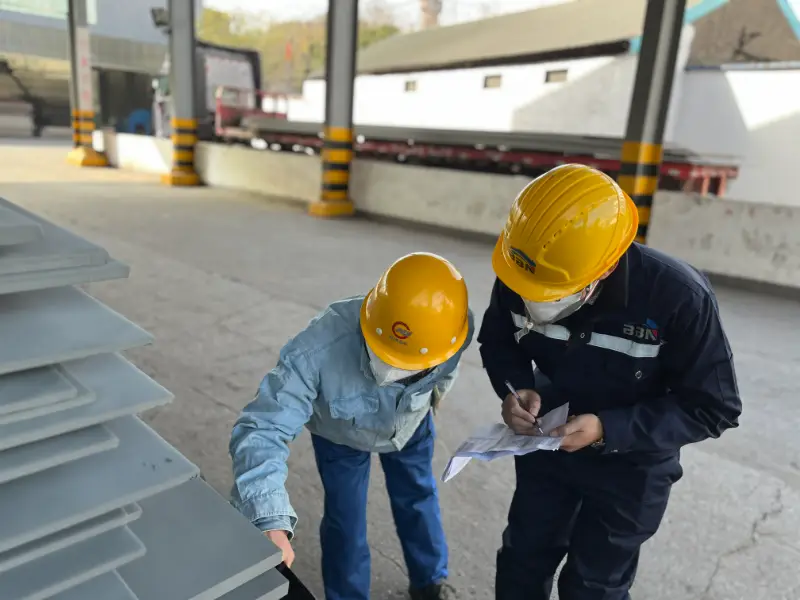
GB3531 15MnNiDR Low Temperature Pressure Vessel Steel Plate
GB3531 15MnNiDR Low Temperature Pressure Vessel Steel Plate
Comprehensive technical data of 15MnNiDR steel plate for pressure vessels and boilers under Chinese standard GB 3531, including chemical composition, mechanical properties at low temperature, and physical constants.
Hot rolling, normalizing, normalizing + tempering, cold forming, welding (with suitable preheat and PWHT)
- Phone : +8618037372205
- Email : [email protected]
- WhatsApp: Contact via Whtsapp
- WeChat: +8618037372205
GB3531 15MnNiDR Low Temperature Pressure Vessel Steel Plate Introduction
15MnNiDR is a low alloy steel plate specifically designed for pressure vessels and boilers operating at low temperatures, standardized under GB 3531. It is characterised by a ferritic-pearlitic microstructure with controlled alloying elements such as manganese and nickel to ensure good toughness at sub-zero temperatures. The steel offers a minimum yield strength of 285 MPa in thick sections, and excellent Charpy impact toughness down to -45 °C with a guaranteed absorbed energy of at least 60 J. This makes it suitable for the fabrication of critical components in the petrochemical, gas storage and refrigeration industries. The material is supplied in normalized or normalized and tempered condition to refine grain size and enhance low-temperature ductility.
GB3531 15MnNiDR Low Temperature Pressure Vessel Steel Plate Chemical Composition
The following table lists the specified chemical elements and their permissible ranges for 15MnNiDR according to GB 3531-2014. The steel is alloyed with manganese and a modest amount of nickel to improve low-temperature toughness. Grain refining elements (niobium, vanadium, titanium) are controlled to ensure a fine austenite grain size. The sum Nb+V+Ti ≤ 0.12% is also a mandatory requirement of the standard.
| Element | Standard Value (wt%) | Remarks |
|---|---|---|
| Carbon, C | ≤ 0.18 | |
| Silicon, Si | 0.15 – 0.50 | |
| Manganese, Mn | 1.20 – 1.60 | |
| Phosphorus, P | ≤ 0.016 | Low P for low temperature toughness |
| Sulfur, S | ≤ 0.010 | Low S for cleanliness |
| Nickel, Ni | 0.20 – 0.60 | Improves low temperature notch toughness |
| Vanadium, V | ≤ 0.05 | |
| Niobium, Nb | ≤ 0.04 | |
| Total Aluminum, Alt | ≥ 0.020 | Acid‑soluble or total Al, for grain refinement and deoxidation |
| Chromium, Cr | ≤ 0.30 | Residual element |
| Copper, Cu | ≤ 0.25 | Residual element |
| Molybdenum, Mo | ≤ 0.10 | Residual element |
| Nitrogen, N | ≤ 0.012 | Binding element, if not fixed by Al can reduce toughness |
| Niobium+V+Ti | ≤ 0.12 | Sum of grain refining elements; Ti is not individually specified but controlled by this limit |
GB3531 15MnNiDR Low Temperature Pressure Vessel Steel Plate Thermal and Electrical Physical Properties
The values below represent characteristic physical properties for 15MnNiDR as a typical low‑alloy carbon‑manganese‑nickel steel. These data are not part of the GB 3531 standard but are widely accepted engineering estimates for this class of material. Actual values may slightly vary with heat treatment condition and testing temperature.
| Property | Typical Value | Unit | Conditions / Remarks |
|---|---|---|---|
| Density, ρ | 7.85 | g/cm³ | Room temperature |
| Modulus of elasticity, E | 206 | GPa | Room temperature, tensile |
| Shear modulus, G | 79.3 | GPa | Room temperature |
| Poisson's ratio, ν | 0.30 | — | Room temperature, elastic range |
| Coefficient of thermal expansion, α | 11.2 / 12.2 / 12.8 | 10⁻⁶/K | 20–100 °C / 20–200 °C / 20–300 °C |
| Thermal conductivity, λ | 36 / 34 / 32 | W/(m·K) | At 20 °C / 100 °C / 200 °C |
| Specific heat capacity, cp | 470 | J/(kg·K) | At 20–100 °C |
| Electrical resistivity, ρe | 0.23 | 10⁻⁶ Ω·m | Room temperature |
GB3531 15MnNiDR Low Temperature Pressure Vessel Steel Plate Mechanical Properties
Mechanical properties of 15MnNiDR are guaranteed after normalizing or normalizing and tempering treatment. The yield strength and tensile strength depend on plate thickness as tabulated below. Charpy V‑notch impact energy at -45 °C is a key requirement for low temperature service. Bending test shall show no cracks when bent around a mandrel of diameter 3a (a = plate thickness).
| Property | Required Value | Unit | Test Condition / Remarks |
|---|---|---|---|
| Yield strength, ReH | ≥ 325 | MPa | Thickness ≤ 16 mm |
| Yield strength, ReH | ≥ 315 | MPa | 16 < t ≤ 36 mm |
| Yield strength, ReH | ≥ 305 | MPa | 36 < t ≤ 60 mm |
| Yield strength, ReH | ≥ 295 | MPa | 60 < t ≤ 100 mm |
| Yield strength, ReH | ≥ 285 | MPa | 100 < t ≤ 120 mm |
| Tensile strength, Rm | 490 – 630 | MPa | Thickness ≤ 60 mm |
| Tensile strength, Rm | 480 – 620 | MPa | 60 < t ≤ 120 mm |
| Elongation after fracture, A | ≥ 20 | % | Gauge length 5.65√So (proportional test piece), all thicknesses |
| Charpy impact energy, KV₂ (-45 °C) | ≥ 60 (average of 3 specimens), min. single value ≥ 42 | J | Longitudinal V‑notch, test temperature -45 °C |
| Bend test (180°) | No cracks | — | Mandrel diameter d = 3a (a = plate thickness) |
GB3531 15MnNiDR Low Temperature Pressure Vessel Steel Plate Fully Equivalent Material Standards and Replaceable Grades
| Country / Region | Standard | Grade | Remarks |
|---|---|---|---|
| European Union | EN 10028-4 | 13MnNi6-3 (1.6215) | Nickel‑alloyed fine grain steel for low temperature pressure vessels; chemical and mechanical properties very close, often considered a direct counterpart. Both require normalizing and achieve similar low temperature toughness. |
| International (ISO) | ISO 9328-4 | P355NL1 | Structural steel with similar minimum yield strength (355 MPa) for low temperature service; nickel content may differ but overall performance is comparable for many applications. |
GB3531 15MnNiDR Low Temperature Pressure Vessel Steel Plate Application Introduction
15MnNiDR plates are predominantly used in the fabrication of welded pressure vessels and boilers that operate at temperatures as low as -45 °C. The steel combines adequate strength with excellent notch toughness, making it a cost‑effective choice for storage and processing equipment in the petrochemical and gas industries. The normalized delivery condition ensures uniform mechanical properties and good weldability. Typical fabrication includes cold forming of shells and heads, followed by submerged‑arc or manual metal arc welding with matching filler metals. Post‑weld heat treatment (stress relieving) is normally applied according to pressure vessel design codes.
Product Applications: Cryogenic storage tanks (spherical and cylindrical), Liquefied gas rail and road tankers, Reactors and columns for low‑temperature processes, Heat exchanger shells and channels, Boiler drums and steam separators, Offshore platform pressure vessels
Processed into products: Dished heads (hemispherical, ellipsoidal, torispherical), Cylindrical shells and shell courses, Nozzles, manways and flanges (to be welded onto the vessel), Stiffening rings and support skirts, Tube sheets (for heat exchangers), Compact flanges and hub connectors
Application industries: Petrochemical and chemical processing, Oil & gas (onshore and offshore), Industrial gas (LNG, LPG, liquid ammonia, ethylene) storage and transport, Refrigeration and cryogenic engineering, Boiler and heat exchanger manufacturing, Power generation (conventional and nuclear pressure boundary components)
GB3531 15MnNiDR Low Temperature Pressure Vessel Steel Plate Similar/Alternative Materials for Low Temperature Pressure Vessels
| Country / Region | Standard | Grade | Remarks |
|---|---|---|---|
| China | GB 3531 | 09MnNiDR | Lower carbon and slightly different Ni content; used for similar low‑temperature pressure vessels down to -70 °C; can be an alternative when thinner sections and lower strength are acceptable. |
| China | GB 3531 | 16MnDR | Slightly higher Mn and no intentional Ni addition; good down to -40 °C; often substituted for 15MnNiDR in less severe services. |
| USA | ASTM A537 / A537M | Class 1 (A537 Cl.1) | Heat‑treated carbon‑manganese‑silicon steel plate for pressure vessels; toughness at -45 °C can be achieved with supplementary requirements, but not inherently a low‑temperature grade. |
| Japan | JIS G3115 | SPV355 | Pressure vessel steel for intermediate temperatures; when ordered with low temperature toughness supplement, it becomes comparable but not fully equivalent. |
Notes:
All data are extracted from the official Chinese standard GB 3531-2014 'Steel plates for low temperature pressure vessels'. The physical property values are typical and may vary with actual product analysis and processing. For critical applications, it is recommended to specify supplementary requirements such as ultrasonic testing (UT) to EN 10160 or ASTM A578, and to carry out weld procedure qualification using actual plate material. The maximum thickness in the standard is 120 mm; for greater thicknesses, consult the manufacturer. This steel is normally not intended for stress‑relieved use above 620 °C to avoid degradation of low‑temperature toughness.
- Share



