
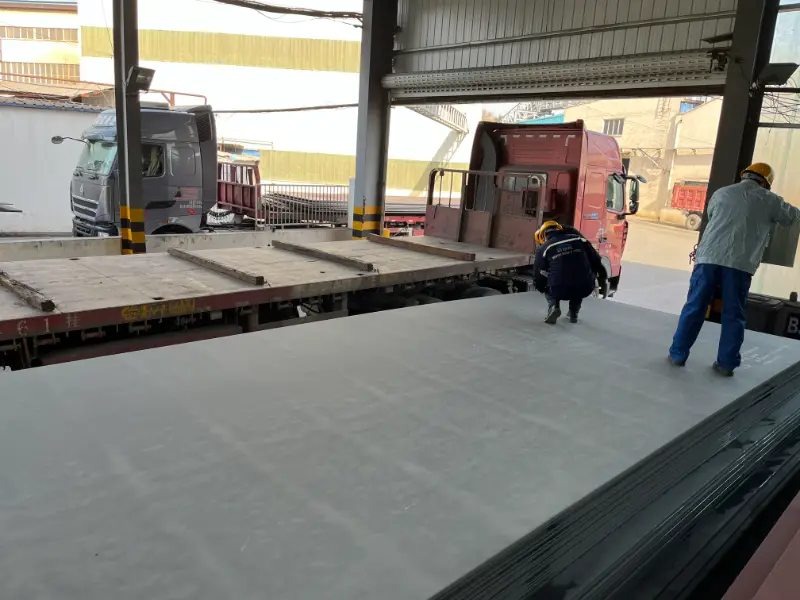
EN10083-3 41CrS4 High Alloy Steel Plate
EN10083-3 41CrS4 High Alloy Steel Plate - Properties, Equivalents & Application
Comprehensive reference for EN10083-3 41CrS4 (1.7039) alloy steel plate: chemical composition, mechanical and physical properties, international equivalents, and application guide.
Hot rolling, forging, quenching + tempering, soft annealing, cold drawing, machining
- Phone : +8618037372205
- Email : [email protected]
- WhatsApp: Contact via Whtsapp
- WeChat: +8618037372205
EN10083-3 41CrS4 High Alloy Steel Plate Introduction
41CrS4 is a quenched and tempered alloy steel defined in EN 10083-3:2006, known for its high strength, good hardenability, and improved machinability due to controlled sulfur addition. It belongs to the group of special alloy steels for quenching and tempering. With a chromium content of approx. 1% and a sulfur range of 0.020–0.040%, it offers an excellent balance of toughness, fatigue resistance, and machinability. Typical delivery condition is +QT (quenched and tempered), but it can also be supplied in soft annealed or untreated state. The grade is widely used in automotive and mechanical engineering for medium- to high-stressed components such as shafts, gears, and bolts.
EN10083-3 41CrS4 High Alloy Steel Plate Chemical Composition
As specified in EN 10083-3:2006, Table 3. The sulfur content is deliberately elevated to enhance machinability, while phosphorus is limited to ensure ductility. No other alloying elements (e.g., Mo, Ni) are required; only the listed elements are standardized.
| Element | Standard Value (%) | Remarks |
|---|---|---|
| Carbon (C) | 0.38 – 0.45 | Key for hardenability and strength |
| Silicon (Si) | ≤ 0.40 | Deoxidizer, moderate influence |
| Manganese (Mn) | 0.60 – 0.90 | Contributes to hardenability |
| Phosphorus (P) | ≤ 0.025 | Residual element, kept low for toughness |
| Sulfur (S) | 0.020 – 0.040 | Controlled range for improved machinability |
| Chromium (Cr) | 0.90 – 1.20 | Provides hardenability and wear resistance |
EN10083-3 41CrS4 High Alloy Steel Plate Thermal and Electrical Physical Properties
The following data are general typical approximate values for medium-carbon alloy steels and are not part of EN 10083-3. They serve as a guide for design and process engineering. Actual values may vary with heat treatment and microstructure.
| Property | Typical Value | Unit | Testing Condition / Temperature |
|---|---|---|---|
| Density (ρ) | 7.85 | g/cm³ | 20 °C |
| Elastic Modulus (E) | 210 | GPa | 20 °C |
| Shear Modulus (G) | 80 | GPa | 20 °C (estimated from E and ν) |
| Poisson's Ratio (ν) | 0.3 | – | 20 °C |
| Thermal Expansion Coefficient (α) | 11.5 | 10⁻⁶/K | 20 – 100 °C |
| Thermal Expansion Coefficient (α) | 12.0 | 10⁻⁶/K | 20 – 200 °C |
| Thermal Expansion Coefficient (α) | 12.5 | 10⁻⁶/K | 20 – 300 °C |
| Thermal Conductivity (λ) | 42 | W/(m·K) | 20 °C |
| Specific Heat Capacity (c_p) | 460 | J/(kg·K) | 20 – 100 °C |
| Electrical Resistivity (ρ_e) | 0.20 × 10⁻⁶ | Ω·m | 20 °C |
EN10083-3 41CrS4 High Alloy Steel Plate Mechanical Properties
Minimum values according to EN 10083-3:2006, Table 9 for different ruling sections (diameter or thickness, d). Properties are valid after quenching from 830–860 °C in oil or water and tempering at 540–680 °C. Impact energy is not a mandatory requirement but may be agreed upon ordering.
| Property | Standard Requirement | Unit | Testing Condition |
|---|---|---|---|
| Yield Strength (ReH) | 750 | MPa | d ≤ 16 mm |
| Yield Strength (ReH) | 660 | MPa | 16 < d ≤ 40 mm |
| Yield Strength (ReH) | 560 | MPa | 40 < d ≤ 100 mm |
| Yield Strength (ReH) | 460 | MPa | 100 < d ≤ 160 mm |
| Tensile Strength (Rm) | 1000 – 1200 | MPa | d ≤ 16 mm |
| Tensile Strength (Rm) | 900 – 1100 | MPa | 16 < d ≤ 40 mm |
| Tensile Strength (Rm) | 800 – 950 | MPa | 40 < d ≤ 100 mm |
| Tensile Strength (Rm) | 750 – 900 | MPa | 100 < d ≤ 160 mm |
| Tensile Strength (Rm) | 650 – 800 | MPa | 160 < d ≤ 250 mm |
| Elongation (A) | 9 | % | d ≤ 16 mm |
| Elongation (A) | 10 | % | 16 < d ≤ 40 mm |
| Elongation (A) | 12 | % | 40 < d ≤ 100 mm |
| Elongation (A) | 13 | % | 100 < d ≤ 160 mm |
| Elongation (A) | 14 | % | 160 < d ≤ 250 mm |
| Reduction of Area (Z) | 40 | % | d ≤ 16 mm |
| Reduction of Area (Z) | 45 | % | 16 < d ≤ 40 mm |
| Reduction of Area (Z) | 50 | % | 40 < d ≤ 100 mm |
| Reduction of Area (Z) | 55 | % | 100 < d ≤ 160 mm |
EN10083-3 41CrS4 High Alloy Steel Plate Exact Equivalent Material Standards and Substitutable Grades
| Country / Region | Standard | Grade | Remarks |
|---|---|---|---|
| Europe | EN 10083-3 | 41CrS4 (1.7039) | Original standard, current |
| International | ISO 683-2 | 41CrS4 | Chemically and mechanically equivalent |
| Germany (DIN) | DIN EN 10083-3 | 41CrS4 | Adopted European standard; formerly DIN 17200 41CrS4 |
| Italy (UNI) | UNI EN 10083-3 | 41CrS4 | Direct implementation of EN |
| France (AFNOR) | NF EN 10083-3 | 41CrS4 | Direct implementation of EN |
| United Kingdom | BS EN 10083-3 | 41CrS4 | Direct implementation of EN |
| Spain (UNE) | UNE EN 10083-3 | 41CrS4 | Direct implementation of EN |
EN10083-3 41CrS4 High Alloy Steel Plate Application Introduction
41CrS4 is designed for parts that require high strength and good machinability. Its controlled sulfur content allows faster cutting speeds and better surface finish without severe loss of toughness when properly heat treated. Typical applications are found in automotive, agricultural machinery, hydraulic, and general mechanical engineering industries.
Product Applications: Drive shafts and axles, Gear wheels and pinions, Connecting rods and crankshafts, High-strength bolts, studs, and nuts, Hydraulic cylinder rods and pistons, Spindles and machine tool components
Processed into products: Automotive transmission gears, Tractor half-axle shafts, Press-fit bushings and sleeves, Threaded fasteners class 10.9/12.9, Steering knuckle arms, Industrial camshafts, Pump shafts, Forged levers and linkages
Application industries: Automotive and transportation, Agricultural and construction machinery, Hydraulic and pneumatic systems, General mechanical engineering, Power transmission, Tooling and fixture manufacturing
EN10083-3 41CrS4 High Alloy Steel Plate Similar / Closely Comparable Material Alternatives
| Country / Region | Standard | Grade | Remarks |
|---|---|---|---|
| Europe | EN 10083-3 | 41Cr4 (1.7035) | Identical base composition but without elevated sulfur (S ≤ 0.035%); lower machinability |
| USA | ASTM A322 / A29 | 5140 | Similar Cr-Mn steel, but typically S content max 0.040% and tighter limits; not intentionally resulfurized |
| China | GB/T 3077 | 40Cr | Close composition except S ≤ 0.035%; widely used for similar applications |
| Japan | JIS G4104 | SCr440 | Chromium-manganese steel with comparable hardenability; S not controlled like 41CrS4 |
| Russia | GOST 4543 | 40Ch (40Х) | Equivalent to 40Cr; lower sulfur, different inclusion control |
Notes:
- Heat treatment: Austenitizing at 830–860 °C followed by oil or water quenching; tempering temperature chosen to achieve desired strength (typically 540–680 °C). The steel is susceptible to temper embrittlement if slowly cooled through 350–550 °C; rapid cooling after tempering is recommended.
- Weldability: limited due to high hardenability; preheating to 200–300 °C and post-weld heat treatment are advised.
- Surface hardening: Suitable for induction or flame hardening; case depth depends on prior microstructure.
- Machining: excellent in +QT condition thanks to uniformly distributed sulfides; recommended chip breaking tool geometry.
- Share



