
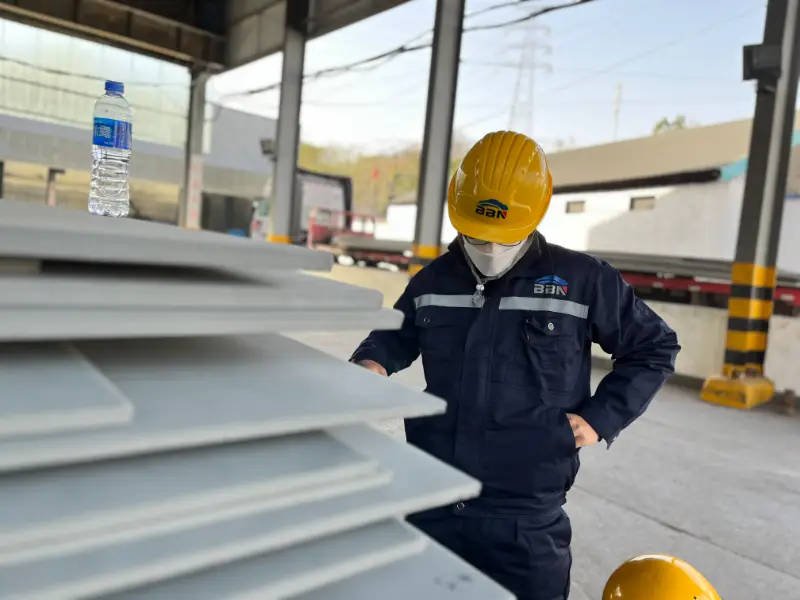
ASTM A709 Grade 100 (A709GR100) High-Strength Structural Steel Plate
ASTM A709 Grade 100 (A709GR100) High-Strength Structural Steel Plate for Bridge Construction
Complete material data for ASTM A709 Grade 100 (A709GR100) including chemical composition, mechanical properties, thermal properties, international equivalents, and application guidelines.
Suitable for flame cutting, welding (low-hydrogen procedures), bending, and machining; not intended for further hot forming after delivery unless re-heat treatment is performed.
- Phone : +8618037372205
- Email : [email protected]
- WhatsApp: Contact via Whtsapp
- WeChat: +8618037372205
ASTM A709 Grade 100 High-Strength Structural Steel Plate Introduction
ASTM A709 Grade 100 (A709GR100) is a high-strength, low-alloy structural steel plate produced by quenching and tempering, intended primarily for welded bridges and buildings. It offers a minimum yield strength of 690 MPa (100 ksi), enabling lightweight design without sacrificing load-carrying capacity. The steel combines excellent notch toughness with good weldability, provided proper preheating and low-hydrogen practices are followed. It is available in several thicknesses and can be ordered with supplementary toughness requirements (Zones 1, 2, or 3) for low-temperature service. Typical applications include main girders, flanges, and highly stressed connection plates in long-span and movable bridges, as well as heavy-duty structural members in building construction and offshore platforms.
ASTM A709 Grade 100 High-Strength Structural Steel Plate Chemical Composition per ASTM A709 Grade 100
The chemical composition of ASTM A709 Grade 100 is designed to provide a good balance of strength, toughness, and weldability. The table reflects the maximum allowable limits per ASTM A709/A709M for thicknesses up to 50 mm (2 in.). Elements not listed may be present but are not specified. The steel is fully killed and fine-grained. Supplementary requirements may impose tighter controls on certain elements.
| Element | Standard Value (max, %) | Remarks |
|---|---|---|
| Carbon (C) | 0.20 | For thickness ≤ 50 mm |
| Manganese (Mn) | 0.60 – 1.50 | Depending on thickness and product analysis |
| Phosphorus (P) | 0.025 | Max, heat analysis |
| Sulfur (S) | 0.025 | Max, heat analysis |
| Silicon (Si) | 0.15 – 0.50 | Standard range for killed steel |
| Copper (Cu) | 0.20 – 0.40 | Required when specified for weathering; otherwise max 0.40 |
| Nickel (Ni) | 0.25 | Max, unless agreed |
| Chromium (Cr) | 0.25 | Max, unless agreed |
| Molybdenum (Mo) | 0.08 | Max, unless agreed |
| Vanadium (V) | 0.06 | Max, unless agreed |
| Titanium (Ti) | 0.03 | Max, unless agreed |
| Aluminum (Al) | ≥ 0.02 total | Typically used for grain refinement |
| Nitrogen (N) | 0.015 | Max, unless agreed |
ASTM A709 Grade 100 High-Strength Structural Steel Plate Thermal and Electrical Physical Properties
The following physical properties are typical for quenched and tempered high-strength low-alloy steel in the density range of 7.85 g/cm³. They are indicative and may vary slightly with exact composition and heat treatment. The values are useful for structural analysis, thermal management, and electrical design. Data are derived from general sources for HSLA steels of similar grade.
| Property | Typical Value | Unit | Test Condition |
|---|---|---|---|
| Density (ρ) | 7.85 | g/cm³ | 20 °C |
| Elastic Modulus (E) | 205 | GPa | Room temperature |
| Shear Modulus (G) | 80 | GPa | Calculated from E and ν |
| Poisson's Ratio (ν) | 0.30 | — | Elastic range |
| Thermal Expansion Coefficient (α) | 12.5 | 10⁻⁶/°C | 20 – 100 °C |
| Thermal Conductivity (λ) | 45 | W/m·K | 20 °C |
| Specific Heat Capacity | 475 | J/kg·K | 20 °C |
| Electrical Resistivity (ρ_e) | 0.18 – 0.22 | µΩ·m | Room temperature |
ASTM A709 Grade 100 High-Strength Structural Steel Plate Mechanical Properties per ASTM A709 Grade 100
The mechanical properties of ASTM A709 Grade 100 are verified on standard test specimens taken from the heat-treated plate. Yield and tensile strengths are determined at room temperature. Elongation varies with plate thickness and specimen gauge length. Impact toughness (Charpy V-notch) may be specified for the intended bridge zone (1, 2, or 3) at the purchaser's option. The table lists the minimum property requirements as per ASTM A709.
| Property | Minimum Required Value | Unit | Test Condition / Remarks |
|---|---|---|---|
| Yield Strength (ReH) | 690 | MPa | 0.2% offset, transverse direction, thickness ≤ 50 mm |
| Yield Strength (ReH) | 100 | ksi | 0.2% offset, transverse direction |
| Tensile Strength (Rm) | 760 – 895 | MPa | Transverse direction |
| Tensile Strength (Rm) | 110 – 130 | ksi | Transverse direction |
| Elongation in 200 mm (8 in.) | 15 | % | For thickness ≤ 20 mm (¾ in.) |
| Elongation in 50 mm (2 in.) | 18 | % | For thickness ≤ 20 mm (¾ in.) |
| Elongation in 200 mm (8 in.) | 15 | % | For thickness 20–40 mm (¾–1½ in.) |
| Elongation in 50 mm (2 in.) | 17 | % | For thickness 20–40 mm (¾–1½ in.) |
| Charpy V-notch Impact Energy (Zone 1) | 41 @ 21 °C | J | Longitudinal, average of 3 specimens, min single 30 J |
| Charpy V-notch Impact Energy (Zone 2) | 41 @ 4 °C | J | Longitudinal, average of 3 specimens, min single 30 J |
| Charpy V-notch Impact Energy (Zone 3) | 34 @ -18 °C | J | Longitudinal, average of 3 specimens, min single 27 J |
ASTM A709 Grade 100 High-Strength Structural Steel Plate Fully Equivalent Material Standards and Replaceable Grade Recommendations
| Country / Region | Standard | Grade | Remarks |
|---|---|---|---|
| Europe | EN 10025-6 | S690Q / S690QL / S690QL1 | Quenched and tempered structural steel; composition and mechanical properties match closely. Verify Charpy temperature requirements. |
| Japan | JIS G 3128 | SHY685 | High yield strength steel for welded structures; similar strength level, but chemistry may differ in micro-alloying. |
| China | GB/T 1591 | Q690D / Q690E | High-strength structural steel; Q690 series provides comparable yield and tensile strengths. Need to confirm low-temperature toughness. |
| International | ISO 4950-2 | E690 | High yield strength flat products; chemistry and mechanical requirements are harmonized. |
ASTM A709 Grade 100 High-Strength Structural Steel Plate Application Introduction
ASTM A709 Grade 100 is engineered for structural applications where high strength, toughness, and weldability are essential. Its 690 MPa minimum yield strength allows substantial weight reduction in large-scale welded fabrications, improving economic and environmental performance. The steel can be processed by plasma cutting, drilling, and controlled welding. Post-weld heat treatment (PWHT) is generally not required for thicknesses up to 50 mm if the procedure is qualified, though stress relief may be applied. The material is particularly suited for major bridge components, heavy-building columns, and offshore structures requiring notch toughness at low temperature.
Product Applications: Main box girders and truss members for long-span bridges, Orthotropic steel decks and stiffeners, Welded built-up columns and heavy beams, Lattice boom sections for mobile cranes, Platform support legs for jack-up rigs, High-capacity storage tank shells and roofs
Processed into products: Flanges and webs of bridge plate girders, Splice plates and gusset plates in bolted connections, End posts and bearing stiffeners, Mining shovel booms and dipper handles, Jack-up leg chords and pinion plates, High-strength anchor boxes for cable-stayed bridges
Application industries: Bridge construction and rehabilitation, Commercial and high-rise building frames, Offshore platforms and marine structures, Heavy equipment and crane manufacturing, Pressure vessel and storage tank supports, Mining and infrastructure projects
ASTM A709 Grade 100 High-Strength Structural Steel Plate Similar or Alternate Materials with Close Performance
| Country / Region | Standard | Grade | Remarks |
|---|---|---|---|
| USA | ASTM A514 / A517 | Grade E | Quenched and tempered alloy steel, 690 MPa yield; A514 for structural, A517 for pressure vessels. Composition and properties are very similar. Suitable for many bridge applications with purchaser approval. |
| USA | ASTM A572 | Grade 65 | Lower strength (450 MPa yield) but same family of HSLA structural steel. Not a direct substitute but acceptable if strength requirements permit. |
| Europe | EN 10025-6 | S690QH / S690QH1 | High-strength grades for hot-dip galvanizing or other specific requirements. Close to A709 Gr.100 but slightly different chemistry for surface treatments. |
Notes:
Supplementary Requirements: ASTM A709 Grade 100 can be ordered with additional Charpy V-notch impact testing for specific bridge temperature zones (Z1, Z2, Z3), ultrasonic inspection per ASTM A435 or A577, or with controlled chemical composition for improved weldability (CEV ≤ 0.52 typically).Welding: Use low-hydrogen filler metals matching the base metal strength. Preheat and interpass temperatures should be in the range 150–200 °C depending on thickness and atmospheric conditions.Availability: Plates up to 50 mm thick are standard; greater thicknesses may require special mill practices and are subject to agreement between purchaser and supplier.
- Share



