
ASTM A662 Grade C
ASTM A662 Grade C: Carbon-Manganese-Silicon Steel Plate for Welded Pressure Vessels and Boilers
Comprehensive material data for ASTM A662 Grade C steel plate used in welded pressure vessels and boilers, including chemical composition, mechanical and physical properties, international equivalents, and application guidance.
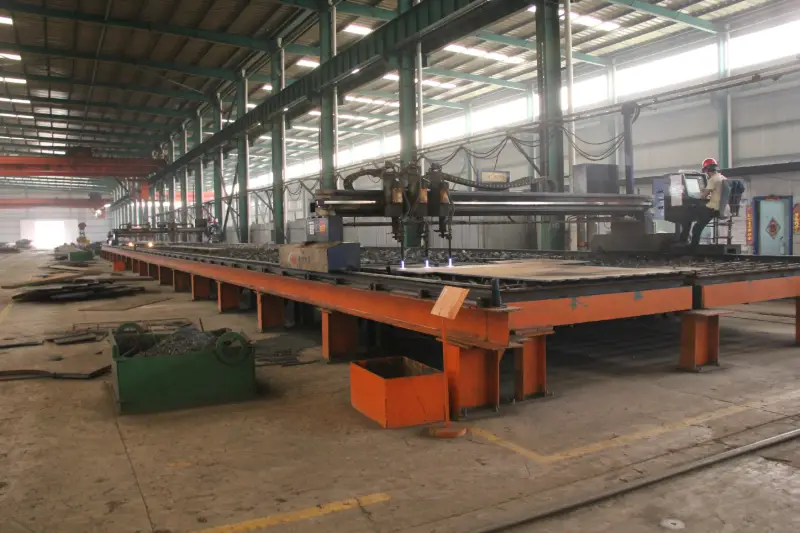
Hot rolling, normalizing, or stress relieving (as agreed)
- Phone : +8618037372205
- Email : [email protected]
- WhatsApp: Contact via Whtsapp
- WeChat: +8618037372205
ASTM A662 Grade C Introduction
ASTM A662 Grade C (A662GR C) is a carbon-manganese-silicon steel plate specifically designed for welded pressure vessels and boilers at moderate and lower temperatures. It offers a balanced combination of strength and notch toughness, making it suitable for storage tanks, reactors, and heat exchangers in the oil, gas, and chemical industries. The steel is typically supplied in the normalized or as-rolled condition and can withstand demanding service conditions. Key features include:
- Good weldability due to controlled carbon and alloy content
- Excellent toughness at low temperatures when specified with supplementary impact requirements
- Uniform mechanical properties across plate thickness
- Compliance with ASME Boiler and Pressure Vessel Code (when appropriately certified)
ASTM A662 Grade C Chemical Composition
The chemical composition of ASTM A662 Grade C is tightly controlled to ensure good weldability and mechanical properties. Carbon is limited to maintain toughness, while manganese and silicon are added for strength and deoxidation. Phosphorus and sulfur are kept low to avoid embrittlement.
| Element | Specification (wt%) | Remarks |
|---|---|---|
| Carbon (C) | ≤0.20 | |
| Manganese (Mn) | 1.00 – 1.60 | |
| Phosphorus (P) | ≤0.035 | |
| Sulfur (S) | ≤0.035 | |
| Silicon (Si) | 0.15 – 0.50 |
ASTM A662 Grade C Thermal and Electrical Physical Properties
The following values are typical for carbon-manganese steel and are provided for engineering guidance. They are not part of the ASTM A662 specification and may vary slightly depending on exact composition and heat treatment.
| Property | Typical Value | Unit | Conditions/Notes |
|---|---|---|---|
| Density (ρ) | 7.85 | g/cm³ | At 20 °C |
| Elastic Modulus (E) | 200 | GPa | At room temperature |
| Shear Modulus (G) | 79.3 | GPa | At room temperature |
| Poisson's Ratio (ν) | 0.3 | – | Elastic range |
| Thermal Expansion (α) | 11.7 | 10⁻⁶/K | Mean value between 20 °C and 100 °C |
| Thermal Conductivity (λ) | 52 | W/(m·K) | At 100 °C |
| Specific Heat Capacity | 460 | J/(kg·K) | At room temperature |
| Electrical Resistivity (ρ_e) | 0.15 | µΩ·m | At 20 °C |
ASTM A662 Grade C Mechanical Properties
Mechanical properties are determined using test specimens taken from plates in the delivery condition. Values vary with plate thickness. The standard specifies minimum yield strength, tensile strength, elongation, and bend test requirements. Impact toughness may be ordered as a supplementary requirement.
| Property | Specified Value | Unit | Test Condition |
|---|---|---|---|
| Yield Strength (ReH) | ≥275 (40) | MPa (ksi) | At room temperature; valid for thickness ≤ 50 mm |
| Tensile Strength (Rm) | 480 – 620 (70 – 90) | MPa (ksi) | At room temperature |
| Elongation (A) in 200 mm (8 in.) | ≥22 | % | Gauge length 200 mm; applicable for thickness > 19 mm |
| Elongation (A) in 50 mm (2 in.) | ≥25 | % | Gauge length 50 mm; applicable for thickness ≤ 19 mm |
| Bend Test | Bend angle 180°; inner diameter = 2 × plate thickness (2t) | – | No cracks on the outside of the bent portion |
ASTM A662 Grade C Fully Equivalent Material Standards and Substitute Grades
| Country/Region | Standard | Grade | Remarks |
|---|---|---|---|
| – | – | No direct equivalent | No standard matches exactly. Similar grades are listed in Similar Materials. |
ASTM A662 Grade C Application Introduction
ASTM A662 Grade C is employed in the fabrication of welded pressure vessels, boilers, and piping components. Its strength and toughness make it suitable for equipment operating at moderate temperatures and pressure. Typical applications include:
- Oil and gas separation and storage tanks
- Chemical reactors and process columns
- Heat exchangers and condensers
- Steam boiler drums and shells
Product Applications: Welded pressure vessels, Industrial boilers, Heat exchangers, Storage tanks and spheres, Autoclaves and reactors
Processed into products: Vessel shells and courses, Dished ends and heads, Tube sheets and flanges, Nozzle reinforcement pads, Support saddles and brackets
Application industries: Oil & Gas (onshore/offshore), Chemical & Petrochemical Processing, Power Generation (including thermal and nuclear auxiliary equipment), Industrial Boiler Manufacturing, Pressure Vessel Fabrication
ASTM A662 Grade C Similar and Comparable Alternative Materials
| Country/Region | Standard | Grade | Remarks |
|---|---|---|---|
| Europe | EN 10028-2 | P355GH | C ≤ 0.20, Mn 1.00–1.70, P,S ≤ 0.025; ReH ≥ 280 MPa, Rm 470–630 MPa; often used for similar pressure vessels. |
| Japan | JIS G3115 | SPV315 | C ≤ 0.20, Mn 0.80–1.50; ReH ≥ 315 MPa, Rm 480–610 MPa; close in tensile strength. |
| China | GB/T 713 | Q345R | C ≤ 0.20, Mn 1.20–1.60; ReH ≥ 285 MPa (thickness dependent), Rm 490–620 MPa; widely used for pressure vessels. |
| International | ASME | SA-516 Grade 70 | C ≤ 0.31, Mn 0.85–1.20; ReH ≥ 260 MPa, higher carbon; notched toughness may differ; used when higher strength not required. |
Notes:
Supplementary requirements may be specified when ordering, such as:
- Charpy V-notch impact tests at various temperatures (e.g., S5)
- Ultrasonic testing per ASTM A435/A435M
- High-temperature tensile tests
- Restrictions on additional residual elements (copper, nickel, chromium, molybdenum)
Delivery condition is commonly normalized for plates over 40 mm, and stress relieved after welding when required by code. Plates can be certified for ASME Boiler and Pressure Vessel Code use by appropriate stamping.
- Share



