
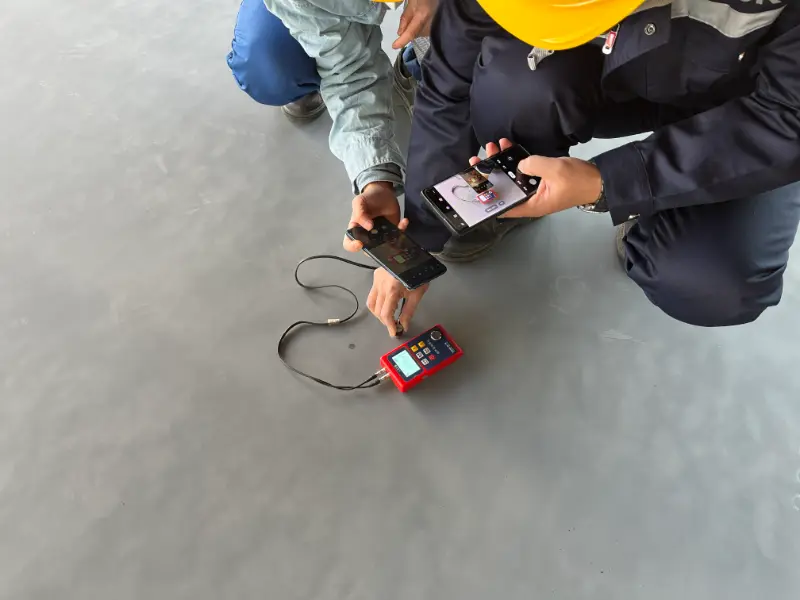
ASTM A572 Grade 65 Steel Plate
ASTM A572 Grade 65 Carbon Steel Plate: High-Strength Low-Alloy Structural Steel for Heavy-Duty Applications
Explore ASTM A572 Grade 65 (A572GR65) carbon steel plate: chemical composition, mechanical properties, thermal characteristics, equivalent materials, and industrial applications for structural and heavy machinery engineering.
Cutting, welding, bending, hot forming, machining and drilling
- Phone : +8618037372205
- Email : [email protected]
- WhatsApp: Contact via Whtsapp
- WeChat: +8618037372205
ASTM A572 Grade 65 Steel Plate Introduction
ASTM A572 Grade 65 is a high-strength low-alloy (HSLA) structural steel plate under the standard ASTM A572/A572M. It offers a minimum yield strength of 65 ksi (450 MPa) for thicknesses up to 40 mm, combined with good weldability and formability. The alloy is strengthened by microalloying elements such as columbium (niobium), vanadium, or titanium, which refine grain structure and enhance mechanical properties without requiring heat treatment. This grade is widely used in welded structures, bridges, buildings, and heavy machinery where higher strength-to-weight ratios are essential. It can be delivered in the as-rolled condition, normalized or thermo-mechanically controlled processed (TMCP) according to agreement. Compared to ordinary carbon steels, A572 Grade 65 enables lighter structural designs without compromising safety, often replacing thick sections of lower-strength grades.
ASTM A572 Grade 65 Steel Plate Chemical Composition
The chemical requirements as per ASTM A572/A572M for Grade 65 plates. Values are maximum unless a range is indicated. Microalloying elements (Nb, V, Ti) are added to achieve mechanical properties; no maximum limits are specified but their content shall be reported. Additional elements like copper may be specified for enhanced atmospheric corrosion resistance.
| Element | Standard Value (max, wt.%) | Remarks |
|---|---|---|
| Carbon (C) | 0.26 (thickness ≤ 40 mm), 0.28 (thickness > 40–100 mm) | Depending on plate thickness |
| Manganese (Mn) | 1.35 (thickness ≤ 40 mm), 1.65 (thickness > 40 mm) | Balanced with carbon for strength and toughness |
| Phosphorus (P) | 0.040 | Maximum for heat analysis |
| Sulfur (S) | 0.050 | Maximum for heat analysis |
| Copper (Cu) | 0.20 minimum when specified | Required only if copper steel is ordered |
| Niobium (Nb) / Vanadium (V) / Titanium (Ti) | Not specified by standard; content shall be reported when added | Microalloying additions for grain refinement and strengthening |
ASTM A572 Grade 65 Steel Plate Thermal and Electrical Physical Properties
Physical property data are typical for low-alloy structural steels and are not specified in ASTM A572. Values are for room temperature unless stated otherwise. These numbers can be used for design calculations and thermal analysis.
| Property | Typical Value | Unit | Test Condition / Temperature |
|---|---|---|---|
| Density (ρ) | 7.85 | g/cm³ | Room temperature |
| Elastic modulus (E) | 205 | GPa (29.7 × 10⁶ psi) | Room temperature |
| Shear modulus (G) | 80 | GPa (11.6 × 10⁶ psi) | Room temperature |
| Poisson's ratio (ν) | 0.30 | – | Room temperature |
| Thermal expansion coefficient (α) | 11.7 | 10⁻⁶ /K | 20–100 °C |
| Thermal expansion coefficient (α) | 12.5 | 10⁻⁶ /K | 20–200 °C |
| Thermal expansion coefficient (α) | 13.7 | 10⁻⁶ /K | 20–400 °C |
| Thermal conductivity (λ) | 52 | W/(m·K) | 20 °C |
| Specific heat capacity | 486 | J/(kg·K) | Room temperature |
| Electrical resistivity (ρ_e) | 0.15 | µΩ·m | 20 °C |
ASTM A572 Grade 65 Steel Plate Mechanical Properties
Tensile and bend test requirements per ASTM A572/A572M for Grade 65. Yield and tensile values depend on plate thickness. Elongation is measured in a 200 mm (8 in.) gage length for plates. Bend test is conducted at 180° with specified mandrel diameter ratios. Impact toughness is not required unless supplementary requirement S5 is invoked.
| Property | Specified Minimum/Maximum Value | Unit | Test Condition / Plate Thickness |
|---|---|---|---|
| Yield Strength (ReH) | 65 | ksi (450 MPa) | ≤ 40 mm (1.5 in.) |
| Yield Strength (ReH) | 60 | ksi (415 MPa) | > 40–100 mm (>1.5–4 in.) |
| Yield Strength (ReH) | 55 | ksi (380 MPa) | > 100–150 mm (>4–6 in.) |
| Tensile Strength (Rm) | 80 | ksi (550 MPa) | ≤ 100 mm (4 in.) |
| Tensile Strength (Rm) | 75 | ksi (515 MPa) | > 100–150 mm (>4–6 in.) |
| Elongation after fracture in 200 mm (8 in.) | 15 | % | ≤ 40 mm (1.5 in.) |
| Elongation after fracture in 200 mm (8 in.) | 14 | % | > 40–100 mm (1.5–4 in.) |
| Elongation after fracture in 200 mm (8 in.) | 14 | % | > 100–150 mm (4–6 in.) |
| Bend test (180°) – mandrel diameter | 2t | – | ≤ 50 mm (2 in.) |
| Bend test (180°) – mandrel diameter | 3t | – | > 50–100 mm (2–4 in.) |
| Bend test (180°) – mandrel diameter | 3.5t | – | > 100–150 mm (4–6 in.) |
ASTM A572 Grade 65 Steel Plate Direct Equivalent Material Standards and Substitute Grades
| Country/Region | Standard | Grade | Remarks |
|---|---|---|---|
| – | – | – | No direct equivalent standard fully matching ASTM A572 Grade 65. The grades below are functionally similar but have differences in chemical and mechanical specifications. |
ASTM A572 Grade 65 Steel Plate Application Introduction
ASTM A572 Grade 65 is engineered for heavy-load structural applications where high strength-to-weight ratio, good weldability, and toughness are critical. It is extensively employed in permanent and mobile structures, heavy machinery, and infrastructure projects. Due to its microalloyed chemistry, it can be fabricated by conventional hot-forming, welding, and machining processes, often without pre- or post-weld heat treatment in moderate thicknesses.
Typical industries and products include:
Product Applications: Bridge beams, girders, and trusses, High-rise building columns and bracing, Crane booms, lattice structures, and mobile equipment frames, Excavator arms and loader components, Offshore platform members and jackets, Storage tanks and silos, Heavy-duty conveyor frameworks
Processed into products: Welded plate girders, Box sections and built-up columns, Base plates and gusset plates, Flange and web plates for cranes, Transition pieces and connection nodes, Pile caps and bearing plates, Heavy-duty mining truck bodies
Application industries: Civil engineering and infrastructure, Building and construction, Heavy machinery and earthmoving, Shipbuilding and offshore structures, Railway and transportation equipment, Pressure vessel and storage tank fabrication, Mining and material handling
ASTM A572 Grade 65 Steel Plate Similar / Alternative Near-Equivalent Materials
The following grades are used internationally as alternatives to ASTM A572 Grade 65. While they offer comparable yield strengths and typical applications, the chemistry, toughness guarantees, and delivery conditions may differ. Engineering judgement and specification review is advised.
| Country/Region | Standard | Grade | Remarks |
|---|---|---|---|
| China | GB/T 1591 | Q460C/D/E | High-strength low-alloy structural steel, nominal yield 460 MPa; impact toughness and fine-grain treatment may differ. |
| Europe | EN 10025-4 | S460M/ML | Thermo-mechanically rolled weldable fine-grain structural steel with minimum yield 460 MPa; comparable to Grade 65 in typical thicknesses. |
| Japan | JIS G 3106 | SM570 | Welding structural steel, yield point ≥ 460 MPa; widely used in bridges and heavy structures; chemical requirements differ. |
| International | ISO 630-2 | S460M | Structural steels – technical delivery conditions for thermomechanical rolled weldable fine-grain structural steel; similar strength class. |
Notes:
Supplementary requirements, such as Charpy impact testing (S5), may be specified in the purchase order to guarantee notch toughness at low temperatures. The material can be supplied with copper addition for improved atmospheric corrosion resistance (Grade 65W), similar to weathering steel. For thicknesses exceeding 150 mm, other specifications (e.g., ASTM A572 Gr 65 modified) may require reduced strength values; consult mill capabilities. All fabrication, welding, and inspection should comply with relevant structural codes (AWS D1.1, AISC, etc.).
- Share



