
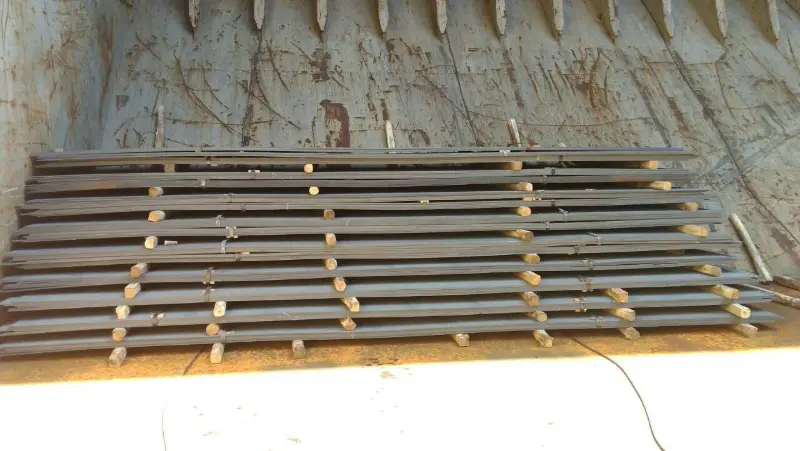
ABS Grade DH40 Shipbuilding Steel Plate
ABS Grade DH40 Shipbuilding Steel Plate: Detailed Composition, Mechanical & Thermal Properties, and Global Equivalents
Complete technical data for ABS Grade DH40 high-strength hull structural steel plate according to ABS Rules: chemical composition, mechanical properties, thermal and electrical physical properties, international equivalent standards, and substitution suggestions.
Hot rolling, normalizing, thermo-mechanical control process (TMCP), cutting, welding, cold forming, bending, machining
- Phone : +8618037372205
- Email : [email protected]
- WhatsApp: Contact via Whtsapp
- WeChat: +8618037372205
ABS Grade DH40 Shipbuilding Steel Plate Introduction
ABS Grade DH40 is a high-strength, normalized or thermo-mechanically control-processed (TMCP) shipbuilding steel plate conforming to the American Bureau of Shipping (ABS) Rules for Materials and Welding. It belongs to the DH40 category of extra-high-strength hull structural steels, with a minimum yield strength of 390 MPa and a tensile strength range of 510–660 MPa. The 'D' designation indicates notch toughness testing at -20°C, while 'H' denotes higher strength than normal-strength grades. This steel offers excellent weldability, good cold-forming properties, and high resistance to brittle fracture, making it ideal for critical hull components in ships and offshore structures. Its fine-grained microstructure, achieved through controlled processing, ensures consistent mechanical performance across a wide range of plate thicknesses up to 100 mm. DH40 steel is globally recognized under multiple classification societies and national standards, ensuring seamless substitution in international projects.
ABS Grade DH40 Shipbuilding Steel Plate Chemical Composition – Weight %
The chemical composition of ABS DH40 steel is controlled to achieve fine-grained structure and high strength with good weldability. Carbon equivalent (CEV) is limited to
- CEV ≤ 0.43% for thickness t ≤ 50 mm
- CEV ≤ 0.45% for thickness 50 < t ≤ 100 mm
using formula CEV = C + Mn/6 + (Cr+Mo+V)/5 + (Ni+Cu)/15. Microalloying elements such as Nb, V, and Ti are added for grain refinement and precipitation strengthening. Aluminium is required as a grain-refining element.
| Element | Standard Value (min–max) | Remarks |
|---|---|---|
| Carbon (C) | ≤ 0.18 | |
| Manganese (Mn) | 0.90 – 1.60 | |
| Silicon (Si) | ≤ 0.50 | |
| Phosphorus (P) | ≤ 0.025 | |
| Sulfur (S) | ≤ 0.025 | |
| Aluminium (Al) acid soluble | ≥ 0.015 | Al content required when used as grain refiner |
| Niobium (Nb) | 0.02 – 0.05 | |
| Vanadium (V) | 0.05 – 0.10 | |
| Titanium (Ti) | ≤ 0.02 | |
| Copper (Cu) | ≤ 0.35 | |
| Chromium (Cr) | ≤ 0.20 | |
| Nickel (Ni) | ≤ 0.40 | |
| Molybdenum (Mo) | ≤ 0.08 | |
| Nitrogen (N) | ≤ 0.009 | Only if not bound by Al or Ti |
ABS Grade DH40 Shipbuilding Steel Plate Thermal and Electrical Physical Properties
The physical properties listed are typical for normalized or TMCP high-strength low-alloy steel of this grade. These values are not mandatory in the standard but serve as engineering reference for design calculations. They are measured at room temperature unless otherwise noted. The thermal expansion coefficient increases with temperature, while thermal conductivity slightly decreases.
| Property | Typical Value | Unit | Test Conditions / Temperature |
|---|---|---|---|
| Density (ρ) | 7850 | kg/m³ | at 20°C |
| Elastic Modulus (E) | 205 | GPa | at 20°C |
| Shear Modulus (G) | 79.3 | GPa | at 20°C (calculated from E and ν) |
| Poisson's Ratio (ν) | 0.30 | — | at 20°C |
| Thermal Expansion Coefficient (α) | 11.7 × 10⁻⁶ | 1/K | 20–100°C |
| Thermal Expansion Coefficient (α) | 12.8 × 10⁻⁶ | 1/K | 20–200°C |
| Thermal Expansion Coefficient (α) | 13.3 × 10⁻⁶ | 1/K | 20–300°C |
| Thermal Conductivity (λ) | 52 | W/(m·K) | at 20°C |
| Thermal Conductivity (λ) | 51 | W/(m·K) | at 100°C |
| Thermal Conductivity (λ) | 49 | W/(m·K) | at 200°C |
| Specific Heat Capacity (cp) | 460 | J/(kg·K) | at 20°C |
| Specific Heat Capacity (cp) | 480 | J/(kg·K) | at 100°C |
| Electrical Resistivity (ρe) | 0.13 × 10⁻⁶ | Ω·m | at 20°C |
ABS Grade DH40 Shipbuilding Steel Plate Mechanical Properties
Mechanical properties are tested on specimens taken transverse to the rolling direction unless otherwise agreed. Charpy V-notch impact tests are performed at -20°C on longitudinal specimens (KV2). The bend test is a 180° cold bend over a former diameter dependent on plate thickness. Values below are the minimum specified by ABS Rules.
- Tensile test specimen gauge length: L0 = 5.65√S0
- Yield strength is the upper yield point or 0.2% proof stress
- Impact energy values apply to three specimens; average must meet or exceed the given value, with only one individual value possibly below, but not less than 70% of the average.
| Property | Required Value | Unit | Test Conditions |
|---|---|---|---|
| Yield Strength (ReH) | ≥ 390 | MPa | Applicable for all thicknesses up to 100 mm |
| Tensile Strength (Rm) | 510 – 660 | MPa | Thickness ≤ 100 mm |
| Elongation A (L0=5.65√S0) | ≥ 22 | % | Thickness t ≤ 50 mm |
| Elongation A (L0=5.65√S0) | ≥ 22 | % | 50 < t ≤ 70 mm |
| Elongation A (L0=5.65√S0) | ≥ 20 | % | 70 < t ≤ 100 mm |
| Charpy Impact Energy (KV2, longitudinal) | ≥ 34 | J | at -20°C, t ≤ 50 mm |
| Charpy Impact Energy (KV2, longitudinal) | ≥ 41 | J | at -20°C, 50 < t ≤ 70 mm |
| Charpy Impact Energy (KV2, longitudinal) | ≥ 50 | J | at -20°C, 70 < t ≤ 100 mm |
| Cold Bend (180°) | No crack | — | Bend diameter = 3 × thickness for t ≤ 25 mm; larger diameters may apply for thicker plates per ABS rules |
ABS Grade DH40 Shipbuilding Steel Plate Internationally Equivalent Standards and Designations for DH40 Steel
| Country/ Region | Standard / Specification | Grade / Designation | Remarks |
|---|---|---|---|
| International | IACS UR W11 | DH40 | Identical properties; issued by all IACS members |
| USA | ASTM A131 / A131M | DH40 | Same grade designation, identical requirements |
| China | GB 712 | DH40 | Chinese ship steel standard, fully equivalent |
| Europe | EN 10025-4 | S390M / S390ML | Minimum yield 390 MPa; ML option with low temperature toughness; tensile range slightly wider |
| Europe (Offshore) | EN 10225 | S390G1+M | Fixed offshore structures steel; G+M indicates TMCP with minimum YS 390 MPa; impact at -20°C available |
| DNV GL | DNV Rules | DH40 | Classification society material grade; fully interchangeable |
| Lloyd's Register | LR Rules | DH40 | Classification society material grade; fully interchangeable |
| Bureau Veritas | BV Rules | DH40 | Classification society material grade; fully interchangeable |
| ClassNK | NK Rules | DH40 | Classification society material grade; fully interchangeable |
| Korean Register | KR Rules | DH40 | Classification society material grade; fully interchangeable |
| RINA | RINA Rules | DH40 | Classification society material grade; fully interchangeable |
ABS Grade DH40 Shipbuilding Steel Plate Application Introduction
ABS DH40 steel is engineered for demanding structural applications in shipbuilding and offshore engineering where high strength, excellent low-temperature toughness, and good weldability are essential. Its -20°C impact guarantee makes it suitable for hulls operating in temperate regions and occasionally in sub-freezing waters. Typical uses span:
Product Applications: Hull plates (bottom shell, side shell, deck plating), Longitudinal and transverse stiffeners (bulb flats, angles), Internal structural members (web frames, floors, girders), Offshore platform legs and braces, Deckhouses and superstructure elements
Processed into products: Flanged plates (by bending) for frames and brackets, Built-up sections (welded T-bars, girders), Curved shell plates for hull fore and aft sections, Cut-out parts (by flame or plasma cutting) for complex node joints, Machined pads, reinforcement collars, and base plates for equipment mounting
Application industries: Shipbuilding (commercial and naval vessels), Offshore Oil & Gas platforms (jackets, topsides, flare booms), Marine construction (harbour cranes, container handling equipment), Renewable energy (wind turbine foundations, substructures), Heavy civil engineering (bridges, lock gates)
ABS Grade DH40 Shipbuilding Steel Plate Related High-Strength Shipbuilding Steels – Performance Comparison
| Country/Region | Standard | Grade | Remarks |
|---|---|---|---|
| International | ABS / IACS | AH40 | Same tensile and yield properties but impact tested at 0°C; suitable for less severe temperature applications. |
| International | ABS / IACS | EH40 | Same mechanical properties but impact tested at -40°C; for lower service temperatures. |
| International | ABS / IACS | FH40 | Same mechanical properties but impact tested at -60°C; maximum low-temperature toughness. |
| International | ABS / IACS | DH36 | Lower yield strength (355 MPa min) and tensile (490–620 MPa); widely used when DH40 strength is not required. |
| Europe | EN 10025-4 | S420M / S420ML | Higher yield strength (420 MPa min); may be direct upgrade where weight reduction is targeted, but toughness and weldability must be verified. |
| Europe | EN 10025-4 | S355M / S355ML | Lower yield (355 MPa); a downgrade option if design allows, but DH40 preferred for high-stress areas. |
| Japan | JIS G3106 | SM490YB | Yield 365 MPa, tensile 490–610 MPa; not fully equivalent, but sometimes used as substitute after careful assessment of strength and toughness. |
Notes:
Welding recommendations: Preheating is recommended for plate thicknesses over 30 mm, typically at 100–150°C, to avoid cold cracking. Low-hydrogen welding consumables should be used. Post-weld heat treatment is generally not required. CEV control: The limited carbon equivalent ensures good weldability without excessive hardening in the heat-affected zone. Surface condition: DH40 plates are often supplied with blast cleaning and shop primer to resist corrosion during fabrication. For sour service or HIC-resistant applications, special chemistry modifications (lower S, controlled inclusion shape) can be negotiated with the manufacturer. Thickness tolerance: Plates are produced to Class B tolerances per ABS or as agreed. Ultrasonic testing: UT to ASTM A578 or EN 10160 Level C is commonly required for critical hull members and can be specified in the purchase order.
- Share



