
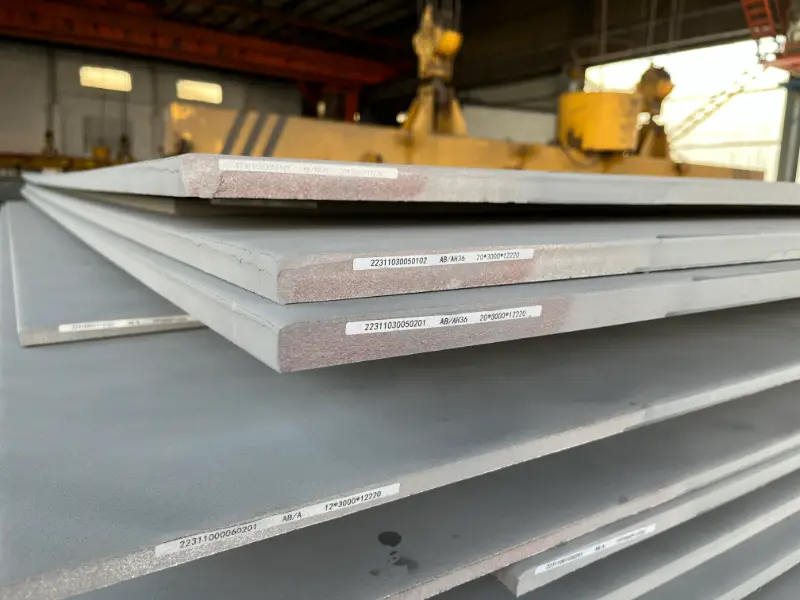
X20Cr13 EN10088
X20Cr13 EN10088-1 Martensitic Stainless Steel Plate/Coil Properties & Equivalents
X20Cr13 (1.4021) is an EN 10088-1 martensitic stainless steel offering hardenability, high strength, and moderate corrosion resistance, widely used in cutlery, medical devices, and wear parts.
Hot rolling, cold rolling, annealing, quenching and tempering, machining, welding (requires preheat and post-weld heat treatment), forming.
- Phone : +8618037372205
- Email : [email protected]
- WhatsApp: Contact via Whtsapp
- WeChat: +8618037372205
X20Cr13 EN10088 Introduction
X20Cr13 (1.4021) is a martensitic chromium stainless steel defined by EN 10088-1, typically supplied as plate or coil. With 0.16–0.25% carbon and 12–14% chromium, it can be hardened by heat treatment to achieve high strength and hardness while retaining fair corrosion resistance in mildly aggressive media. The material exhibits good toughness after tempering and is readily machinable in the annealed condition.
- Key attributes: Heat treatable for high hardness, good wear resistance, moderate corrosion resistance, suitable for both cold and hot working.
- Typical uses: Cutlery blades, surgical instruments, valve seats, pump shafts, bearings, and turbine blades.
- Delivery conditions: Annealed (+A) for easy forming or machining; quenched and tempered (+QT) for final strength and hardness; sometimes cold-rolled with specific surface finishes.
The steel is also known as 1.4021 in Germany and is internationally comparable to AISI 420 (UNS S42000) and JIS SUS420J1.
X20Cr13 EN10088 Chemical Composition
The chemical composition of X20Cr13 conforms to EN 10088-1:2014 for grade 1.4021. Chromium provides the necessary corrosion resistance, while carbon content dictates the hardenability and maximum attainable hardness. Sulphur and phosphorus are kept low to maintain toughness and formability. The composition is carefully balanced to ensure a fully martensitic microstructure after heat treatment.
| Element | Content (%) | Remarks |
|---|---|---|
| Carbon (C) | 0.16 – 0.25 | Key element for hardenability |
| Silicon (Si) | ≤ 1.00 | Deoxidizer, minor strength contribution |
| Manganese (Mn) | ≤ 1.50 | Improves hot workability, ties up sulphur |
| Phosphorus (P) | ≤ 0.040 | Limited to preserve ductility |
| Sulphur (S) | ≤ 0.030 | Restricted for toughness; lower values for enhanced formability |
| Chromium (Cr) | 12.0 – 14.0 | Provides corrosion resistance and hardenability |
X20Cr13 EN10088 Thermal and Electrical Physical Properties
The physical data below represent typical values for martensitic stainless steel X20Cr13 at room temperature and elevated temperatures. These values are suitable for engineering calculations and design. Actual properties can vary slightly with heat treatment condition and product form. Data are compiled from standard references and EN 10088-1 informative annexes.
| Property | Value | Unit | Test Condition |
|---|---|---|---|
| Density (ρ) | 7.7 | g/cm³ | At 20 °C |
| Modulus of Elasticity (E) | 200 | GPa | At 20 °C |
| Shear Modulus (G) | 78 | GPa | Calculated from E and ν at 20 °C |
| Poisson's Ratio (ν) | 0.27 – 0.30 | − | At 20 °C |
| Thermal Expansion (α) | 10.5 | 10⁻⁶/K | 20–100 °C |
| Thermal Expansion (α) | 11.0 | 10⁻⁶/K | 20–200 °C |
| Thermal Expansion (α) | 11.5 | 10⁻⁶/K | 20–300 °C |
| Thermal Conductivity (λ) | 25 | W/(m·K) | At 20 °C |
| Thermal Conductivity (λ) | 25 | W/(m·K) | At 100 °C |
| Thermal Conductivity (λ) | 25 | W/(m·K) | At 200 °C |
| Thermal Conductivity (λ) | 26 | W/(m·K) | At 300 °C |
| Specific Heat Capacity (c) | 460 | J/(kg·K) | At 20 °C |
| Electrical Resistivity (ρₑ) | 0.55 | μΩ·m | At 20 °C |
X20Cr13 EN10088 Mechanical Properties
Mechanical properties for X20Cr13 flat products are specified in EN 10088-2 under different delivery conditions. In the annealed (+A) state, only hardness is normally guaranteed. After quenching and tempering (+QT), the steel attains its full strength potential. The values below represent the minimum requirements for material in the quenched and tempered condition (thickness ≤ 50 mm) at room temperature, as well as the hardness limit for annealed condition.
| Property | Value | Unit | Test Condition |
|---|---|---|---|
| Hardness (Brinell) | ≤ 220 | HBW | Annealed (+A) |
| Tensile Strength (Rm) | 700 – 850 | MPa | Quenched & Tempered (+QT), thickness ≤50 mm |
| Yield Strength (Rp0.2) | ≥ 500 | MPa | +QT, longitudinal |
| Elongation (A) | ≥ 13 | % | +QT, longitudinal, gauge length 5.65√So |
| Impact Energy (KV₂) | ≥ 20 | J | +QT, longitudinal, at room temperature |
X20Cr13 EN10088 Direct Equivalent Material Standards & Substitute Grades
| Country / Region | Standard | Grade | Remarks |
|---|---|---|---|
| European Union | EN 10088-1 & EN 10088-2 | X20Cr13 (1.4021) | Original designation according to European standard |
| Germany | DIN EN 10088-1 | 1.4021 | German steel number |
| United States | ASTM A276 / A240 | 420 (UNS S42000) | Slightly broader carbon range (0.15–0.40%) but considered direct equivalent |
| Japan | JIS G4303 / G4304 | SUS420J1 | Essentially equivalent composition and properties |
| China | GB/T 1220 / GB/T 3280 | 20Cr13 (old 2Cr13) | Direct Chinese counterpart |
| International | ISO 15510 | X20Cr13 | ISO stainless steel designation |
X20Cr13 EN10088 Application Introduction
X20Cr13 is selected for components requiring a combination of high strength, fair corrosion resistance, and the ability to be hardened. Its applications span multiple industries where cyclic loads, mild corrosive fluids, and wear are present. Typical processing includes heat treatment to achieve the desired martensitic structure, followed by grinding and polishing for final dimensions and surface quality.
Product Applications: Surgical scalpels, scissors, forceps, Kitchen knives, blades, and kitchen appliances, Valve stems, pump shafts, and impellers, Ball bearings and roller bearings, Moulds and dies for plastics processing, Turbine blades for low-pressure steam stages
Processed into products: Surgical instruments: scalpel blades, dental picks, bone saws, Cutlery parts: knife blades, forks, spoons, Pump components: impeller hubs, wear rings, shafts, Valve parts: seats, stems, ball valve components, Bearing components: races, rolling elements, Fasteners and springs requiring high hardness
Application industries: Medical and surgical equipment, Cutlery and kitchen tools, Petrochemical pumps and valves, Bearing manufacturing, Food processing machinery, Hydraulic and steam turbine components
X20Cr13 EN10088 Similar / Alternative Stainless Steel Recommendations
| Country / Region | Standard | Grade | Remarks |
|---|---|---|---|
| European Union | EN 10088-1 | X30Cr13 (1.4028) | Higher carbon (0.26–0.35%), higher attainable hardness, reduced toughness and slightly lower corrosion resistance |
| European Union | EN 10088-1 | X46Cr13 (1.4034) | Very high carbon (0.43–0.50%), used for maximum wear resistance e.g., razor blades, harder but brittle |
| European Union | EN 10088-1 | X17CrNi16-2 (1.4057) | Martensitic stainless steel with nickel addition, improved toughness and corrosion resistance, good for aerospace fasteners |
| United States | ASTM A276 | 420F (S42020) | Free-machining variant of 420 with added sulphur, improved machinability but lower toughness |
Notes:
Welding of X20Cr13 requires strict preheating (200–300 °C) and post-weld heat treatment to avoid cracking. The material is not intended for highly corrosive environments such as marine or chlorine-rich media; for those applications, austenitic grades like 1.4301/304 should be considered. Surface finishes as per EN 10088-2 for flat products can be 2D, 2B, bright annealed, etc., depending on the required smoothness and aesthetics.
- Share



