
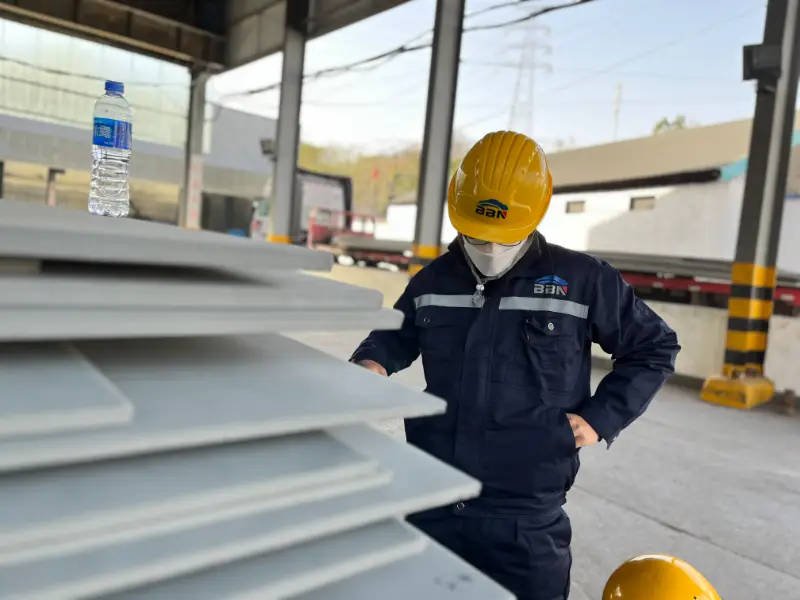
X15Cr13 (1.4024) Martensitic Stainless Steel
X15Cr13 (1.4024) Martensitic Stainless Steel - EN 10088-1 Plate & Coil
Complete technical data for X15Cr13 (1.4024) martensitic stainless steel to EN 10088-1: chemical composition, mechanical properties, physical properties, international equivalents and applications in plate/coil form.
Common processes: hot rolling, cold rolling, annealing (+A), hardening (+Q) and tempering (+T), machining, welding (pre‑heat and post‑weld heat treatment required), grinding and polishing
- Phone : +8618037372205
- Email : [email protected]
- WhatsApp: Contact via Whtsapp
- WeChat: +8618037372205
X15Cr13 Martensitic Stainless Steel Introduction
X15Cr13 (material number 1.4024) is a martensitic corrosion‑resisting stainless steel specified in EN 10088‑1. It offers a good combination of moderate corrosion resistance, high hardness and strength after heat treatment. The alloy is designed for components that require wear resistance and the ability to be hardened by quenching and tempering. Typical carbon content of 0.12–0.22% enables a hardness above 50 HRC after quenching, while the chromium content of 12.0–14.0% provides sufficient passivity in mildly aggressive environments. The steel is mainly supplied as hot‑rolled or cold‑rolled plate and coil in the annealed (+A) condition, ready for subsequent hardening and tempering. It can be machined, welded with precautions, and polished to a high surface finish. Key applications include cutlery, surgical instruments, pump shafts, valve parts and moulds.
X15Cr13 Martensitic Stainless Steel Chemical composition according to EN 10088-1:2014
The ladle analysis limits for X15Cr13 (1.4024) comply with EN 10088‑1:2014. Elements not listed are not intentionally added and are limited to residual levels defined by the standard's general requirements. Unless indicated otherwise, values are maximum contents.
| Element | Standard value (wt%) | Remarks |
|---|---|---|
| Carbon (C) | 0.12 – 0.22 | Range |
| Silicon (Si) | ≤ 1.00 | Max. |
| Manganese (Mn) | ≤ 1.00 | Max. |
| Phosphorus (P) | ≤ 0.040 | Max. |
| Sulfur (S) | ≤ 0.015 | Max. for ladle analysis; ≤ 0.030 for product analysis |
| Chromium (Cr) | 12.0 – 14.0 | Range |
| Nickel (Ni) | ≤ 1.00 | Max. |
| Molybdenum (Mo) | ≤ 0.50 | Max. (may be present for improving corrosion resistance) |
X15Cr13 Martensitic Stainless Steel Thermal and electrical physical properties
These physical properties are typical for X15Cr13 type martensitic stainless steels at ambient and elevated temperatures. They are not part of normative requirements but serve as an engineering guide for design. Values are influenced by heat treatment condition and testing direction.
| Property | Typical value | Unit | Test condition |
|---|---|---|---|
| Density (ρ) | 7.70 | g/cm³ | At 20 °C |
| Modulus of elasticity (E) | 200 | GPa | At 20 °C, longitudinal |
| Shear modulus (G) | 78 | GPa | At 20 °C, calculated |
| Poisson's ratio (ν) | 0.30 | – | At 20 °C |
| Thermal expansion coefficient (α) | 10.5 / 11.0 | 10⁻⁶/K | 20–100 °C / 20–300 °C |
| Thermal conductivity (λ) | 25 | W/(m·K) | At 20 °C |
| Specific heat capacity (cp) | 460 | J/(kg·K) | At 20 °C |
| Electrical resistivity (ρe) | 0.55 | µΩ·m | At 20 °C |
X15Cr13 Martensitic Stainless Steel Mechanical properties at room temperature
The mechanical properties of X15Cr13 depend strongly on the heat treatment condition. Data below are taken from EN 10088‑2:2014 for flat products (plate/strip). Values refer to transverse test pieces unless stated otherwise. For the hardened and tempered condition +QT650, thicknesses up to 20 mm are considered. When ordering, the specific condition must be indicated.
| Property | Required value | Unit | Test condition / reference |
|---|---|---|---|
| Hardness (Brinell) | ≤ 230 | HBW | Annealed (+A) condition |
| Yield strength (ReH) | ≥ 450 | MPa | +QT650 (quenched and tempered to 650‑850 MPa Rm range), transverse, thickness ≤ 20 mm |
| Tensile strength (Rm) | 650 – 850 | MPa | +QT650, transverse, thickness ≤ 20 mm |
| Elongation after fracture (A) | ≥ 12 | % | +QT650, transverse, gauge length L₀=80 mm for thickness ≤ 3 mm, or 5.65√S₀ for ≥ 3 mm, thickness ≤ 20 mm |
X15Cr13 Martensitic Stainless Steel Fully equivalent material standards and alternative designations
The steel X15Cr13 (1.4024) according to EN 10088‑1 has direct counterparts only within the European standard system or in national standards that transpose EN 10088‑1 identically. International standards often list a slightly different carbon range and are therefore classified as similar rather than fully identical.
| Country/Region | Standard | Designation | Remarks |
|---|---|---|---|
| European Union | EN 10088-1 | X15Cr13 (1.4024) | Original definition |
| United Kingdom | BS EN 10088-1 | X15Cr13 (1.4024) | Identical transposition |
| Germany | DIN EN 10088-1 | X15Cr13 (1.4024) | Identical; former DIN 1.4024 |
| France | NF EN 10088-1 | X15Cr13 (1.4024) | Identical |
| Italy | UNI EN 10088-1 | X15Cr13 (1.4024) | Identical |
X15Cr13 Martensitic Stainless Steel Application Introduction
X15Cr13 is chosen when components need to combine wear resistance, hardness, and a basic level of corrosion protection in fresh water, steam, and mildly acidic or alkaline media. Its mechanical properties are developed by austenitizing around 950–1050 °C, oil or air quenching, and tempering at temperatures suited to the target strength. Pre‑ and post‑weld heat treatment is essential to avoid cracking. The steel is not recommended for severe chloride environments or for applications requiring deep drawing in hard condition.
Product Applications: Scalpels, scissors, forceps, orthopaedic implants (temporary), Knife blades, scissors, kitchen knives, Pump shafts, valve stems, fasteners, Mould inserts and tooling for plastics, Turbocharger components
Processed into products: Surgical blades and scissors, Knife blades and shear blades, Valve seats and discs, Pump impellers and wear rings, Spindle shafts and bushings, Pressure plate springs (after hardening/tempering), Steam turbine stationary blades
Application industries: Medical and surgical instruments, Cutlery and kitchen tools, General mechanical engineering (shafts, spindles, valves), Pump and compressor components, Steam and gas turbine blades (low‑to‑medium temperature), Plastic injection moulds, Food processing equipment
X15Cr13 Martensitic Stainless Steel Closely related or similar alternative grades
The following grades have a comparable chromium content (12–14%) but differ slightly in carbon or other elements. They may be used as alternatives depending on the required hardness, corrosion resistance and applicable standard regulations. A detailed case‑by‑case evaluation is recommended.
| Country/Region | Standard | Designation | Remarks |
|---|---|---|---|
| USA | ASTM A240 / A276 | 420 (UNS S42000) | Carbon 0.15% min, similar hardness but less narrow C range |
| Japan | JIS G4304 / G4303 | SUS420J1 | Carbon 0.16–0.25%, very close performance |
| China | GB/T 3280 / GB/T 1220 | 20Cr13 (S42013) / 2Cr13 | Carbon 0.16–0.25%, often directly interchangeable |
| International | ISO 15510 | X12Cr13 (1.4006) | Lower carbon (≤0.15%), somewhat lower hardenability |
Notes:
Welding of X15Cr13 requires pre‑heating to 200–300 °C and immediate tempering at 700–750 °C followed by slow cooling to avoid martensite‑induced cracking. The steel is magnetic in all conditions. For improved corrosion resistance, variants with molybdenum (e.g., X20CrMo13) or higher chromium may be specified. Machinability is acceptable in the annealed state (roughly 45–60% of AISI B1112). Surface treatment such as nitriding can further increase wear resistance.
- Share



