
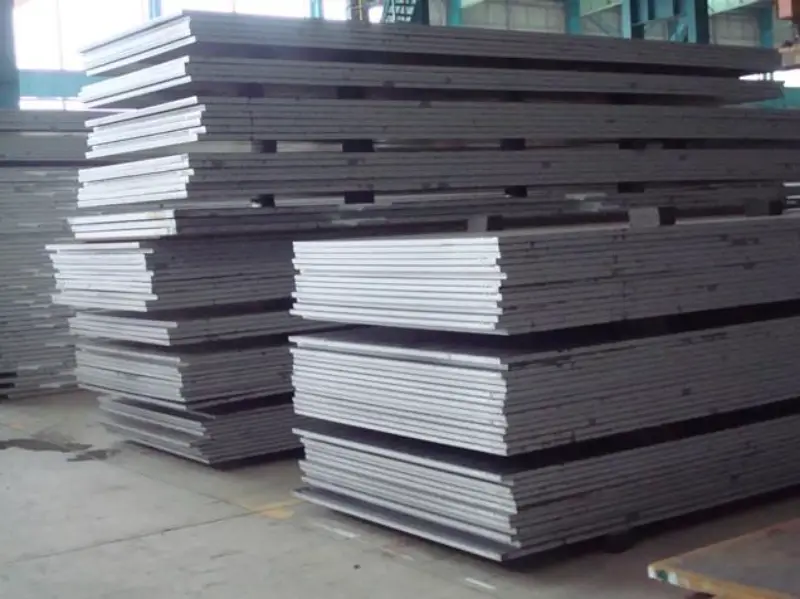
304 (S30400) Stainless Steel Plate/Coil
304 (S30400) Stainless Steel Plate/Coil - Properties, Standards & Global Equivalents
Comprehensive technical datasheet for austenitic 304 (UNS S30400) stainless steel plate/coil: chemical composition, mechanical and physical properties, international equivalents, and application guide.
Hot rolling, cold rolling, solution annealing, pickling, skin-pass, polishing, cutting to length, slitting
- Phone : +8618037372205
- Email : [email protected]
- WhatsApp: Contact via Whtsapp
- WeChat: +8618037372205
304 Stainless Steel Plate/Coil Introduction
AISI 304 (UNS S30400) is the most widely used austenitic chromium-nickel stainless steel. It contains 18–20% Cr and 8–10.5% Ni, which confer excellent corrosion resistance in a wide range of atmospheric, chemical, and food-processing environments. 304 exhibits good ductility, formability, and weldability. In the solution-annealed condition it is non-magnetic, but may become slightly magnetic after cold working. It is typically supplied as plate, sheet, or coil in various finishes (2B, No.4, BA) and can be hot or cold rolled. The steel cannot be hardened by heat treatment – strength is increased by cold working only. Its balanced composition makes it a universal choice for architectural panels, kitchen equipment, chemical vessels, and heat exchangers.
304 Stainless Steel Plate/Coil Chemical Composition
Typical ladle analysis according to ASTM A240/A240M for 304. Values are mass percentages. Single values denote maximum limits unless a range is given. Nitrogen (N) is not normally specified in ASTM A240 but may be controlled to 0.10% max; other standards like EN 10088-2 explicitly limit N to 0.10%. The carbon limit ensures intergranular corrosion resistance in the welded condition for moderate thicknesses. Phosphorus and sulfur are kept low for purity.
| Element | Standard Value (wt%) | Remarks |
|---|---|---|
| Carbon (C) | ≤ 0.07 | 0.08 max in some older editions; EN 10088-2: ≤0.07 |
| Manganese (Mn) | ≤ 2.00 | Same across standards |
| Phosphorus (P) | ≤ 0.045 | EN: ≤0.045 |
| Sulfur (S) | ≤ 0.030 | EN: ≤0.015 for general use, ≤0.030 for machinability improved variants |
| Silicon (Si) | ≤ 0.75 | EN: ≤1.00 |
| Chromium (Cr) | 17.5 – 19.5 | Core alloying element for corrosion resistance |
| Nickel (Ni) | 8.0 – 10.5 | Stabilizes austenite |
| Nitrogen (N) | ≤ 0.10 | Not required by ASTM A240; EN 10088-2: ≤0.10 |
| Iron (Fe) | Balance |
304 Stainless Steel Plate/Coil Physical Properties
Physical properties data for 304 stainless steel (UNS S30400) at 20°C unless otherwise stated. These values are representative for the solution-annealed condition. Thermal conductivity and specific heat vary with temperature; therefore values at elevated temperatures are provided where applicable. The modulus of elasticity decreases with rising temperature.
| Property | Standard Reference Value | Unit | Test Condition / Temperature |
|---|---|---|---|
| Density (ρ) | 8.0 | g/cm³ | 20°C |
| Modulus of elasticity (E) | 193 | GPa | 20°C (tension) |
| Shear modulus (G) | 77 | GPa | Calculated from E and ν |
| Poisson's ratio (ν) | 0.29 | dimensionless | 20°C |
| Thermal expansion coefficient (α) | 16.0 | 10⁻⁶/K | 20–100°C |
| Thermal expansion coefficient (α) | 17.2 | 10⁻⁶/K | 20–300°C |
| Thermal expansion coefficient (α) | 18.0 | 10⁻⁶/K | 20–500°C |
| Thermal conductivity (λ) | 16.2 | W/(m·K) | 100°C |
| Thermal conductivity (λ) | 21.5 | W/(m·K) | 500°C |
| Specific heat capacity (cp) | 500 | J/(kg·K) | 0–100°C |
| Electrical resistivity (ρe) | 0.72 | µΩ·m | 20°C |
| Melting range | 1400–1450 | °C | - |
304 Stainless Steel Plate/Coil Mechanical Properties
Minimum mechanical property requirements per ASTM A240/A240M for plate, sheet, and coil in the solution-annealed condition at room temperature. For product thicknesses greater than 4.76 mm (0.1875 in.), the same minimum values generally apply, but test specimen geometry and gauge length may differ. Hardness is not a mandatory requirement in many standards but is often measured. The steel exhibits excellent ductility and strain-hardening characteristics.
| Property | Standard Requirement | Unit | Test Condition |
|---|---|---|---|
| Yield strength (ReH, 0.2% offset) | ≥ 205 | MPa | Room temperature, transverse |
| Tensile strength (Rm) | ≥ 515 | MPa | Room temperature, transverse |
| Elongation (A) | ≥ 40 | % | 50 mm (2 in.) gauge length, for thickness ≤ 4.76 mm (0.1875 in.) |
| Elongation (A) | ≥ 40 | % | 50 mm (2 in.) gauge length, for thickness > 4.76 mm up to 19.1 mm typical |
| Hardness | ≤ 201 HBW / ≤ 92 HRB | HBW / HRB | Brinell (3000 kg) / Rockwell B |
| Bend test | No mandatory requirement | - | Material is highly ductile; bending is normally satisfactory |
304 Stainless Steel Plate/Coil Completely Equivalent Material Standards & Substitute Grades
| Country / Region | Standard | Grade Designation | Remarks |
|---|---|---|---|
| USA | ASTM A240/A240M | 304 (UNS S30400) | Plate/sheet/coil; identical chemical range |
| European Union | EN 10088-2 | 1.4301 (X5CrNi18-10) | Nominal composition matches; S ≤ 0.015 for general use |
| Japan | JIS G4304 | SUS304 | Similar; carbon ≤ 0.08, slight differences in Si/P limits but interchangeable |
| China | GB/T 3280 | 06Cr19Ni10 | New designation; fully equivalent to 304 |
| International | ISO 15510 | X5CrNi18-10 | Harmonized with EN; directly cross-references to 1.4301 and 304 |
| Russia | GOST 5632 | 08Ch18N10 (08Х18Н10) | Practically identical composition, small differences in impurity limits |
| India | IS 6911 | ISS 304 (X04Cr19Ni10) | Equivalent to AISI 304 |
304 Stainless Steel Plate/Coil Application Introduction
304 stainless steel is a versatile grade that combines good corrosion resistance with excellent formability and weldability. It is the standard choice for environments that require cleanliness and moderate atmospheric or chemical resistance. The material is suitable for a wide range of indoor and outdoor applications. Typical processing includes deep drawing, bending, spinning, and mild stamping. Machining is more difficult than carbon steel because of work hardening; free-machining versions (303) are recommended if extensive cutting is needed.
Product Applications: Kitchen sinks and countertops, Commercial food preparation equipment (mixers, blenders, tables), Heat exchangers and boiler tubes, Storage tanks for chemicals, wine, and beer, Architectural cladding and roofing panels, Escalator and elevator panels, Sanitary tubing and fittings, Catering equipment and cookware, Automotive trim moldings and wheel covers
Processed into products: Fasteners (nuts, bolts, screws) – when adequate corrosion resistance is needed, Flanges, fittings, and valves for piping systems, Springs and wire forms (after cold working), Pressings and stampings for consumer goods, Welded assemblies for structural applications, Hinges, brackets, and supports in food zones, Spray nozzles, filters, and strainers, Impeller blades for pumps
Application industries: Food and beverage processing, Chemical and petrochemical, Architecture and construction, Household appliances (kitchen sinks, cookware, dishwashers), Automotive (trim, exhaust components – low-temperature parts), Medical and pharmaceutical equipment, Water treatment and desalination, Cryogenics and pressure vessels, Pulp and paper, Brewery and dairy
304 Stainless Steel Plate/Coil Similar / Alternative Stainless Steel Grades
| Country / Region | Standard | Grade | Remarks |
|---|---|---|---|
| USA | ASTM A240 | 304L (S30403) | Lower carbon (≤0.03) for improved weld corrosion resistance; slightly lower strength but similar corrosion behavior |
| USA | ASTM A240 | 304H (S30409) | Higher carbon (0.04–0.10) for higher strength at elevated temperatures; not as corrosion-resistant after welding without post-weld heat treatment |
| EU | EN 10088-2 | 1.4306 (X2CrNi19-11) | Low-carbon version (max 0.03% C); used where welding without sensitization is required |
| EU | EN 10088-2 | 1.4307 (X2CrNi18-9) | Also a low-carbon variant with slightly lower nickel; substitutes 1.4301 in welded fabrications |
| Japan | JIS G4304 | SUS304L | Low-carbon counterpart; same implications as 304L |
| China | GB/T 3280 | 022Cr19Ni10 | Corresponds to 304L; tight carbon control |
| Global | General | S30403 (304L) | When welding without annealing is required, 304L is the primary alternative to 304 |
| Global | General | S30400 (304) with stabilized grades | Additions of Ti or Nb (321, 347) can offer resistance to intergranular attack in heavy sections |
Notes:
304 (S30400) plate and coil are typically available in thicknesses from 0.3 mm to over 100 mm. For thicknesses above 12.7 mm, the material may require solution annealing after welding to restore full corrosion resistance. When used in the as-welded condition in heavy sections, the risk of sensitization (chromium carbide precipitation) in the heat-affected zone should be assessed; for critical welded applications, 304L or a stabilized grade is recommended. Surface finishes include 2B (cold-rolled, annealed, pickled), No. 1 (hot-rolled, annealed, pickled), BA (bright annealed), and various polished finishes. Customized surface roughness, protective films, and PVC coatings can be supplied. For magnetic property requirements, note that 304 is non-magnetic in the annealed state but becomes slightly magnetic after cold deformation. Electrical resistivity and thermal properties make it suitable for certain electronic components where moderate electrical conductivity is needed. Ensure compliance with ASTM A480/A480M for general requirements for flat-rolled stainless steel products.
- Share



