
X1CrNiMoAlTi12-10-2 (1.4530)
X1CrNiMoAlTi12-10-2 (1.4530) - High-Strength Martensitic Precipitation Hardening Stainless Steel for Corrosion Resistance
Detailed material data for X1CrNiMoAlTi12-10-2 stainless steel according to EN 10088-1, including chemical composition, mechanical and physical properties, international equivalents, and application guidance.
Hot/cold forming, machining, welding, aging heat treatment
- Phone : +8618037372205
- Email : [email protected]
- WhatsApp: Contact via Whtsapp
- WeChat: +8618037372205
X1CrNiMoAlTi12-10-2 Introduction
X1CrNiMoAlTi12-10-2 (EN material number 1.4530) is a low-interstitial martensitic precipitation hardening stainless steel. It combines high strength after aging treatment with good corrosion resistance, especially in chloride-containing environments. The alloy is characterized by very low carbon, silicon, and manganese contents, enhanced by additions of molybdenum, aluminum, and titanium for age hardening. Key features:
- Ultra-low interstitial (C+N) design for improved toughness and ductility
- Excellent mechanical strength in the aged condition (up to 1400 MPa tensile strength)
- Good stress corrosion cracking resistance
- Good weldability and formability in the solution-annealed state
Typical applications include aerospace structural components, fasteners, medical instruments, and high-performance springs.
X1CrNiMoAlTi12-10-2 Chemical Composition according to EN 10088-1
The chemical composition is specified for the cast analysis (heat analysis) as per EN 10088-1:2014. X1CrNiMoAlTi12-10-2 is characterized by extremely low carbon and nitrogen to ensure a clean, tough martensitic matrix that responds well to precipitation hardening via Al and Ti additions. Tight control of impurities (P, S) enhances hot workability and corrosion resistance.
| Element | Standard Value (wt%) | Remarks |
|---|---|---|
| Carbon (C) | ≤ 0.015 | Ultra-low for toughness |
| Silicon (Si) | ≤ 0.10 | Deoxidizer residual |
| Manganese (Mn) | ≤ 0.10 | Desulfurization aid |
| Phosphorus (P) | ≤ 0.010 | Strictly controlled impurity |
| Sulfur (S) | ≤ 0.005 | Strictly controlled impurity |
| Chromium (Cr) | 11.50 – 12.50 | Corrosion resistance and martensite formation |
| Nickel (Ni) | 9.50 – 10.50 | Toughness and austenite stabilization |
| Molybdenum (Mo) | 1.50 – 2.50 | Pitting resistance and secondary hardening |
| Aluminum (Al) | 0.15 – 0.40 | Precipitation hardening element |
| Titanium (Ti) | 0.20 – 0.50 | Precipitation hardening element |
| Nitrogen (N) | ≤ 0.010 | Minimized to avoid nitrides |
X1CrNiMoAlTi12-10-2 Thermal and Electrical Physical Properties
Physical properties for X1CrNiMoAlTi12-10-2 in the hardened condition. Data are typical for martensitic precipitation hardening stainless steels. Thermal expansion coefficients given for different temperature intervals. Values are approximate and may vary slightly with heat treatment.
| Property | Typical Value | Unit | Test Conditions / Remarks |
|---|---|---|---|
| Density (ρ) | 7.7 | g/cm³ | Room temperature |
| Modulus of Elasticity (E) | 200 | GPa | Tensile, room temperature |
| Shear Modulus (G) | 78 | GPa | Calculated from E and ν |
| Poisson's Ratio (ν) | 0.3 | — | Typical for stainless steel |
| Thermal Expansion Coefficient (α) | 10.5 | 10⁻⁶ /K | 20 – 100 °C |
| Thermal Expansion Coefficient (α) | 11.0 | 10⁻⁶ /K | 20 – 200 °C |
| Thermal Expansion Coefficient (α) | 11.5 | 10⁻⁶ /K | 20 – 300 °C |
| Thermal Conductivity (λ) | 15 | W/(m·K) | At 20 °C |
| Specific Heat Capacity (cₚ) | 500 | J/(kg·K) | At 20 °C |
| Electrical Resistivity (ρₑ) | 0.80 | μΩ·m | At 20 °C |
X1CrNiMoAlTi12-10-2 Mechanical Properties
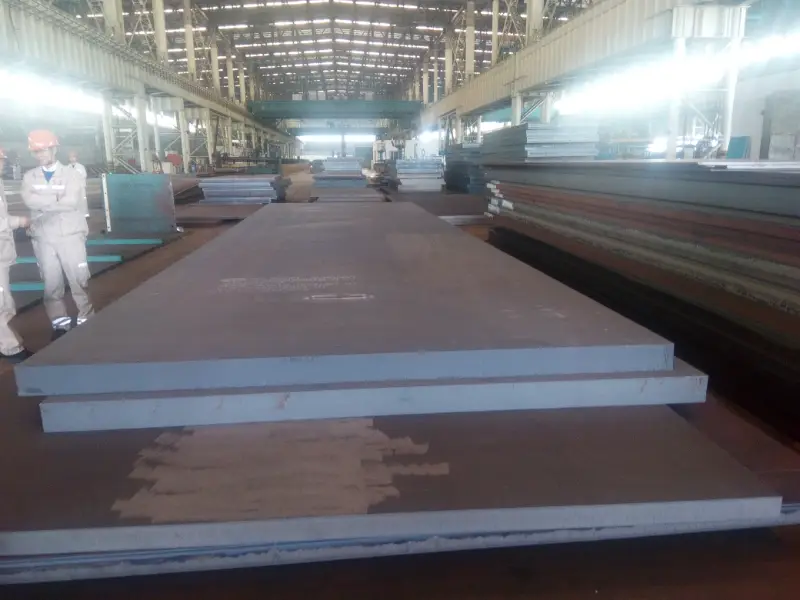
Mechanical properties for plates, sheets, and strips in the solution annealed + aged (AT+P) condition, as per EN 10088-2 and EN 10088-3. Values are for longitudinal direction, room temperature, unless otherwise stated. The aging treatment typically involves 4–8 hours at 480–510 °C followed by air cooling. Note: For product thickness ≤ 100 mm. For thicker sections, slightly lower strength values may apply.
| Property | Standard Requirement | Unit | Test Conditions |
|---|---|---|---|
| 0.2% Proof Stress (Rp0.2) | ≥ 950 | MPa | Room temperature, longitudinal |
| Tensile Strength (Rm) | 1100 – 1400 | MPa | Room temperature, longitudinal |
| Elongation (A) | ≥ 10 | % | Gauge length 5.65√S₀, longitudinal |
| Impact Energy (KV₂) | ≥ 20 | J | 20 °C, Charpy V-notch, longitudinal |
| Hardness | approx. 35 – 45 | HRC | After standard aging |
X1CrNiMoAlTi12-10-2 Exactly Matching International Standards and Substitutable Grades
List of directly equivalent designations for X1CrNiMoAlTi12-10-2 in different standards. The material is registered in ISO and some national standards. No identical UNS grade exists; therefore, this list includes only exact matches.
| Country/Region | Standard | Designation | Remarks |
|---|---|---|---|
| European Union | EN 10088-1 | X1CrNiMoAlTi12-10-2 (1.4530) | Original designation |
| International | ISO 15510 | X1CrNiMoAlTi12-10-2 | Identical to EN |
| Germany | DIN 17440 / SEW 400 | X1CrNiMoAlTi12-10-2 (1.4530) | Withdrawn, matches EN |
| France | NF A35-574 | Z1CNDAT12-10-02 | Old French designation, equivalent |
X1CrNiMoAlTi12-10-2 Application Introduction
X1CrNiMoAlTi12-10-2 is used where a combination of very high strength, good toughness, and corrosion resistance is required. Its excellent ductility in the solution-annealed state allows complex forming before final aging. Key engineering considerations:
- Fully martensitic after solution annealing; subsequent aging at 480–510 °C develops peak strength.
- Outstanding resistance to stress corrosion cracking in chloride environments compared to conventional martensitic grades.
- Avoid overheating during forging; hot working temperature 1100–900 °C, slow cool after forging.
- Magnetic in all conditions.
Product Applications: Aircraft landing gear components, Structural airframe parts and fittings, Surgical scalpels, bone saws, and dental drills, High-stress corrosion-resistant fasteners (bolts, screws), Flexible couplings and bellows, High-pressure valve bodies and pump shafts, Top-level racing bicycle frames and components, Precision spring elements for instruments
Processed into products: Aerospace bolts, studs, and nuts, Torsion bars and drive shafts, Medical implants and surgical tools, Diaphragm valves and pressure sensor housings, Watch mainsprings and balance wheels, High-end knife blades (sports) for marine use, Power generation turbine bolts
Application industries: Aerospace & defense, Medical and dental technology, Petrochemical and offshore engineering, High-performance sports equipment, Precision mechanics and watchmaking, Springs and fasteners industry
X1CrNiMoAlTi12-10-2 Similar or Near-Equivalent Substitute Materials
Grades with comparable mechanical properties and corrosion resistance, but differing slightly in chemical composition. They can be considered as potential alternatives, subject to engineering evaluation.
| Country/Region | Standard | Designation | Remarks |
|---|---|---|---|
| USA | ASTM A564 / A693 | UNS S45500 (Custom 455) | Higher carbon, lower Mo; similar strength class |
| USA | AMS 5862 | PH 13-8 Mo (UNS S13800) | Lower Ni, different hardening element (Al only) |
| Japan | JIS G4303 | SUS XM-16 (similar to S45500) | Not identical but comparable precipitation hardening steel |
| Germany | EN 10088-1 | X5CrNiCuNb16-4 (1.4542, 17-4PH) | Different hardening mechanism (Cu, Nb); used in similar applications |
Notes:
This material should be heat treated according to EN 10088-3 recommendations. Typical solution annealing at 820–850 °C (depending on product form) followed by air cooling, then aging at 480 °C for 4 h. Welding: Can be welded using matching or over-alloyed filler metals; post-weld heat treatment (aging) is recommended to restore strength. Corrosion resistance: Good resistance to industrial and marine atmospheres, moderately resistant to some acids. Not recommended for strongly reducing acids at high temperatures. Product forms covered by EN 10088-2 (sheet/plate/strip) and EN 10088-3 (bars, wire, sections).
- Share



