
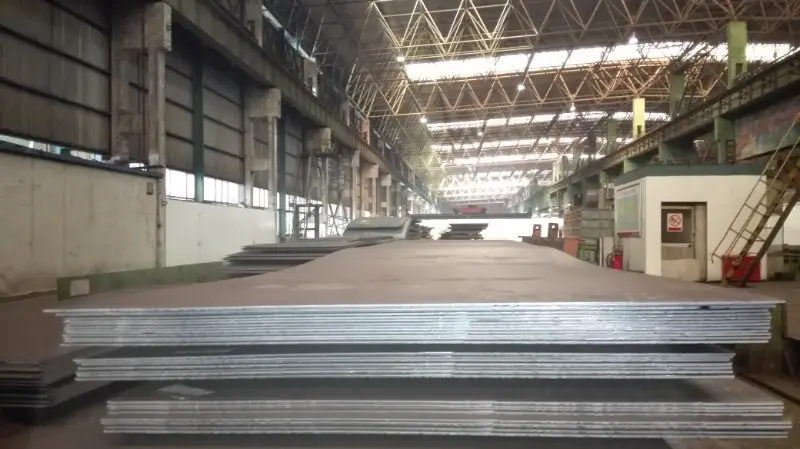
SUS890L Super Austenitic Stainless Steel
SUS890L Super Austenitic Stainless Steel: High Corrosion Resistance in Extreme Acidic & Chloride Environments
Comprehensive property data for SUS890L as per JIS G4304/G4305, including chemical composition, mechanical & thermal properties, and international equivalents like UNS N08904 and EN 1.4539.
Hot rolling, cold rolling, solution annealing, pickling, welding, machining, forming
- Phone : +8618037372205
- Email : [email protected]
- WhatsApp: Contact via Whtsapp
- WeChat: +8618037372205
SUS890L Super Austenitic Stainless Steel Introduction
SUS890L is a fully austenitic, low-carbon super stainless steel offering exceptional resistance to pitting, crevice corrosion, and stress corrosion cracking in reducing and oxidizing acids. Its high chromium (19–23%), nickel (23–28%), molybdenum (4–5%), and copper (1–2%) content ensures stable passivity in environments such as sulfuric acid, phosphoric acid, and chloride-containing media. The low carbon level (<0.020%) minimizes intergranular corrosion risk after welding. Key features:
- Outstanding resistance to various acid media, especially H2SO4 and H3PO4
- Excellent pitting and crevice corrosion resistance (PREN typically 30–36)
- Good weldability without sensitization
- High ductility and toughness
SUS890L Super Austenitic Stainless Steel Chemical Composition as per JIS G4304/G4305
The chemistry is designed to achieve high corrosion resistance in aggressive acid and chloride media. Low carbon prevents sensitization, while copper improves resistance to sulfuric acid. Specification limits are given in weight percent.
| Element | Standard Value (wt%) | Remarks |
|---|---|---|
| Carbon (C) | ≤ 0.020 | Low C for intergranular corrosion resistance |
| Silicon (Si) | ≤ 1.00 | General deoxidation |
| Manganese (Mn) | ≤ 2.00 | Austenite stabilizer |
| Phosphorus (P) | ≤ 0.045 | Impurity control |
| Sulfur (S) | ≤ 0.030 | Impurity control |
| Nickel (Ni) | 23.00 – 28.00 | Key for austenitic structure and corrosion resistance |
| Chromium (Cr) | 19.00 – 23.00 | Passivation element |
| Molybdenum (Mo) | 4.00 – 5.00 | Pitting/crevice corrosion resistance |
| Copper (Cu) | 1.00 – 2.00 | Sulfuric acid resistance |
SUS890L Super Austenitic Stainless Steel Thermal & Electrical Physical Properties
Data are typical for the alloy and can be used for engineering calculations. Properties vary with temperature; representative values are given. Magnetic permeability is less than 1.02 (virtually non-magnetic) in annealed condition.
| Property | Typical Value | Unit | Condition / Temperature |
|---|---|---|---|
| Density (ρ) | 8.0 | g/cm³ | 20°C |
| Modulus of Elasticity (E) | 193 | GPa | 20°C |
| Shear Modulus (G) | 73 | GPa | 20°C |
| Poisson's Ratio (ν) | 0.30 | - | 20°C |
| Coefficient of Thermal Expansion (α) | 15.0 | 10⁻⁶/K | 20–100°C |
| Coefficient of Thermal Expansion (α) | 15.5 | 10⁻⁶/K | 20–200°C |
| Coefficient of Thermal Expansion (α) | 16.0 | 10⁻⁶/K | 20–300°C |
| Coefficient of Thermal Expansion (α) | 16.5 | 10⁻⁶/K | 20–400°C |
| Thermal Conductivity (λ) | 12.2 | W/m·K | 100°C |
| Thermal Conductivity (λ) | 14.5 | W/m·K | 300°C |
| Thermal Conductivity (λ) | 17.0 | W/m·K | 500°C |
| Specific Heat Capacity (cp) | 500 | J/kg·K | 20°C |
| Electrical Resistivity (ρe) | 0.87 | µΩ·m | 20°C |
SUS890L Super Austenitic Stainless Steel Mechanical Properties
Values are according to JIS G4304/G4305 for plate/coil in solution-annealed condition. Higher ductility permits severe forming operations. Hardness values are maximum limits; impact toughness is excellent even at low temperatures but not explicitly required by JIS for this alloy.
| Property | Standard Requirement | Unit | Test Condition / Remarks |
|---|---|---|---|
| Tensile Strength (Rm) | ≥ 490 | MPa | Gauge length 50 mm, ≤5 mm thickness |
| Tensile Strength (Rm) | ≥ 490 | MPa | Plate thickness 5–8 mm (typical) |
| Yield Strength (ReH, 0.2% offset) | ≥ 215 | MPa | Ambient temperature |
| Elongation (A) | ≥ 35 | % | Thickness ≤5 mm (JIS Z 2241, test piece 13A or 13B) |
| Elongation (A) | ≥ 35 | % | Thickness 5–8 mm (min. 35%) |
| Bend Test (180°) | No cracks on outside | - | Bend radius = specimen thickness (t) for t ≤ 8 mm |
| Hardness | ≤ 215 | HBW | Max. limit |
| Hardness | ≤ 90 | HRB | Max. limit |
| Hardness | ≤ 230 | HV | Max. limit |
SUS890L Super Austenitic Stainless Steel Completely Equivalent International Standards & Substitute Grades
| Country/Region | Standard | Grade/Designation | Remarks |
|---|---|---|---|
| USA / International | ASTM A240 / UNS | UNS N08904 (904L) | Fully equivalent chemistry and properties |
| Europe | EN 10088-2 / EN 10028-7 | 1.4539 (X1NiCrMoCu25-20-5) | Very close match; slight differences in allowed impurity ranges |
| China | GB/T 3280 / GB/T 4237 | 022Cr19Ni23Mo4Cu (S31254? No, check S39042?) | Actually GB/T 20878 S39042 equivalent to 904L; 022Cr19Ni23Mo4Cu is S39042, fully equivalent |
| International | ISO 15510 | X1CrNiMoCuN25-20-7 (maybe nominal) | Not exact; ISO has 4539 class, also 904L-like grades |
| Japan | JIS G4304/G4305 | SUS890L | Original standard |
SUS890L Super Austenitic Stainless Steel Application Introduction
SUS890L is engineered for highly corrosive environments where standard austenitic stainless steels (e.g., 304/316L) fail. It bridges the gap between conventional stainless and expensive nickel-base alloys. Main uses:
Product Applications: Chemical storage and transport vessels for sulfuric/phosphoric acids, Heat exchangers and condensers, Piping systems, fittings, and flanges, Reactor internals and agitators, Scrubber internals and mist eliminators, Pharmaceutical WFI (Water for Injection) systems
Processed into products: Tube sheets for shell & tube exchangers, Welded pipe spools and butt-weld fittings, Pump impellers and shafts, Valve bodies and trim, Structural components in chronic acid service, Expansion bellows for high-temperature corrosive gases
Application industries: Chemical & Petrochemical (acid production, storage tanks), Pharmaceutical & Food Processing (reactors, piping for corrosive products), Marine & Offshore (seawater-cooled heat exchangers, splash zone components), Pulp & Paper (digesters, bleaching equipment), Flue Gas Desulfurization (FGD) scrubbers, ducting, and stack liners, Oil & Gas (sour service components, wellhead equipment)
SUS890L Super Austenitic Stainless Steel Similar / Alternative Super Austenitic Stainless Steels
| Country/Region | Standard | Grade | Remarks |
|---|---|---|---|
| USA | UNS | N08926 (6Mo) | Higher Mo (6-7%) and N, better pitting resistance but less Cu; PREN >40 |
| Europe | EN | 1.4529 (X1NiCrMoCuN25-20-7) | 6Mo super austenitic with Cu and N; higher strength |
| Japan | JIS | SUS312L (UNS S31254 type) | Another super austenitic with ~6% Mo, used in seawater applications |
| Traditional | UNS S31726 | Higher Mo 4.8-5.2%, Ni around 16-18%, still austenitic but lower Ni and no Cu | |
| Duplex alternative | UNS S32205 / S32750 | Duplex stainless steels offer high strength but may have lower acid resistance in reducing media |
Notes:
Welding: Use filler metal similar to the parent metal (e.g., ERNiCrMo-3 or 904L wire) to maintain corrosion resistance. Low heat input is recommended. No post-weld heat treatment is usually needed, but passivation can restore surface. Machining: Because of high work hardening, rigid machines, sharp tools, and low cutting speeds are required. Sulfur-chlorinated oils can be used as cutting fluids. Applications above 400°C are not recommended due to possible formation of sigma phase in long-term exposure.
- Share



