
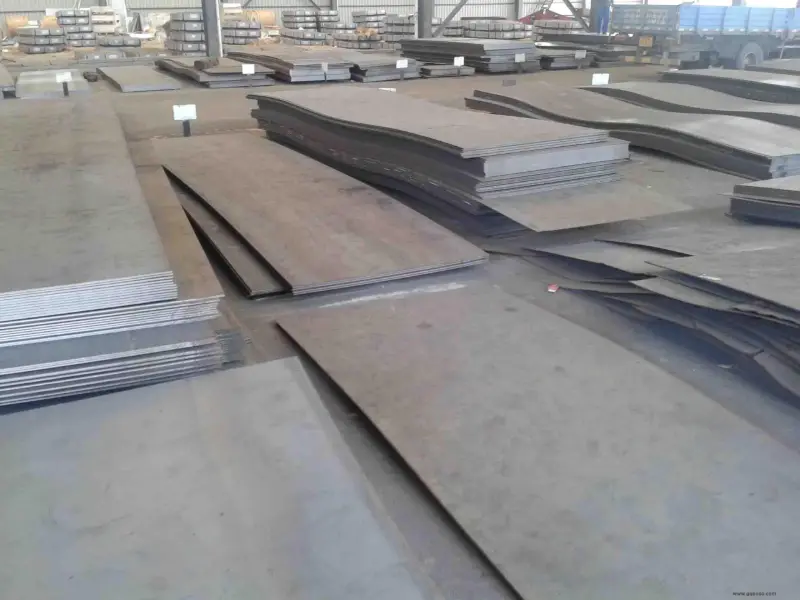
SUS836L Austenitic Stainless Steel Plate/Coil JIS G4304/G4305
SUS836L Austenitic Stainless Steel Plate/Coil JIS G4304/G4305 - High-Chloride Resistant Super Austenitic
Detailed technical data for SUS836L stainless steel according to JIS G4304/G4305. Includes chemical composition, mechanical properties, physical properties, international equivalents, and application guidelines.
Hot rolling, cold rolling, solution annealing, pickling, bright annealing, welding, forming, machining
- Phone : +8618037372205
- Email : [email protected]
- WhatsApp: Contact via Whtsapp
- WeChat: +8618037372205
SUS836L Austenitic Stainless Steel Plate/Coil JIS G4304/G4305 Introduction
SUS836L is a high-alloy, fully austenitic stainless steel developed for extreme corrosion resistance in chloride-rich environments. It is classified as a super austenitic grade and is supplied as hot-rolled or cold-rolled plate and coil under JIS G4304 and G4305. The alloy offers outstanding resistance to pitting, crevice corrosion, and stress-corrosion cracking, thanks to a high molybdenum content (6–7%) and significant nitrogen alloying.
- Excellent weldability and formability in the solution-annealed condition
- Superior mechanical strength compared to conventional 316L or 317L stainless steels
- Widely used in chemical processing, seawater handling, and pollution control equipment
- International equivalents include EN 1.4529, UNS N08926, and ISO 15510 X2NiCrMoCu25-20-7
This datasheet compiles official JIS specifications, typical physical properties, and cross-reference guidance for material selection and substitution.
SUS836L Austenitic Stainless Steel Plate/Coil JIS G4304/G4305 Chemical Composition
The following element ranges are specified in JIS G4304 for SUS836L. The extremely low carbon content minimizes carbide precipitation during welding, while high chromium, nickel, molybdenum, and nitrogen ensure superior localised corrosion resistance. Copper improves resistance to sulfuric acid.
| Element | Standard Value (wt%) | Remarks |
|---|---|---|
| Carbon (C) | ≤0.020 | Low carbon for improved weldability |
| Silicon (Si) | ≤1.00 | |
| Manganese (Mn) | ≤2.00 | |
| Phosphorus (P) | ≤0.045 | |
| Sulfur (S) | ≤0.030 | |
| Chromium (Cr) | 19.00 – 21.00 | Key element for passivity |
| Nickel (Ni) | 24.00 – 26.00 | Austenite stabiliser |
| Molybdenum (Mo) | 6.00 – 7.00 | Enhances pitting resistance |
| Copper (Cu) | 0.50 – 1.50 | Improves acid resistance |
| Nitrogen (N) | 0.15 – 0.25 | Increases strength and pitting resistance |
SUS836L Austenitic Stainless Steel Plate/Coil JIS G4304/G4305 Physical Properties
Thermal and electrical properties are measured on solution-annealed samples. The values below represent typical engineering data for alloy 926 (UNS N08926 / 1.4529) which is chemically and mechanically equivalent to SUS836L. Properties are not part of JIS G4304 specification but are essential for design calculations.
- The density is slightly higher than standard austenitic grades due to high alloy content.
- Thermal expansion coefficient is given for temperature intervals; linear interpolation is possible.
| Property | Typical Value | Unit | Temperature / Condition |
|---|---|---|---|
| Density (ρ) | 8.1 | g/cm³ | 20°C |
| Elastic Modulus (E) | 200 | GPa | 20°C |
| Shear Modulus (G) | 77 | GPa | 20°C |
| Poisson's Ratio (ν) | 0.30 | – | 20°C |
| Thermal Expansion (α) | 15.3 | µm/m·°C | 20–100°C |
| Thermal Expansion (α) | 15.8 | µm/m·°C | 20–200°C |
| Thermal Expansion (α) | 16.1 | µm/m·°C | 20–300°C |
| Thermal Expansion (α) | 16.5 | µm/m·°C | 20–400°C |
| Thermal Expansion (α) | 16.8 | µm/m·°C | 20–500°C |
| Thermal Conductivity (λ) | 11.0 | W/m·K | 20°C |
| Thermal Conductivity (λ) | 12.5 | W/m·K | 100°C |
| Thermal Conductivity (λ) | 15.0 | W/m·K | 200°C |
| Thermal Conductivity (λ) | 17.0 | W/m·K | 300°C |
| Thermal Conductivity (λ) | 19.0 | W/m·K | 400°C |
| Thermal Conductivity (λ) | 21.0 | W/m·K | 500°C |
| Specific Heat Capacity | 450 | J/kg·K | 20°C |
| Specific Heat Capacity | 480 | J/kg·K | 100°C |
| Specific Heat Capacity | 500 | J/kg·K | 200°C |
| Specific Heat Capacity | 520 | J/kg·K | 300°C |
| Specific Heat Capacity | 540 | J/kg·K | 400°C |
| Specific Heat Capacity | 560 | J/kg·K | 500°C |
| Electrical Resistivity (ρ_e) | 0.85 | µΩ·m | 20°C |
SUS836L Austenitic Stainless Steel Plate/Coil JIS G4304/G4305 Mechanical Properties
Tensile and hardness values are mandatory requirements of JIS G4304/G4305 for plates and coils. Values apply to room temperature testing. Elongation requirements may vary with specimen gauge length; standard 50 mm gauge used.
- Thickness grouping follows JIS G4304: ≤8 mm and 8–75 mm. For cold-rolled products (JIS G4305), thickness ≤8 mm applies.
- Hardness is measured as HBW, HRB, or HV; at least one method must comply.
| Property | Minimum / Maximum Value | Unit | Test Condition |
|---|---|---|---|
| Yield Strength (Rp0.2) | ≥240 | MPa | Thickness ≤8 mm, 0.2% offset, annealed |
| Yield Strength (Rp0.2) | ≥240 | MPa | Thickness 8–75 mm, 0.2% offset, annealed |
| Tensile Strength (Rm) | ≥530 | MPa | All thicknesses, annealed |
| Elongation (A) | ≥35 | % | Gauge 50 mm, thickness ≤8 mm, annealed |
| Elongation (A) | ≥30 | % | Gauge 50 mm, thickness 8–75 mm, annealed |
| Hardness | ≤253 | HBW | Annealed, plate/sheet |
| Hardness | ≤100 | HRB | Annealed, plate/sheet |
| Hardness | ≤253 | HV | Annealed, plate/sheet |
SUS836L Austenitic Stainless Steel Plate/Coil JIS G4304/G4305 Fully Equivalent Material Standards and Substitute Grades
| Country/Region | Standard | Designation / Grade | Remarks |
|---|---|---|---|
| Japan | JIS G4304 / G4305 | SUS836L | Original standard, plate/coil |
| International | ISO 15510 | X2NiCrMoCu25-20-7 | Fully equivalent |
| Europe | EN 10088-2 | 1.4529 (X1NiCrMoCuN25-20-7) | Fully equivalent |
| USA | ASTM A240 / A240M | UNS N08926 | Fully equivalent, often named Alloy 926 |
| China | GB/T 3280 | S25073 (00Cr25Ni20Mo7CuN) | Fully equivalent |
SUS836L Austenitic Stainless Steel Plate/Coil JIS G4304/G4305 Application Introduction
SUS836L is engineered for the most demanding wet corrosion applications where standard austenitic stainless steels such as 316L fail due to pitting, crevice attack, or stress-corrosion cracking. Its combination of high chromium, molybdenum, and nitrogen delivers a pitting resistance equivalent number (PREN) typically above 47, making it suitable for seawater, bleach, and hot chloride environments. Common uses include:
Product Applications: Chemical storage tanks and pressure vessels, Heat exchangers and condensers, Process piping systems and fittings, Pumps, valves, and agitators, Instrumentation tubing, Structural components in corrosive atmospheres
Processed into products: Tube sheets and baffles, Welded pipe spools and manifolds, Pump casings and impellers, Valve bodies and trim, Spray nozzles and distributors, Tank linings and overlay welding consumables
Application industries: Chemical processing (reactors, columns, piping), Oil & gas (offshore platforms, topside piping, seawater injection systems), Flue gas desulfurization (FGD) scrubbers, Pulp & paper (bleach plant equipment, digesters), Marine engineering (desalination plants, shipboard piping), Pharmaceutical and food processing (critical process vessels)
SUS836L Austenitic Stainless Steel Plate/Coil JIS G4304/G4305 Similar or Alternative Material Recommendations
| Country/Region | Standard | Designation | Remarks |
|---|---|---|---|
| USA/Europe | ASTM A240 / EN 10088-2 | 254 SMO (UNS S31254 / 1.4547) | Lower pitting resistance equivalent (PREN ~42 vs ~47 for SUS836L); suitable for less aggressive chlorides |
| USA/Europe | ASTM B625 / EN 10088-2 | Alloy 31 (UNS N08031 / 1.4562) | Comparable PREN but higher iron; excellent in sulfuric acid |
| USA | ASTM A240 | UNS N08925 (Alloy 925) | Lower molybdenum (6.5% typical), cost-effective alternative for moderate chloride environments |
| Global | Various | INCOLOY 27-7Mo (UNS S31277) | Higher strength, similar corrosion resistance; may require different welding procedures |
Notes:
Material should not be exposed to temperatures above 450°C for extended periods to avoid precipitation of sigma phase which can degrade corrosion resistance. Welding must be performed with a filler metal of matching or higher alloy content (e.g., AWS A5.14 ERNiCrMo-3 or EN ISO 18274 S Ni 6059). Post-weld solution annealing is recommended for maximum corrosion resistance, but the low carbon content permits as-welded use in many mild environments. For cold-worked conditions, property values may differ; consult manufacturer data.
- Share



