
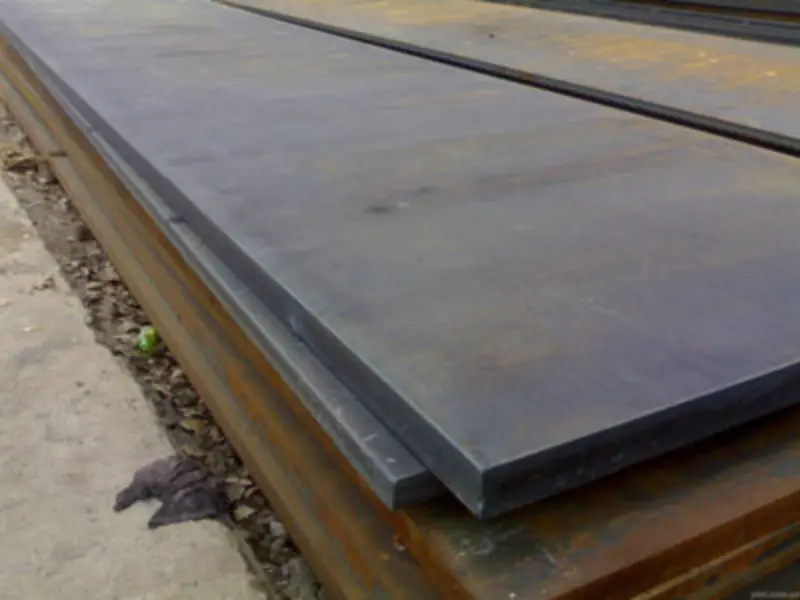
SUS445J2 Stainless Steel
SUS445J2 Ferritic Stainless Steel: Superior Cr-Mo Alloy for High-End Corrosion Resistance
Comprehensive technical data for SUS445J2 ferritic stainless steel according to JIS standards, including chemical composition, mechanical and physical properties, international equivalents, and application guidance.
Forming, welding (with appropriate filler), deep drawing, bending, cutting, polishing
- Phone : +8618037372205
- Email : [email protected]
- WhatsApp: Contact via Whtsapp
- WeChat: +8618037372205
SUS445J2 Stainless Steel Introduction
SUS445J2 is a high-chromium, molybdenum-bearing ferritic stainless steel standardized in Japan under JIS G4304/G4305. It is designed for exceptional resistance to pitting, crevice corrosion, and stress corrosion cracking in chloride-containing environments. The alloy achieves a stable ferritic microstructure through controlled additions of stabilizing elements such as titanium and/or niobium, which provide intergranular corrosion resistance after welding. Key features include:
- High chromium (21–24%) and molybdenum (1.5–2.5%) for superior localized corrosion resistance
- Very low carbon and nitrogen levels to minimize sensitization
- Magnetic properties typical of ferritic grades
- Good formability and weldability in thin gauges
- Excellent performance in hot water, solar heating, and industrial applications
Typical delivery conditions: annealed and pickled plate/coil. The material is widely used in energy-efficient and long-life corrosion-resistant equipment.
SUS445J2 Stainless Steel Chemical Composition
The chemical composition of SUS445J2 conforms to JIS G 4304:2012. The alloy relies on high chromium and molybdenum for corrosion resistance, while low carbon and nitrogen contents prevent sensitization. Stabilizing elements Ti and/or Nb are added to tie up carbon and nitrogen, enhancing intergranular corrosion resistance after welding. Specific amounts of stabilizers are not mandated by JIS but are essential for meeting the corrosion performance requirements.
| Element | Standard Value (mass %) | Remarks |
|---|---|---|
| Carbon (C) | ≤ 0.025 | Max |
| Silicon (Si) | ≤ 1.00 | Max |
| Manganese (Mn) | ≤ 1.00 | Max |
| Phosphorus (P) | ≤ 0.040 | Max |
| Sulfur (S) | ≤ 0.030 | Max |
| Chromium (Cr) | 21.00 – 24.00 | Key for pitting resistance |
| Molybdenum (Mo) | 1.50 – 2.50 | Enhances crevice corrosion resistance |
| Nickel (Ni) | ≤ 0.60 | Max; iron substitute |
| Nitrogen (N) | ≤ 0.025 | Max |
| Titanium (Ti) + Niobium (Nb) | Singly or combined addition | Stabilizing elements; typical Ti 0.10–0.60, Nb 0.10–0.60, but not mandated by JIS |
SUS445J2 Stainless Steel Thermal and Electrical Physical Properties
Physical properties are representative for ferritic stainless steel SUS445J2 in the annealed condition. These values are influenced by exact composition and microstructure. High thermal conductivity and low thermal expansion relative to austenitic grades benefit heat exchanger applications.
| Property | Standard Reference Value | Unit | Test Condition / Notes |
|---|---|---|---|
| Density (ρ) | 7.70 | g/cm³ | At 20 °C |
| Elastic Modulus (E) | 200 | GPa | At 20 °C |
| Shear Modulus (G) | 77 | GPa | At 20 °C, calculated from E and Poisson ratio |
| Poisson Ratio (ν) | 0.28 | — | At 20 °C |
| Thermal Expansion Coefficient (α) | 10.4 | 10⁻⁶/K | 20–100 °C |
| Thermal Expansion Coefficient (α) | 11.0 | 10⁻⁶/K | 20–300 °C |
| Thermal Expansion Coefficient (α) | 11.5 | 10⁻⁶/K | 20–500 °C |
| Thermal Conductivity (λ) | 23.0 | W/(m·K) | At 100 °C |
| Specific Heat Capacity | 460 | J/(kg·K) | At 20 °C |
| Electrical Resistivity (ρ_e) | 0.60 | μΩ·m | At 20 °C |
SUS445J2 Stainless Steel Mechanical Properties
Mechanical properties specified by JIS G 4304 for solution-annealed condition of hot-rolled plate. Values apply to thickness ≤ 8 mm. Higher thickness ranges may have slightly adjusted requirements. The alloy provides a good balance of strength and ductility typical of ferritic stainless steels, with yield strength adequate for structural and pressure applications.
| Property | Standard Requirement | Unit | Test Condition |
|---|---|---|---|
| Yield Strength (ReH) | ≥ 205 | MPa | Room temperature, 0.2% offset, annealed |
| Tensile Strength (Rm) | ≥ 410 | MPa | Room temperature, annealed |
| Elongation (A) | ≥ 20 | % | Gauge length 50 mm, thickness ≤ 8 mm, annealed |
| Hardness | ≤ 219 | HBW | Annealed |
| Hardness | ≤ 95 | HRB | Annealed (alternative) |
| Hardness | ≤ 230 | HV | Annealed (alternative) |
SUS445J2 Stainless Steel Direct Equivalent Materials and Replaceable Grades
SUS445J2 does not have an exact duplicate in major international standards. The table below lists the JIS grade itself. The nearest alternatives are given in the similar materials section.
| Country/Region | Standard | Grade | Remarks |
|---|---|---|---|
| Japan | JIS G 4304 / G 4305 | SUS445J2 | Original designation; fully compliant |
SUS445J2 Stainless Steel Application Introduction
SUS445J2 is engineered for long-term durability in aggressive waters and chloride-bearing atmospheres. Its high PRE (pitting resistance equivalent) makes it suitable for replacing type 316L austenitic in many environments where stress corrosion cracking is a risk. The alloy is fully recyclable and supports sustainable design initiatives.
Product Applications: Solar collector absorber plates, Domestic hot water tanks (enameled or bare), Shell-and-tube heat exchangers, Condensing boiler flue liners, Kitchen sinks and countertops, Building roofing and cladding
Processed into products: Welded pressurised tank shells, Brazed or welded heat exchanger cores, Deep-drawn sink bowls, Roll-formed exhaust muffler shells, Laser-cut interior panels for appliances
Application industries: Solar thermal energy, Hot water systems, Heat exchanger manufacturing, Food processing equipment, Architecture and construction, Automotive exhaust systems
SUS445J2 Stainless Steel Similar / Near-Equivalent Material Recommendations
The grades listed below share comparable corrosion-resistant characteristics due to Cr-Mo addition and stabilized ferritic structure. They can be considered as potential substitutes after thorough evaluation of service conditions, especially regarding chloride concentration and temperature.
| Country/Region | Standard | Grade | Remarks |
|---|---|---|---|
| Japan | JIS G 4304/G 4305 | SUS444 | 18Cr-2Mo stabilised ferritic; lower Cr than SUS445J2, good pitting resistance |
| USA | ASTM A240 | UNS S44400 (Type 444) | Equivalent to SUS444, 18Cr-2Mo-Ti/Nb, widely used for water heaters |
| Europe | EN 10088-2 | 1.4521 (X2CrMoTi18-2) | 18Cr-2Mo-Ti ferritic, similar to 444; lower corrosion resistance |
| Europe | EN 10088-2 | 1.4526 (X2CrMoTi16-2) | Low-Cr 16Cr-2Mo variant; less resistance but adequate for moderate environments |
| USA | ASTM A240 | UNS S44627 | High-Cr 26Cr-1Mo low-C+N ferritic; higher Cr but lower Mo, different balance |
Notes:
SUS445J2 is a ferritic grade and therefore exhibits magnetic properties. It is susceptible to 475 °C embrittlement and sigma phase formation if held for prolonged periods in the range 340–560 °C; therefore, operating temperature above 300 °C must be carefully evaluated. Welding requires proper shielding gas and filler metal matching (e.g., AWS ER446 or ERNiCrMo-3 for dissimilar joints). Post-weld heat treatment is not typically required for thin sections, but pickling and passivation are recommended to restore full corrosion resistance. The surface should not be ground with steel tools to avoid iron contamination.
- Share



