
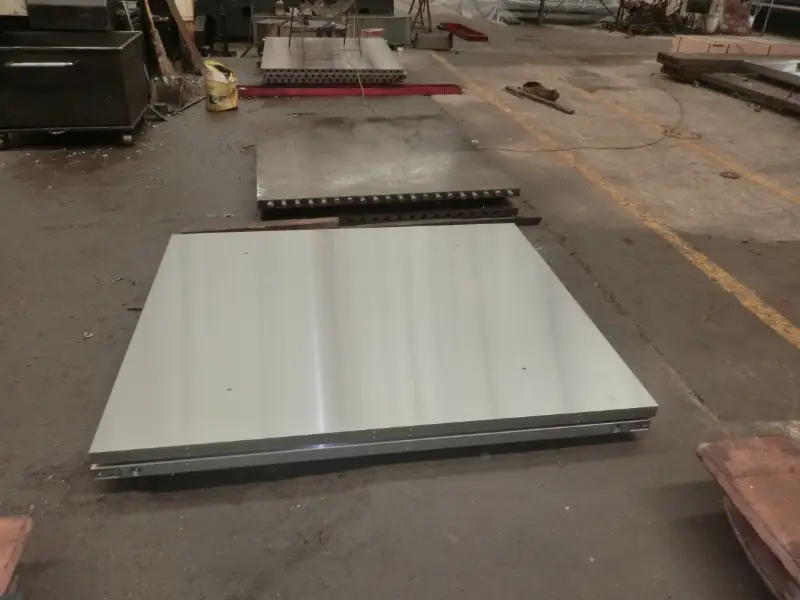
SAPH440 Automobile Structure Steel Plate
SAPH440 Automobile Structure Steel Plate | Q/BQB 310-2009 Composition, Properties & Equivalents
Complete technical data for SAPH440 hot-rolled automobile structure steel plate per Q/BQB 310-2009: chemical composition, mechanical and thermal properties, international equivalents, and application guidance.
Hot rolling; cold forming (bending, stamping, drawing); welding; pickling & oiling
- Phone : +8618037372205
- Email : [email protected]
- WhatsApp: Contact via Whtsapp
- WeChat: +8618037372205
SAPH440 Automobile Structure Steel Plate Introduction
SAPH440 is a hot-rolled steel grade for automobile structural applications specified in Baosteel's enterprise standard Q/BQB 310-2009 (equivalent to JIS G3113). It offers good formability and weldability, making it ideal for parts requiring moderate strength and excellent cold-forming performance. The steel is typically supplied in the as-hot-rolled condition, often pickled and oiled for surface quality. Its balanced chemical composition ensures consistent properties across thicknesses up to 14 mm, with yield strength ≥305 MPa and tensile strength ≥440 MPa. SAPH440 is widely used in automotive chassis, frame members, cross beams, wheel rims, and other structural components. The material is designed for high-volume stamping, bending, and welding processes, meeting strict industry requirements for crashworthiness and durability.
SAPH440 Automobile Structure Steel Plate Chemical Composition
Ladle analysis according to Q/BQB 310-2009 for SAPH440. All values are maximum unless a range or minimum is indicated.
- Aluminum is typically added as a deoxidizer and grain refiner.
- Microalloying elements like Nb, Ti or V may be used to meet strength requirements but are not specified in the standard.
| Element | Specified Value | Note |
|---|---|---|
| Carbon (C) | ≤ 0.21 | max. |
| Silicon (Si) | ≤ 0.30 | max. |
| Manganese (Mn) | ≤ 1.50 | max. |
| Phosphorus (P) | ≤ 0.030 | max. |
| Sulfur (S) | ≤ 0.025 | max. |
| Total Aluminum (Alt) | ≥ 0.01 | min. |
SAPH440 Automobile Structure Steel Plate Thermal & Electrical Physical Properties
These values are typical for low-carbon hot-rolled steel and can be used for engineering calculations. They are not specified in Q/BQB 310-2009 but are representative of SAPH440.
- Density, elastic constants, and thermal properties may vary slightly with composition and processing.
- Electrical resistivity is at room temperature.
| Property | Typical Value | Unit | Test Condition / Note |
|---|---|---|---|
| Density (ρ) | 7.85 × 10³ | kg/m³ | at 20 °C |
| Modulus of Elasticity (E) | 210 | GPa | at 20 °C |
| Shear Modulus (G) | 80 | GPa | calculated from E and ν |
| Poisson's Ratio (ν) | 0.3 | - | typical for steel |
| Coefficient of Thermal Expansion (α) | 12 × 10⁻⁶ | K⁻¹ | 20–100 °C |
| Thermal Conductivity (λ) | 52 | W/(m·K) | at 20 °C |
| Specific Heat Capacity (c) | 460 | J/(kg·K) | at 20 °C |
| Electrical Resistivity (ρₑ) | 0.15 × 10⁻⁶ | Ω·m | at 20 °C |
SAPH440 Automobile Structure Steel Plate Mechanical Properties
Tensile properties and bend test requirements per Q/BQB 310-2009 for SAPH440 at ambient temperature. The values are minimum for strength and elongation, and maximum for bend diameter, depending on thickness.
- Yield strength (ReH) is specified as upper yield or proof strength (Rp0.2).
- Elongation measured on gauge length 50 mm for thickness ≤ 8 mm, and 200 mm for thicker sections per standard practice (A50 or A200). The table lists A50 values.
| Property | Required Value | Unit | Test Condition |
|---|---|---|---|
| Yield Strength (ReH) | ≥ 305 | MPa | t ≤ 8 mm |
| Tensile Strength (Rm) | ≥ 440 | MPa | all thicknesses |
| Elongation (A) | ≥ 29 | % | Gauge length 50 mm; t ≤ 6 mm |
| Elongation (A) | ≥ 30 | % | Gauge length 50 mm; 6 mm < t ≤ 8 mm |
| Elongation (A) | ≥ 28 | % | Gauge length 200 mm; 8 mm < t ≤ 14 mm |
| Bend Test (180°) - Bend diameter | 1a | - | t ≤ 6 mm (a = thickness) |
| Bend Test (180°) - Bend diameter | 2a | - | 6 mm < t ≤ 8 mm |
| Bend Test (180°) - Bend diameter | By agreement | - | t > 8 mm |
SAPH440 Automobile Structure Steel Plate Fully Equivalent Material Standards & Substitute Grades
| Country/Region | Standard | Grade | Remarks |
|---|---|---|---|
| China | Q/BQB 310-2009 | SAPH440 | Original standard (Baosteel enterprise standard) |
| Japan | JIS G3113:2018 | SAPH440 | Equivalent Japanese industrial standard; widely used internationally |
| Europe | EN 10149-2:2013 | S355MC | Comparable hot-rolled high-strength low-alloy steel for cold forming; slight differences in Mn and microalloying |
| International | ISO 6930-2:2009 | FeE355 | International standard high yield strength steel for cold forming |
SAPH440 Automobile Structure Steel Plate Application Introduction
SAPH440 is extensively used in the automotive industry for parts requiring a combination of strength, formability, and weldability. It is supplied in hot-rolled condition and can be further processed by cold forming, bending, stamping, and resistance welding. The material is well suited for mass production and meets the requirements for structural vehicle components.
Product Applications: Automobile chassis frames, Longitudinal beams and cross members, Wheel rims and discs, Suspension arms and subframes, Reinforcement panels, Engine cradles, Truck frame rails
Processed into products: Stamped and bent parts (body structural reinforcements, brackets), Welded assemblies (subframes, engine mounts), Cold-formed profiles (channel sections, U-profiles for chassis), Deep-drawn parts (wheel housings to a limited extent, depending on thickness), Roll-formed sections (longitudinal beams, cross sills)
Application industries: Automotive manufacturing (passenger cars, commercial vehicles), Transportation (trailers, railway vehicles), Construction machinery (structural parts, brackets), General engineering (light to medium structural components)
SAPH440 Automobile Structure Steel Plate Similar / Alternative Material Recommendations
| Country/Region | Standard | Grade | Remarks |
|---|---|---|---|
| China | Q/BQB 310-2009 | SAPH400 | Lower strength grade (≥400 MPa tensile), same automotive structural series; may be used where less strength is needed |
| Europe | EN 10149-2:2013 | S315MC | Lower strength (minimum yield 315 MPa); suitable for less demanding structural parts |
| Germany | DIN EN 10149-2 | QStE340TM | Comparable hot-rolled high-strength steel; slight differences in Mn and Ti content |
| Japan | JIS G3113 | SAPH370 | Alternative grade with lower tensile strength (≥370 MPa); good formability for light-gauge applications |
Notes:
- Q/BQB 310-2009 is a Baosteel enterprise standard derived from JIS G3113; other Chinese steel mills may have similar specifications.
- Surface quality: The product can be supplied as non-pickled (with mill scale) or pickled and oiled. Oiling improves corrosion protection during transport and storage.
- Dimensional tolerances conform to Q/BQB 301 or relevant national standards.
- Weldability: SAPH440 is generally suitable for resistance spot welding, arc welding, and laser welding with standard procedures. Pre-heating is normally not required for thicknesses ≤ 14 mm.
- Heat treatment: This steel is not normally delivered in a heat-treated condition. If required by the end user, annealing or normalizing may be applied to achieve specific formability requirements.
- Share



