
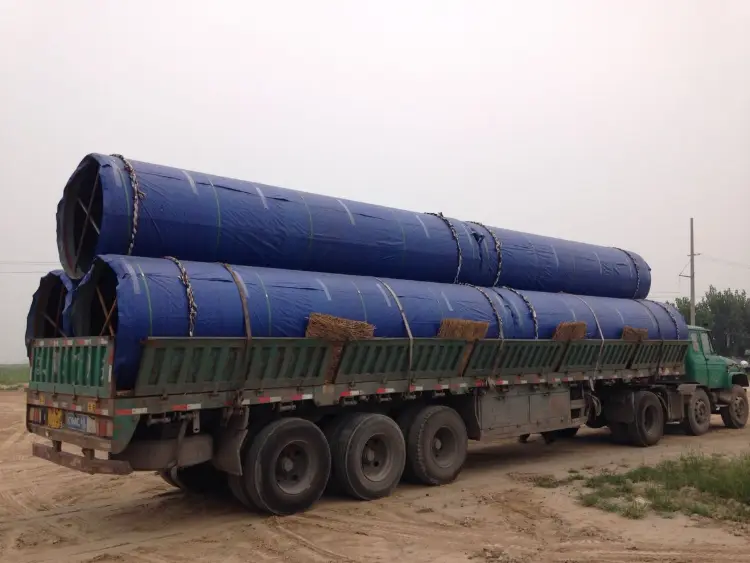
S890Q High-Strength Quenched and Tempered Steel for ERW Pipe
S890Q High-Strength Quenched and Tempered Steel for ERW Pipe - EN 10025-6 Grade Analysis
Comprehensive analysis of S890Q steel under EN 10025-6 for ERW welded pipes: chemical composition, mechanical properties, physical data, and application insights.
Quenching and tempering heat treatment; suitable for welding, bending, cutting, forming.
- Phone : +8618037372205
- Email : [email protected]
- WhatsApp: Contact via Whtsapp
- WeChat: +8618037372205
S890Q High-Strength Quenched and Tempered Steel for ERW Pipe Introduction
S890Q is a high yield strength structural steel grade defined in EN 10025-6, designed for quenched and tempered condition. With a minimum yield strength of 890 MPa, it offers exceptional strength-to-weight ratio, good weldability, and toughness at low temperatures. S890Q is extensively used in heavy-duty structural applications such as crane booms, offshore platforms, and pressure vessels. When formed into ERW (Electric Resistance Welded) pipes, the material provides robust structural hollow sections for demanding mechanical and civil engineering projects. The "Q" designation indicates quality level with impact energy of at least 27 J at -20°C, ensuring reliability in cold climate service.
S890Q High-Strength Quenched and Tempered Steel for ERW Pipe Chemical Composition
Chemical composition as specified in EN 10025-6 for ladle analysis. These limits ensure adequate weldability and hardenability after quenching and tempering. Microalloying elements such as Nb, V, Ti, and B are added for grain refinement and precipitation strengthening; the contents shown are maximum values unless a range is indicated.
| Element | Standard Value (wt%) | Remarks |
|---|---|---|
| C (Carbon) | ≤0.20 | Max |
| Si (Silicon) | ≤0.80 | Max |
| Mn (Manganese) | ≤1.70 | Max |
| P (Phosphorus) | ≤0.020 | Max |
| S (Sulfur) | ≤0.010 | Max |
| Al (Aluminium, total) | 0.015 – 0.060 | For grain refinement |
| Cr (Chromium) | ≤1.50 | Max |
| Cu (Copper) | ≤0.50 | Max |
| Mo (Molybdenum) | ≤0.70 | Max |
| Nb (Niobium) | ≤0.06 | Optional microalloy |
| Ni (Nickel) | ≤2.0 | Max |
| Ti (Titanium) | ≤0.05 | Optional microalloy |
| V (Vanadium) | ≤0.12 | Max |
| Zr (Zirconium) | ≤0.15 | Optional |
| B (Boron) | ≤0.005 | Optional, improves hardenability |
| N (Nitrogen) | ≤0.015 | Max |
S890Q High-Strength Quenched and Tempered Steel for ERW Pipe Physical Properties
The following physical properties are typical for low‑alloy quenched and tempered steels such as S890Q. They are not mandatory requirements of EN 10025-6 but are commonly used for engineering calculations. Actual values may vary with specific heat treatment and minor chemistry adjustments.
| Property | Typical value | Unit | Test condition / remarks |
|---|---|---|---|
| Density (ρ) | 7.85 | g/cm³ | 20°C |
| Modulus of elasticity (E) | 210 | GPa | 20°C |
| Shear modulus (G) | 80 | GPa | 20°C |
| Poisson's ratio (ν) | 0.3 | — | 20°C, dimensionless |
| Thermal expansion coefficient (α) | 12.0 | µm/m·K | 20 – 100°C |
| Thermal expansion coefficient (α) | 12.5 | µm/m·K | 20 – 200°C |
| Thermal expansion coefficient (α) | 13.0 | µm/m·K | 20 – 300°C |
| Thermal conductivity (λ) | 35 | W/(m·K) | 20°C |
| Specific heat capacity (cp) | 460 | J/(kg·K) | 20°C |
| Electrical resistivity (ρe) | 0.25 | µΩ·m | 20°C |
S890Q High-Strength Quenched and Tempered Steel for ERW Pipe Mechanical Properties
Mechanical properties according to EN 10025-6 for quenched and tempered condition. Values depend on nominal thickness t (mm). ReH = upper yield strength, Rm = tensile strength, A = elongation after fracture (gauge length L0 = 5.65√S0), KV = Charpy V‑notch impact energy. All tests performed at room temperature except impact tests at -20°C (Q quality).
| Property | Value (min unless range) | Unit | Test condition / thickness range |
|---|---|---|---|
| Yield strength (ReH) | ≥890 | MPa | t ≤ 50 mm |
| Yield strength (ReH) | ≥830 | MPa | 50 < t ≤ 100 mm |
| Yield strength (ReH) | ≥790 | MPa | 100 < t ≤ 150 mm |
| Tensile strength (Rm) | 940 – 1100 | MPa | t ≤ 50 mm |
| Tensile strength (Rm) | 880 – 1100 | MPa | 50 < t ≤ 100 mm |
| Tensile strength (Rm) | 830 – 1100 | MPa | 100 < t ≤ 150 mm |
| Elongation after fracture (A) | ≥11 | % | t ≤ 50 mm |
| Elongation after fracture (A) | ≥10 | % | 50 < t ≤ 100 mm |
| Elongation after fracture (A) | ≥9 | % | 100 < t ≤ 150 mm |
| Impact energy (KV, longitudinal) | ≥30 | J | -20°C, t ≤ 30 mm |
| Impact energy (KV, longitudinal) | ≥30 | J | -20°C, 30 < t ≤ 50 mm |
| Impact energy (KV, longitudinal) | ≥27 | J | -20°C, 50 < t ≤ 100 mm |
| Impact energy (KV, longitudinal) | ≥27 | J | -20°C, 100 < t ≤ 150 mm |
S890Q High-Strength Quenched and Tempered Steel for ERW Pipe Fully Equivalent Standard Grades and Substitute Recommendations
| Region/Country | Standard | Grade | Remarks |
|---|---|---|---|
| Europe | EN 10025-6 | S890Q | Original specification, identical across CEN member states (e.g., DIN EN, BS EN, NF EN). |
| International | ISO 630-6 | S890Q | Technically identical; international adoption of the same steel grade. |
| China | GB/T 16270-2009 | Q890D / Q890E | Comparable high-yield QT steel; differences in impact temperature (D=-20°C, E=-40°C). Verify detailed limits before substitution. |
S890Q High-Strength Quenched and Tempered Steel for ERW Pipe Application Introduction
S890Q ERW pipe combines ultra‑high strength with good weldability, making it ideal for weight‑critical, dynamic, and low‑temperature applications. Key benefits:
- High strength‑to‑weight ratio reduces structural mass.
- Excellent low‑temperature toughness (down to -20°C and below).
- Good formability into tubular shapes for complex fabrications.
- Proven in offshore, mobile crane, and heavy transport industries.
Product Applications: ERW structural pipes and hollow sections, Mobile crane booms and lifting equipment, Excavator arms and boom sections, Offshore platform jacket legs and piles, Bridge girders and trusses, Pressure vessel and storage tank shells
Processed into products: Telescopic crane boom sections, Hydraulic cylinder housings and arm attachments, Heavy‑duty chassis frames, Welded tubular joints and connectors, Flange and base plates, Stiffener rings and reinforcement sleeves, Pipe spools for high‑pressure fluid systems
Application industries: Construction & Heavy Infrastructure, Offshore & Marine Engineering, Mining & Earthmoving Equipment, Transportation & Heavy Vehicles, Energy & Process Equipment
S890Q High-Strength Quenched and Tempered Steel for ERW Pipe Similar or Comparable Alternative Materials
| Region/Country | Standard | Grade | Remarks |
|---|---|---|---|
| Europe | EN 10025-6 | S960Q | Higher yield strength (960 MPa) QT steel; suitable when weight reduction is paramount; welding more demanding. |
| Europe | EN 10025-6 | S690QL | Lower yield strength (690 MPa) QT steel; good toughness and easier formability; may require thicker sections to match load. |
| USA | ASTM A514/A514M | Grade Q (Type Q) | Quenched and tempered alloy steel plate with min. yield 690 MPa; limited to 65 mm thickness; not a direct strength substitute but used in similar heavy structures. |
Notes:
The manufacture of ERW pipe from S890Q requires controlled heat input during welding to avoid softening in the heat‑affected zone. Post‑weld heat treatment is generally not required when qualified welding procedures are used. S890Q complies with CE‑marking requirements under the EU Construction Products Regulation (CPR). For sour service or special corrosive environments, additional testing and chemistry restrictions (e.g., NACE MR0175) may apply; consult the mill for such requirements.
- Share



