
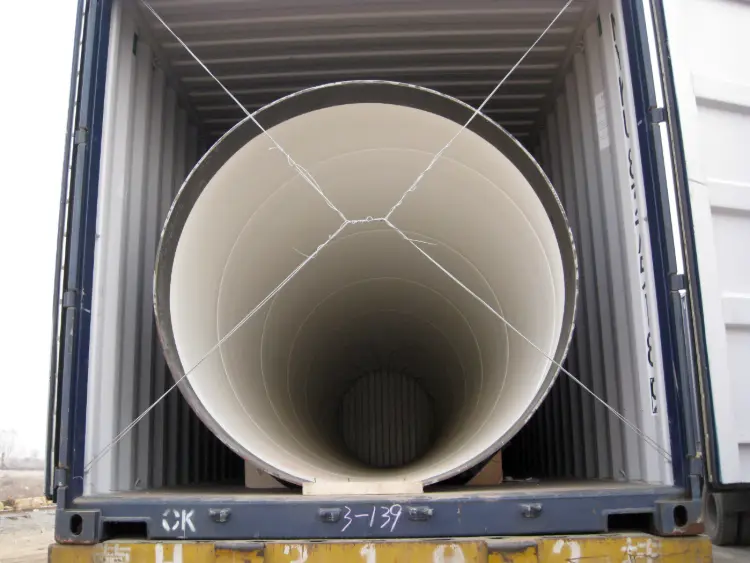
S550QL Quenched and Tempered Structural Steel for SSAW Pipe
S550QL Quenched and Tempered Structural Steel for SSAW Pipe | EN 10025-6
Full material specifications for S550QL grade per EN 10025-6, covering chemical composition, mechanical and physical properties, international equivalents, and application guidance for spiral submerged arc welded (SSAW) pipe and heavy structural engineering.
Hot rolling, quenching and tempering, cold forming, welding (SAW, SMAW, GMAW, SAW spiral pipe forming)
- Phone : +8618037372205
- Email : [email protected]
- WhatsApp: Contact via Whtsapp
- WeChat: +8618037372205
S550QL Quenched and Tempered Structural Steel for SSAW Pipe Introduction
S550QL is a quenched and tempered fine grain structural steel defined in EN 10025-6, delivering a minimum yield strength of 550 MPa and guaranteed low-temperature impact toughness (27 J at -40 °C). The QL designation indicates quenching and tempering with low-temperature impact testing, making it suitable for demanding structural applications where high strength, good weldability, and resistance to brittle fracture are essential. Typical delivery condition is quenched and tempered (+QT). The steel is produced as plates, wide flats, and coils, and is extensively used for manufacturing spiral submerged arc welded (SSAW) pipes. Its excellent weldability with proper preheating and heat input control, combined with good cold-forming characteristics, allows cost-effective fabrication of large-diameter line pipe, offshore structures, bridges, and heavy machinery components. S550QL offers a balanced combination of strength, toughness, and formability for safe, lightweight structural designs under severe service conditions.
S550QL Quenched and Tempered Structural Steel for SSAW Pipe Chemical Composition
The steel is aluminum-killed fine grain treated, with controlled additions of alloying elements to achieve stable high strength and toughness after quenching and tempering. Maximum limits are specified according to EN 10025-6. Key points:
- Sulfur and phosphorus are strictly restricted for cleanliness.
- Elements such as Cr, Ni, Mo, V, Nb, Ti, and B may be added to improve hardenability and mechanical properties.
- Total aluminium content of at least 0.020% ensures fine grain size.
| Chemical Element | Standard Value (max %) | Remarks |
|---|---|---|
| C | 0.20 | Carbon |
| Si | 0.80 | Silicon |
| Mn | 1.70 | Manganese |
| P | 0.020 | Phosphorus |
| S | 0.010 | Sulfur |
| Al (total) | ≥ 0.020 | Fine grain practice minimum |
| N | 0.015 | Nitrogen |
| Cr | 1.50 | Chromium |
| Cu | 0.50 | Copper |
| Mo | 0.70 | Molybdenum |
| Nb | 0.06 | Niobium |
| Ni | 2.00 | Nickel |
| Ti | 0.05 | Titanium |
| V | 0.12 | Vanadium |
| Zr | 0.15 | Zirconium |
| B | 0.005 | Boron |
S550QL Quenched and Tempered Structural Steel for SSAW Pipe Physical Properties
Physical properties are representative for low-alloy quenched and tempered structural steels and are valid at room temperature unless otherwise noted. Variations of ±5% may occur depending on exact heat treatment and product form. Sources: General steel reference data and typical values for S550QL grade.
| Property | Typical Value | Unit | Test Condition |
|---|---|---|---|
| Density (ρ) | 7850 | kg/m³ | 20 °C |
| Elastic modulus (E) | 210 | GPa | 20 °C |
| Shear modulus (G) | 81 | GPa | Calculated from E and ν |
| Poisson's ratio (ν) | 0.3 | dimensionless | 20 °C |
| Thermal expansion coefficient (α) 20–100 °C | 12.0 × 10⁻⁶ | 1/K | Temperature range 20–100 °C |
| Thermal expansion coefficient (α) 20–200 °C | 12.5 × 10⁻⁶ | 1/K | Temperature range 20–200 °C |
| Thermal expansion coefficient (α) 20–300 °C | 13.0 × 10⁻⁶ | 1/K | Temperature range 20–300 °C |
| Thermal conductivity (λ) | 45 – 50 | W/(m·K) | 20 °C |
| Specific heat capacity (c) | 460 | J/(kg·K) | 20 °C |
| Electrical resistivity (ρe) | 0.25 | µΩ·m | 20 °C |
S550QL Quenched and Tempered Structural Steel for SSAW Pipe Mechanical Properties
Mechanical tests are performed on specimens taken from the quenched and tempered delivery condition in accordance with EN 10025-6. Values depend on product thickness. Impact energy is measured on longitudinal Charpy-V notched specimens at -40 °C. Elongation is determined using a proportional gauge length of 5.65√So.Note:
- Transverse properties may be slightly lower; stipulate at enquiry stage.
- Bend test is not mandatory but can be agreed at time of order.
| Property | Standard Requirement Value | Unit | Test Condition |
|---|---|---|---|
| Yield strength ReH (t ≤ 50 mm) | min 550 | MPa | Ambient temperature |
| Yield strength ReH (50 < t ≤ 100 mm) | min 530 | MPa | Ambient temperature |
| Yield strength ReH (100 < t ≤ 150 mm) | min 510 | MPa | Ambient temperature |
| Tensile strength Rm (t ≤ 50 mm) | 670 – 830 | MPa | Ambient temperature |
| Tensile strength Rm (50 < t ≤ 100 mm) | 660 – 820 | MPa | Ambient temperature |
| Tensile strength Rm (100 < t ≤ 150 mm) | 640 – 800 | MPa | Ambient temperature |
| Elongation A5.65 (all thicknesses) | min 14 | % | Gauge length L0 = 5.65√So |
| Impact energy KV -40 °C (longitudinal) | min 27 | J | -40 °C, Charpy-V 2 mm striker |
S550QL Quenched and Tempered Structural Steel for SSAW Pipe Fully Equivalent Material Standards and Substitutable Grades
| Country/Region | Standard | Grade | Remarks |
|---|---|---|---|
| Europe | EN 10025-6 | S550QL | Original specification; quenched and tempered, low temperature impact at -40 °C |
| International | ISO 4950-2 | S550QL | Equivalent grade (standard withdrawn but still referenced for legacy orders) |
| United Kingdom | BS EN 10025-6 | S550QL | Identical adoption of European standard |
| Germany | DIN EN 10025-6 | S550QL | Identical adoption |
| France | NF EN 10025-6 | S550QL | Identical adoption |
S550QL Quenched and Tempered Structural Steel for SSAW Pipe Application Introduction
S550QL steel is specifically engineered for high-strength, low-temperature structural applications. Its combination of 550 MPa minimum yield strength and guaranteed 27 J impact at -40 °C makes it ideal for spiral welded pipes and heavy welded constructions in harsh environments. The material can be cold formed and welded using standard procedures, with recommended preheat and interpass temperature control (typically 100–200 °C depending on thickness). Post-weld heat treatment is usually unnecessary for thicknesses up to 50 mm, but stress relief may be applied for thicker sections. Key application sectors and products include:
Product Applications: Spiral submerged arc welded (SSAW) pipes for liquid and gas transmission, Heavy-duty welded H-beams and box columns, Crane rails and booms, Offshore platform jacket structures and piles, Pressure vessels and storage tanks for low-temperature service
Processed into products: SSAW pipe sections (diameters up to 3000 mm, wall thickness up to 25.4 mm), Bridge girder splices and diaphragm plates, Chassis frames for heavy dump trucks and excavators, Tower sections and flanges for wind turbines, Offshore structural nodes and brace members
Application industries: Oil & Gas (onshore and offshore pipeline systems), Structural engineering (bridges, high-rise buildings, stadiums), Heavy machinery and equipment manufacturing, Renewable energy (wind turbine towers and foundation structures), Mining and earthmoving equipment
S550QL Quenched and Tempered Structural Steel for SSAW Pipe Similar / Alternative Material Recommendations
| Country/Region | Standard | Grade | Remarks |
|---|---|---|---|
| Europe | EN 10025-6 | S550Q | Same minimum yield strength (550 MPa) but impact tested at -20 °C instead of -40 °C |
| Europe | EN 10025-6 | S500QL | Lower yield strength (500 MPa), equivalent low-temperature toughness (-40 °C) |
| Europe | EN 10025-6 | S620QL | Higher yield strength (620 MPa), same toughness class |
| Europe | EN 10025-6 | S690QL | Higher yield strength (690 MPa), same toughness class |
Notes:
- The S550QL grade must be used in quenched and tempered condition; further hot forming above tempering temperature may degrade mechanical properties.
- For welding, follow guidelines of EN 1011-2. Low-hydrogen consumables and controlled heat input are recommended to avoid cold cracking.
- Cold bending radii should be kept above 4t for thicknesses > 12 mm to prevent cracking.
- Ultrasonic testing and impact testing at -40 °C are mandatory for L-quality designation.
- When ordering SSAW pipe, specify the base plate grade S550QL and confirm that the pipe manufacturer's welding procedure qualifies the joint toughness at the required temperature.
- Consult the steel producer for the latest test certificates and any supplementary requirements (e.g., Z-quality, enhanced NDT).
- Share



