
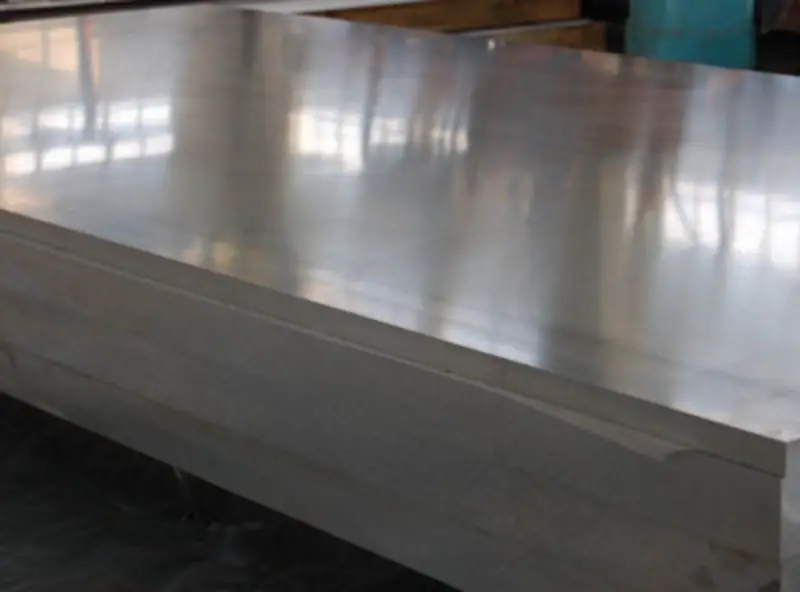
S275N Steel Plate
EN10025-3 S275N Steel Plate: Normalized Fine-Grain Structural Steel for Welded Constructions
Detailed material data for S275N carbon and low-alloy high-strength steel plate according to EN 10025-3, including chemical composition, mechanical properties, thermal and electrical properties, international equivalents, and applications.
Normalizing, normalizing rolling, cutting, cold forming, welding, machining
- Phone : +8618037372205
- Email : [email protected]
- WhatsApp: Contact via Whtsapp
- WeChat: +8618037372205
S275N Steel Plate Introduction
S275N is a normalized/normalized-rolled weldable fine-grain structural steel grade defined in EN 10025-3. It offers a minimum yield strength of 275 MPa for thicknesses up to 16 mm, combined with excellent toughness down to -20 °C and good weldability. The grade is designed for heavily loaded welded structures where reliability and resistance to brittle fracture are essential. Key features include:
- Fine-grain microstructure achieved through normalizing or normalizing rolling
- Guaranteed impact energy of 40 J at -20 °C
- Tight control of sulphur and phosphorus for improved through-thickness properties
- Good formability and machinability in the as-delivered condition
S275N Steel Plate Chemical Composition
Ladle analysis according to EN 10025-3:2004, Table 2. Maximum values unless a range is given. For product thicknesses ≤100 mm. For greater thicknesses consult the standard.
- Fine grain practice requires minimum total aluminium (Altotal) of 0.020% or sufficient other grain-refining elements.
- Carbon equivalent (CEV) limits depend on thickness and are provided separately.
| Element | Standard Value | Notes |
|---|---|---|
| C | ≤0.18% | Max |
| Si | ≤0.50% | Max |
| Mn | 0.50 – 1.50% | Range |
| P | ≤0.025% | Max |
| S | ≤0.015% | Max |
| Nb | ≤0.05% | Max |
| V | ≤0.09% | Max |
| Altotal | ≥0.020% | Min; grain refining |
| Ti | ≤0.05% | Max |
| Cr | ≤0.30% | Max |
| Ni | ≤0.30% | Max |
| Mo | ≤0.10% | Max |
| Cu | ≤0.35% | Max |
| N | ≤0.015% | Max; higher N permitted if sufficient Nb, V, Ti present |
| CEV (t≤30 mm) | ≤0.38 | Carbon equivalent |
CEV (30| ≤0.40 | Carbon equivalent | |
CEV (63| ≤0.42 | Carbon equivalent | |
S275N Steel Plate Thermal and Electrical Physical Properties
Typical physical properties for carbon-manganese structural steel at room temperature unless otherwise noted. These values are generally applicable to S275N grades and are provided for design guidance.
| Property | Standard Required Value | Unit | Test Condition |
|---|---|---|---|
| Density (ρ) | 7850 | kg/m³ | 20 °C |
| Elastic modulus (E) | 200 – 210 | GPa | 20 °C |
| Shear modulus (G) | ≈80 | GPa | 20 °C |
| Poisson ratio (ν) | 0.3 | – | Elastic range |
| Thermal expansion coefficient (α) | 11.1 × 10⁻⁶ | K⁻¹ | 20 – 100 °C |
| Thermal expansion coefficient (α) | 12.5 × 10⁻⁶ | K⁻¹ | 20 – 300 °C |
| Thermal expansion coefficient (α) | 13.7 × 10⁻⁶ | K⁻¹ | 20 – 600 °C |
| Thermal conductivity (λ) | 46 – 52 | W/(m·K) | 20 °C |
| Specific heat capacity (c) | 460 – 480 | J/(kg·K) | 20 °C |
| Electrical resistivity (ρ_e) | 0.15 – 0.20 | μΩ·m | 20 °C |
S275N Steel Plate Mechanical Properties
Minimum specified values for S275N in the normalized condition according to EN 10025-3:2004, Tables 3 and 5. Properties are valid for longitudinal test pieces. Impact energy is verified on Charpy-V specimens.
| Property | Standard Required Value | Unit | Test Condition |
|---|---|---|---|
| Yield strength (ReH) | ≥275 | MPa | Thickness ≤16 mm |
| Yield strength (ReH) | ≥265 | MPa | Thickness 16 < t ≤ 40 mm |
| Yield strength (ReH) | ≥255 | MPa | Thickness 40 < t ≤ 63 mm |
| Yield strength (ReH) | ≥245 | MPa | Thickness 63 < t ≤ 80 mm |
| Yield strength (ReH) | ≥235 | MPa | Thickness 80 < t ≤ 100 mm |
| Tensile strength (Rm) | 370 – 530 | MPa | Thickness ≤100 mm |
| Tensile strength (Rm) | 360 – 520 | MPa | Thickness 100 < t ≤ 200 mm |
| Elongation (A, Lo=5.65√So) | ≥24 | % | Thickness ≤40 mm, longitudinal |
| Elongation (A, Lo=5.65√So) | ≥22 | % | Thickness 40 < t ≤ 63 mm, longitudinal |
| Elongation (A, Lo=5.65√So) | ≥21 | % | Thickness 63 < t ≤ 100 mm, longitudinal |
| Charpy-V impact energy (KV) | ≥40 | J | -20 °C, longitudinal |
| Bend test (through 180°) | d=0.5a | – | Thickness ≤16 mm |
| Bend test (through 180°) | d=1.0a | – | Thickness 16 < t ≤ 40 mm |
| Bend test (through 180°) | d=1.5a | – | Thickness 40 < t ≤ 63 mm |
| Bend test (through 180°) | d=2.0a | – | Thickness 63 < t ≤ 100 mm |
S275N Steel Plate Fully Equivalent Standards and Alternative Designations
| Country/Region | Standard | Designation | Notes |
|---|---|---|---|
| European Union | EN 10025-3 | S275N | Original standard; +N delivery condition |
| International (ISO) | ISO 630-3:2012 | S275N | Technically identical to EN 10025-3 S275N |
| Germany | DIN EN 10025-3 | S275N | National adoption of EN |
| UK | BS EN 10025-3 | S275N | National adoption of EN |
| France | NF EN 10025-3 | S275N | National adoption of EN |
| Italy | UNI EN 10025-3 | S275N | National adoption of EN |
| Spain | UNE EN 10025-3 | S275N | National adoption of EN |
| Sweden | SS-EN 10025-3 | S275N | National adoption of EN |
S275N Steel Plate Application Introduction
S275N is designed for welded, bolted, and riveted structures in civil engineering, mechanical engineering, and shipbuilding. Its fine-grain structure and guaranteed toughness at sub-zero temperatures make it suitable for critical load-bearing components. Typical applications include:
Product Applications: Welded bridge girders and box sections, Building columns and trusses, Offshore platform legs and nodes, Crane booms and lifting equipment, Dump truck bodies and mining buckets, Storage tanks and silos, Wind turbine tower sections
Processed into products: Main load-carrying plates and profiles, Webs and flanges of welded beams, End plates and stiffeners, Brackets, lugs, and clevises, Structural shells and casings, Supporting frames for heavy machinery
Application industries: Steel construction and civil engineering (bridges, high-rise buildings, stadiums), Offshore and marine engineering (platform structures, ship hulls, decks), Heavy machinery and transport (crane booms, excavator arms, trailer frames), Pressure vessel and storage tank manufacturing (applications not requiring pressure certification), Wind energy (tower sections, foundations), Mining and agricultural equipment
S275N Steel Plate Similar / Alternative Material Recommendations
| Country/Region | Standard | Designation | Notes |
|---|---|---|---|
| European Union | EN 10025-2 | S275JR / S275J0 / S275J2 | Non-normalized structural steels; lower toughness, higher impurity limits |
| European Union | EN 10025-4 | S275M / S275ML | Thermomechanical rolled fine-grain steels with different delivery condition |
| European Union | EN 10025-3 | S355N | Higher strength normalized fine-grain steel (yield 355 MPa) |
| USA | ASTM A572/A572M | Grade 42 | High-strength low-alloy structural steel with similar yield, but different impact requirements |
| USA | ASTM A633/A633M | Grade C | Normalized high-strength low-alloy steel, often used for similar applications |
| International (ISO) | ISO 630-2 | S275E | Engineering steel with comparable yield but different toughness specifications |
Notes:
- For improved through-thickness properties (Z-grade), grades S275N, S275NL (additional low temperature) can be ordered with Z15, Z25, or Z35 options according to EN 10164.
- Normalized rolling (+N) is allowed as an alternative to normalizing heat treatment; the final product shall have a uniform fine-grain structure and meet all property requirements.
- Welding procedures should follow established guidelines (e.g., EN 1011) due to the CEV restrictions; preheat may be required for thicker sections.
- This grade is often supplied with inspection certificate 3.1 per EN 10204.
- Share



