
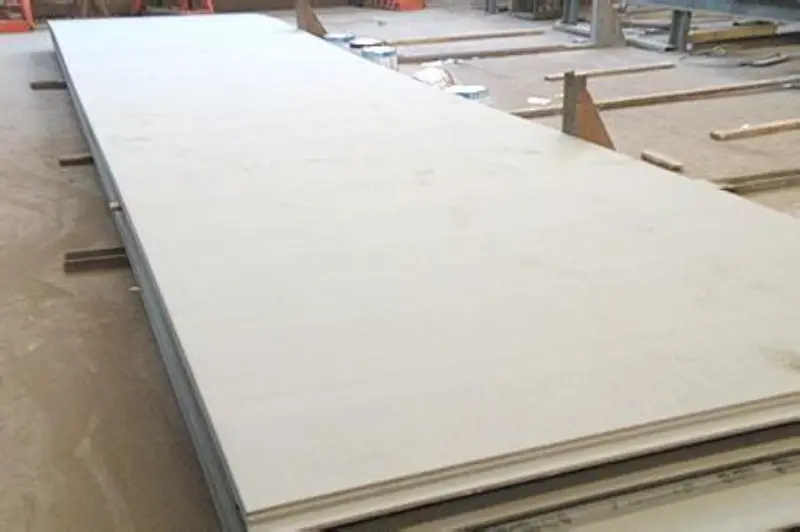
Q460E Structural Steel Plate
Q460E Structural Steel Plate: Low-Alloy High-Strength for -40°C Toughness (GB/T 16270)
Q460E is a Chinese standard high-strength low-alloy steel plate with minimum yield strength 460 MPa and excellent low-temperature impact toughness, widely used in welded structures for bridges, buildings, and heavy machinery.
Hot rolling, controlled rolling, normalizing, thermo-mechanical controlled process (TMCP)
- Phone : +8618037372205
- Email : [email protected]
- WhatsApp: Contact via Whtsapp
- WeChat: +8618037372205
Q460E Structural Steel Plate Introduction
Q460E is a high-strength low-alloy structural steel plate standardized under GB/T 16270 in China. It is specifically designed for welded structures that demand a combination of high strength, good ductility, and superior notch toughness at temperatures as low as -40°C. With a minimum yield strength of 460 MPa, it belongs to the Q460 strength category and is widely employed in heavy construction, bridge engineering, offshore platforms, and machinery manufacturing. The steel is microalloyed with elements such as niobium, vanadium, and titanium to achieve fine grain refinement, which enhances both strength and low-temperature impact properties. Its low carbon equivalent ensures excellent weldability under standard procedures. Typical delivery conditions include thermo-mechanical controlled process (TMCP) or normalizing, but as-rolled condition may also be agreed upon.
- Key features: High yield strength, good elongation, reliable Charpy-V impact energy at -40°C, fine-grained microstructure, and consistent plate quality.
- Applications: Critical structural components in buildings, bridges, pressure vessels, cranes, and offshore structures exposed to cold environments.
Q460E Structural Steel Plate Chemical Composition
The chemical composition of Q460E steel is strictly controlled to ensure a fine-grained microstructure and low-temperature toughness. Microalloying elements such as Nb, V, and Ti are added for grain refinement and precipitation strengthening. Phosphorus and sulfur contents are limited to very low levels to improve ductility and weldability. The sum of Nb+V+Ti typically does not exceed 0.22% for Q460E.
Remarks: Values are maximum unless a range is indicated. Carbon equivalent CEV is usually ≤0.47% for thicknesses ≤50 mm to guarantee good weldability.
| Chemical Element | Specified Value (wt%) | Remarks |
|---|---|---|
| Carbon (C) | ≤0.20 | |
| Silicon (Si) | ≤0.60 | |
| Manganese (Mn) | 1.00–1.70 | |
| Phosphorus (P) | ≤0.020 | Strict control for low-temperature toughness |
| Sulfur (S) | ≤0.010 | Strict control for low-temperature toughness |
| Niobium (Nb) | ≤0.11 | Grain refiner |
| Vanadium (V) | ≤0.20 | Grain refiner and precipitation strengthener |
| Titanium (Ti) | ≤0.20 | Grain refiner |
| Chromium (Cr) | ≤0.30 | Residual element |
| Nickel (Ni) | ≤0.50 | Residual element |
| Copper (Cu) | ≤0.40 | Residual element |
| Molybdenum (Mo) | ≤0.30 | Residual element |
| Nitrogen (N) | ≤0.015 | |
| Boron (B) | ≤0.004 | |
| Total Aluminum (Alt) | ≥0.020 | Grain refiner, typically acid-soluble ≥0.015% |
Q460E Structural Steel Plate Thermal and Electrical Physical Properties
The physical property data provided are typical for low-alloy structural steels at room temperature. These values are not specified in GB/T 16270, but are derived from general material references. Actual values may vary slightly depending on the exact chemical composition and heat treatment condition. The thermal expansion coefficient is given for the temperature range 20–100°C.
| Property | Typical Value | Unit | Test Condition |
|---|---|---|---|
| Density (ρ) | 7.85 | g/cm³ | 20°C |
| Modulus of Elasticity (E) | 206 | GPa | 20°C |
| Shear Modulus (G) | 79 | GPa | 20°C (estimated) |
| Poisson's Ratio (ν) | 0.3 | dimensionless | 20°C |
| Coefficient of Thermal Expansion (α) | 12.0 ×10⁻⁶ | /K | 20–100°C |
| Thermal Conductivity (λ) | 42 | W/(m·K) | 20°C |
| Specific Heat Capacity | 480 | J/(kg·K) | 20°C |
| Electrical Resistivity (ρₑ) | 0.23 | μΩ·m | 20°C |
Q460E Structural Steel Plate Mechanical Properties
The mechanical properties below are based on tensile and impact tests conducted in accordance with GB/T 16270-2009. The yield strength decreases with increasing plate thickness. Charpy V-notch impact energy is guaranteed at -40°C in longitudinal direction. Bend test is performed through 180° with specified mandrel diameters according to thickness.
| Property | Specified Value | Unit | Test Condition |
|---|---|---|---|
| Yield Strength (ReH) | ≥460 | MPa | Thickness ≤16 mm |
| Yield Strength (ReH) | ≥440 | MPa | Thickness >16–35 mm |
| Yield Strength (ReH) | ≥420 | MPa | Thickness >35–50 mm |
| Yield Strength (ReH) | ≥400 | MPa | Thickness >50–100 mm |
| Tensile Strength (Rm) | 550–720 | MPa | Thickness ≤100 mm |
| Elongation (A) | ≥17 | % | Thickness ≤16 mm, gauge length 5.65√S₀ |
| Elongation (A) | ≥17 | % | Thickness >16–35 mm |
| Elongation (A) | ≥17 | % | Thickness >35–50 mm |
| Elongation (A) | ≥16 | % | Thickness >50–100 mm |
| Bend Test (Mandrel diameter) | 2a | Thickness ≤16 mm, 180° bend | |
| Bend Test (Mandrel diameter) | 3a | Thickness >16–35 mm, 180° bend | |
| Bend Test (Mandrel diameter) | 3a | Thickness >35–50 mm, 180° bend | |
| Bend Test (Mandrel diameter) | 4a | Thickness >50–100 mm, 180° bend | |
| Charpy Impact Energy (KV2, -40°C) | ≥34 | J | Longitudinal, standard 10×10 mm specimen |
Q460E Structural Steel Plate Fully Equivalent International Standards and Substitutable Grades
| Country/Region | Standard | Grade | Remarks |
|---|---|---|---|
| Europe | EN 10025-4 | S460ML | TMCP delivery, impact at -50°C (≥27J); strength and chemical concept closely match Q460E, with only a slightly lower test temperature for impact. |
| Europe | EN 10025-4 | S460NL | Normalized delivery, -50°C impact; equivalent in strength but uses normalizing heat treatment rather than TMCP. |
| International | ISO 4950-2:1995 | E460DD | TMCP delivery; similar yield and tensile strength, comparable toughness (withdrawn standard but still referenced). |
| Japan | JIS G3106 | SM570 | Yield ≥460 MPa, tensile 570–720 MPa; strength matches Q460E, but impact test only at 0°C — not suitable for low-temperature equivalent without supplementary agreement. |
Q460E Structural Steel Plate Application Introduction
Q460E steel is extensively used in heavy steel structures where high strength must be combined with reliable toughness at sub-zero temperatures. Its superior weldability allows fabrication of complex nodes and sections. Typical applications across industries are summarized below.
Product Applications: Hot-rolled structural steel plates in thicknesses up to 100 mm, Welded built-up sections (H-beams, box columns, crane girders), Bridge deck plates and orthotropic deck components, Segments of offshore wind turbine towers, Pressure vessel shells and heads for LPG/ammonia storage
Processed into products: Column-to-beam moment connections in high-rise buildings, Main chords and diagonals of bridge trusses, Leg sections and rack chocks of self-elevating platforms, Boom and mast of heavy-duty lattice boom cranes, Cylindrical courses and dished ends of low-temperature pressure vessels
Application industries: Building and construction (high-rise steel frames, stadiums, exhibition halls), Bridge engineering (highway and railway bridges, long-span truss bridges), Offshore and marine engineering (jack-up rig legs, platform decks, ship hull reinforcement), Heavy machinery manufacturing (cranes, mining excavators, bulldozers), Pressure vessels and liquid storage tanks (low-temperature service, -40°C minimum design metal temperature)
Q460E Structural Steel Plate Similar or Alternative High-Strength Low-Alloy Steels
| Country/Region | Standard | Grade | Remarks |
|---|---|---|---|
| China | GB/T 16270 | Q460D | Same strength level, impact test at -20°C; widely used when -40°C toughness is not required. |
| China | GB/T 16270 | Q460C | Impact test at 0°C; suitable for general structural applications without low-temperature demands. |
| Europe | EN 10025-4 | S460M | TMCP, impact at -20°C; very similar to Q460D, less demanding toughness. |
| Europe | EN 10025-3 | S460N | Normalized, impact at -20°C; comparable strength, often used in building frames. |
| USA | ASTM A572/A572M | Grade 65 | Yield ≥450 MPa, tensile ≥550 MPa; no mandatory low-temperature impact requirement — mainly used in bridges and buildings in non-arctic regions. |
Notes:
The data provided are based on GB/T 16270-2009. Actual mechanical properties may be further restricted by purchaser's specifications. For thicknesses >100 mm or special dimensions, the mechanical properties shall be agreed. Carbon equivalent (CEV) is typically kept ≤0.47% for thicknesses ≤50 mm to ensure good field weldability. The values for physical properties are approximate and are not part of the standard; they serve as engineering reference. All mechanical properties are for test pieces taken in the longitudinal direction unless otherwise stated.
- Share



