
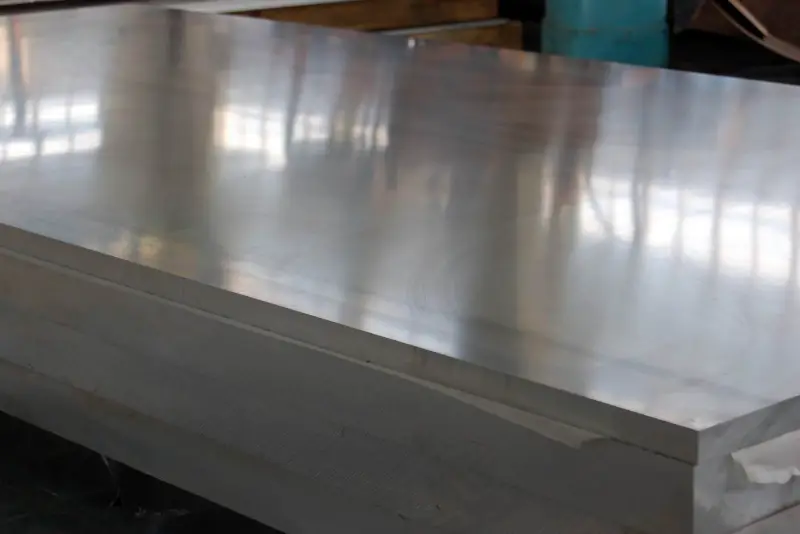
Q-BQB 310-2009 B510L Hot-Rolled High-Strength Automotive Structural Steel Plate
B510L Steel for Automotive Structures: Q-BQB 310-2009 Standard Data & Properties
Complete technical data for B510L steel according to Baosteel standard Q-BQB 310-2009, including chemical composition, mechanical properties, thermal physical properties, equivalent grades, and application guidance.
Hot rolling, controlled rolling, normalizing, cold forming, punching, welding, bending
- Phone : +8618037372205
- Email : [email protected]
- WhatsApp: Contact via Whtsapp
- WeChat: +8618037372205
Q-BQB 310-2009 B510L Hot-Rolled High-Strength Automotive Structural Steel Plate Introduction
B510L is a hot-rolled high-strength low-alloy (HSLA) steel grade primarily designed for automotive structural applications, particularly for chassis and frame components such as longitudinal beams and cross members. It is normalized or controlled-rolled to achieve a fine ferrite-pearlite microstructure with microalloying elements like niobium and titanium, providing an excellent balance of strength, toughness, and formability. According to Baosteel enterprise standard Q-BQB 310-2009, B510L offers a minimum yield strength of 355 MPa and tensile strength in the range of 510–610 MPa, with good ductility and cold-bending performance. The steel exhibits reliable weldability and is often delivered in hot-rolled condition, sometimes with additional surface treatment as agreed. Its typical thickness range covers 1.6 mm to 14 mm, making it suitable for a variety of load-bearing parts in commercial vehicles and passenger cars.
Q-BQB 310-2009 B510L Hot-Rolled High-Strength Automotive Structural Steel Plate Chemical Composition
The chemical composition of B510L according to Q-BQB 310-2009 is optimized for weldability, strength, and toughness. The carbon equivalent (CEV) is typically controlled to ensure good weldability. Microalloying with Nb and Ti contributes to grain refinement and precipitation strengthening. Note: The values shown are maximum limits unless a range is indicated. Altot stands for total aluminum content.
| Element | Standard Value (max %) | Remarks |
|---|---|---|
| Carbon (C) | ≤ 0.16 | |
| Silicon (Si) | ≤ 0.50 | |
| Manganese (Mn) | ≤ 1.60 | |
| Phosphorus (P) | ≤ 0.025 | |
| Sulfur (S) | ≤ 0.015 | |
| Aluminum (Altot) | ≥ 0.015 | Total aluminum content |
| Niobium (Nb) | ≤ 0.09 | Typical addition for grain refinement |
| Titanium (Ti) | ≤ 0.15 | May be added alone or in combination with Nb |
| Nitrogen (N) | ≤ 0.012 | Not always specified; limited to ensure toughness |
Q-BQB 310-2009 B510L Hot-Rolled High-Strength Automotive Structural Steel Plate Thermal and Electrical Physical Properties
The following physical properties are typical for low-carbon microalloyed steel and are not mandatory requirements of Q-BQB 310-2009. They are provided for design calculations. Values may vary slightly with chemical composition and processing. The thermal expansion coefficient is given for the temperature range 20–100°C.
| Property | Typical Value | Unit | Test Condition / Temperature |
|---|---|---|---|
| Density (ρ) | 7.85 | g/cm³ | Room temperature |
| Modulus of Elasticity (E) | 210 | GPa | Room temperature |
| Shear Modulus (G) | 80 | GPa | Room temperature |
| Poisson's Ratio (ν) | 0.3 | — | Room temperature |
| Thermal Expansion Coefficient (α) | 12.0 × 10⁻⁶ | K⁻¹ | 20–100 °C |
| Thermal Conductivity (λ) | 45 | W/(m·K) | Room temperature |
| Specific Heat Capacity (cp) | 460 | J/(kg·K) | Room temperature |
| Electrical Resistivity (ρe) | 0.20 | μΩ·m | Room temperature |
Q-BQB 310-2009 B510L Hot-Rolled High-Strength Automotive Structural Steel Plate Mechanical Properties
The mechanical properties listed are the minimum required values according to Q-BQB 310-2009, unless otherwise stated. Testing is performed at room temperature unless specified. The values apply to specimens taken in the transverse direction for thicknesses ≤14 mm. Bending test is 180° with a mandrel diameter of 2a (where a = specimen thickness). Impact test requirements are not mandatory in the standard but may be agreed upon; typical values at -20°C for longitudinal Charpy V-notch specimens are provided for reference.
| Property | Required Value | Unit | Test Condition |
|---|---|---|---|
| Yield Strength (ReH) | ≥ 355 | MPa | Thickness ≤ 14 mm, transverse |
| Tensile Strength (Rm) | 510 – 610 | MPa | Thickness ≤ 14 mm, transverse |
| Elongation after fracture (A80) | ≥ 24 | % | Thickness ≤ 3 mm |
| Elongation after fracture (A5) | ≥ 24 | % | Thickness > 3 mm |
| Bending Test (180°) | d = 2a | — | No cracks; a = specimen thickness |
| Charpy V-notch Impact (KV2) | ≥ 27 (typical) | J | -20 °C, longitudinal (by agreement) |
Q-BQB 310-2009 B510L Hot-Rolled High-Strength Automotive Structural Steel Plate Directly Equivalent International Standards and Substitutable Grades
B510L is a proprietary grade under Baosteel's enterprise standard. There is no exact one-to-one equivalent in international standards, but the following grades cover comparable chemical and mechanical requirements and are often used in similar automotive structural applications. The substitution should be verified by the end user.
| Country/Region | Standard | Grade | Remarks |
|---|---|---|---|
| China | Q-BQB 310-2009 | B510L | Original grade |
| Europe | EN 10149-2 | S355MC | Yield strength matched; tensile range usually 430–550 MPa, so B510L's upper tensile strength 610 MPa may be slightly higher |
| Japan | JIS G3113 | SAPH440 | Tensile strength minimum 440 MPa; typical range may overlap, but SAPH440 has lower minimum yield (~275 MPa); additional alloy adjustment may be needed |
| ISO | ISO 4952 | Fe510C | Older designation; approximate correspondence based on tensile strength class |
Q-BQB 310-2009 B510L Hot-Rolled High-Strength Automotive Structural Steel Plate Application Introduction
B510L is specifically developed for welded and cold-formed structural components in the automotive industry. Its excellent formability, high yield strength, and good fatigue resistance make it ideal for weight-saving designs while maintaining crashworthiness. The steel is typically supplied in the as-hot-rolled condition and can be processed by shearing, punching, bending, and drawing without significant springback problems when tooling is properly designed. Welding can be performed using all common methods (MIG/MAG, resistance spot welding) with appropriate consumables and low heat input to avoid softening in the heat-affected zone.
Product Applications: Truck chassis and frame rails, Passenger car subframes and engine cradles, Longitudinal and cross beams for heavy-duty vehicles, Suspension arms and brackets, Bumper reinforcements, Body-in-white structural reinforcements
Processed into products: Longitudinal members (main frame rails), Cross members (transverse frame connectors), Reinforcement brackets and gussets, Spring hanger brackets, Engine mounting brackets, Shock absorber mounts, Towing hitch components, Chassis extensions
Application industries: Automotive (commercial vehicles, passenger cars), Trailer and transport equipment manufacturing, Agricultural machinery frames, Construction machinery structural parts, Railway vehicle components (non-critical)
Q-BQB 310-2009 B510L Hot-Rolled High-Strength Automotive Structural Steel Plate Similar or Closely Related Alternative Materials
The following grades share similar application fields and property profiles with B510L. They may serve as alternatives after appropriate qualification, especially when processing and welding conditions are considered.
| Country/Region | Standard | Grade | Remarks |
|---|---|---|---|
| Germany / Europe | DIN EN 10149-2 / SEW 092 | QStE 340 TM (1.0548) / QStE 380 TM | Thermomechanically rolled microalloyed steel with comparably high yield and good formability; very close in performance |
| USA | ASTM A1011 / A1018 | HSLAS Grade 50 Class 1 or 2 | Minimum yield 340 MPa, tensile 410 MPa; slightly lower strength but can be a candidate if design permits |
| India | IS 11513 | St 44-3 / Fe 510 | Similar tensile strength class; weldable structural steel with good toughness |
Notes:
B510L is a Baosteel custom grade; for exact supply thickness, width, and surface requirements, consult the mill's specific specifications. Carbon equivalent (CEV) is typically controlled to ≤ 0.35% for good weldability. The steel shows a fine grain size and improved toughness after normalizing. It is not recommended for applications requiring extensive hot forming or temperatures above 600°C, as that may degrade the microalloy strengthening. Surface defects, oiling, and packaging should be agreed upon at the time of order. For fatigue-critical parts, a full-size component test is advised.
- Share



