
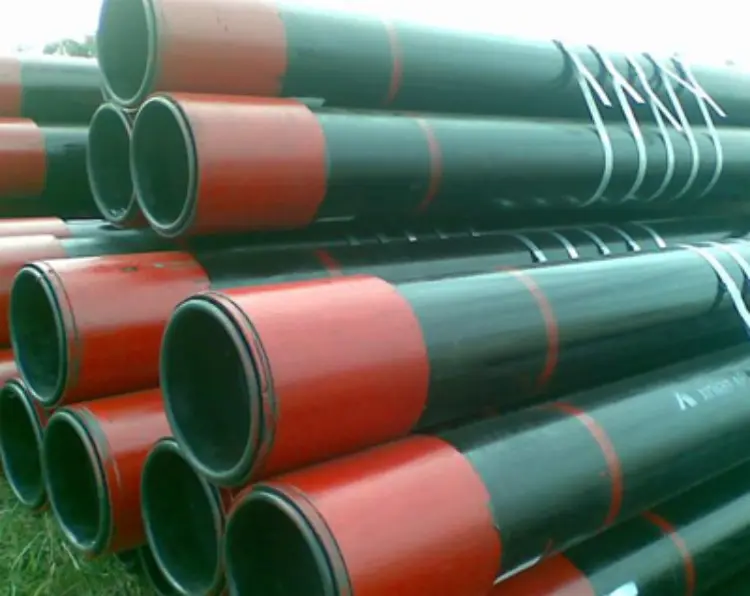
L390 PSL1 SSAW Pipe per GB/T 9711
GB/T 9711-2011 PSL1 L390 SSAW Steel Pipe – Pipeline Material Data Sheet
Detailed material data for L390 spiral welded pipe (SSAW) according to GB/T 9711-2011 PSL1, including chemical composition, mechanical properties, physical properties, equivalent grades, and application guidance.
Submerged arc welding, cold forming, edge preparation, pipe expanding (optional)
- Phone : +8618037372205
- Email : [email protected]
- WhatsApp: Contact via Whtsapp
- WeChat: +8618037372205
L390 PSL1 SSAW Pipe per GB/T 9711 Introduction
GB/T 9711-2011 PSL1 L390 SSAW pipe is a spiral submerged arc welded steel pipe for petroleum and natural gas pipeline transportation systems. The steel grade L390 corresponds to a minimum yield strength of 390 MPa. It is produced in accordance with the Chinese national standard GB/T 9711-2011, Product Specification Level 1 (PSL1). This pipe is typically supplied in welded condition with the weld seam being processed by submerged arc welding (SSAW). The material exhibits a good balance of strength and toughness, suitable for moderate pressure and sweet service conditions. It is commonly used in onshore and offshore pipeline applications where cost-effectiveness and reliable mechanical properties are required.
L390 PSL1 SSAW Pipe per GB/T 9711 Chemical Composition
The chemical composition is based on heat analysis according to GB/T 9711-2011 PSL1 requirements for grade L390. The standard specifies maximum limits for certain elements, while others are determined by the manufacturer to achieve the required mechanical properties. The values below are typical limits; actual values shall conform to the standard's product analysis tolerances.
| Element | Standard Value (max, unless range) | Remarks |
|---|---|---|
| C (Carbon) | 0.28 | Hot analysis, max |
| Mn (Manganese) | 1.40 | Hot analysis, max |
| P (Phosphorus) | 0.030 | Hot analysis, max |
| S (Sulfur) | 0.030 | Hot analysis, max |
| Si (Silicon) | 0.45 | Typical max, not specified in PSL1; may be used for deoxidation |
| Nb (Niobium) | 0.05 | Typical microalloying element, single or combined |
| V (Vanadium) | 0.10 | Typical microalloying element, single or combined |
| Ti (Titanium) | 0.04 | Typical microalloying element, single or combined |
| Cu (Copper) | 0.50 | Max if used |
| Ni (Nickel) | 0.50 | Max if used |
| Cr (Chromium) | 0.50 | Max if used |
| Mo (Molybdenum) | 0.50 | Max if used |
L390 PSL1 SSAW Pipe per GB/T 9711 Thermal and Electrical Physical Properties
These physical properties are typical for carbon-manganese pipeline steel similar to L390/X56. They are not part of GB/T 9711-2011 requirements and are provided as typical engineering reference data at room temperature unless otherwise noted. Actual values may vary slightly with specific chemical composition and heat treatment condition.
| Property | Standard Value | Unit | Test Condition |
|---|---|---|---|
| Density (ρ) | 7850 | kg/m³ | Room temperature, typical |
| Modulus of Elasticity (E) | 205 - 210 | GPa | Room temperature, typical |
| Shear Modulus (G) | 80 - 84 | GPa | Room temperature, typical |
| Poisson's Ratio (ν) | 0.28 - 0.30 | — | Room temperature, typical |
| Thermal Expansion Coefficient (α) | 11.7 - 12.5 | 10⁻⁶/K | 20°C to 200°C |
| Thermal Conductivity (λ) | 45 - 52 | W/(m·K) | Room temperature |
| Specific Heat Capacity (cp) | 460 - 480 | J/(kg·K) | Room temperature |
| Electrical Resistivity (ρ_e) | 0.20 - 0.25 | µΩ·m | Room temperature |
L390 PSL1 SSAW Pipe per GB/T 9711 Mechanical Properties
The following mechanical properties correspond to the base metal of the pipe as required by GB/T 9711-2011 PSL1 for grade L390. Tensile testing is performed on strip specimens taken transverse to the weld or from the pipe body. Bend test requirements apply to the weld seam. Impact testing is not mandatory for PSL1 unless specified in the purchase order. Values are minimum unless a range is given.
| Property | Standard Required Value | Unit | Test Condition |
|---|---|---|---|
| Yield Strength (ReH) | 390 - 545 | MPa | Transverse specimen, 0.5% total extension under load, room temperature |
| Tensile Strength (Rm) | 490 - 760 | MPa | Transverse specimen, room temperature |
| Elongation (A) | Minimum as per formula: A = 1940 × A_0.2 / Rm^0.9, but typically ≥ 22% | % | Gauge length 50.8 mm, transverse specimen |
| Bend Test (Weld) | No cracks ≥ 3 mm in any direction after 180° bending | — | Former diameter depends on wall thickness; for t ≤ 12.7 mm, diameter = 6t |
| Charpy Impact (KV) | Not required for PSL1 unless ordered | J | - |
L390 PSL1 SSAW Pipe per GB/T 9711 Equivalent Standards and Substitute Grades
| Country/Region | Standard | Grade | Remarks |
|---|---|---|---|
| International | API Spec 5L (46th Ed.) | X56 PSL1 | Direct equivalent, line pipe |
| International | ISO 3183:2019 | L390 PSL1 | Identical technical content |
| Europe | EN 10208-2:2009 | L390ME or L390NE | Depending on delivery condition; PSL1 equivalents typically suffix ME |
| China | GB/T 9711-2011 | L390 (PSL1) | The subject grade |
L390 PSL1 SSAW Pipe per GB/T 9711 Application Introduction
L390 SSAW pipes are widely used in the energy sector for long-distance transportation of oil, gas, and water. The spiral welded structure provides excellent hoop strength and is cost-efficient for large-diameter pipes. The material can be formed into various pipeline components and is suitable for both buried and above-ground installations in non-sour environments.
Product Applications: Line pipes for cross-country oil and gas pipelines, Subsea flowlines, Water injection lines, Casing and conductor pipes for wells, Structural pipe for offshore platforms
Processed into products: Pipe bends and elbows (hot induction bends), Reducers and tees, Flanges and fittings, Welded joints and repairs
Application industries: Oil and gas gathering and transmission, Water treatment and distribution, Structural applications (piling, jackets), Slurry and mineral transport
L390 PSL1 SSAW Pipe per GB/T 9711 Similar and Alternative Materials
| Country/Region | Standard | Grade | Remarks |
|---|---|---|---|
| International | API Spec 5L | X52 (PSL1) | Lower strength grade (min YS 360 MPa), suitable where lower strength is acceptable |
| International | API Spec 5L | X60 (PSL1) | Higher strength grade (min YS 415 MPa), for increased operating pressure |
| Europe | EN 10208-2 | L360MB/L360NB | Comparable to X52, reduced strength level |
| Europe | EN 10208-2 | L415MB/L415NB | Comparable to X60, higher strength pipe |
Notes:
PSL1 pipes do not require Charpy V-notch impact testing, so fracture toughness is not guaranteed unless specifically ordered. Material should be used only for non-sour service unless supplementary testing (e.g., HIC, SSC) is performed. Dimensional tolerances and inspection levels are as per GB/T 9711-2011. The SSAW process may introduce residual stresses that should be considered in design.
- Share



