
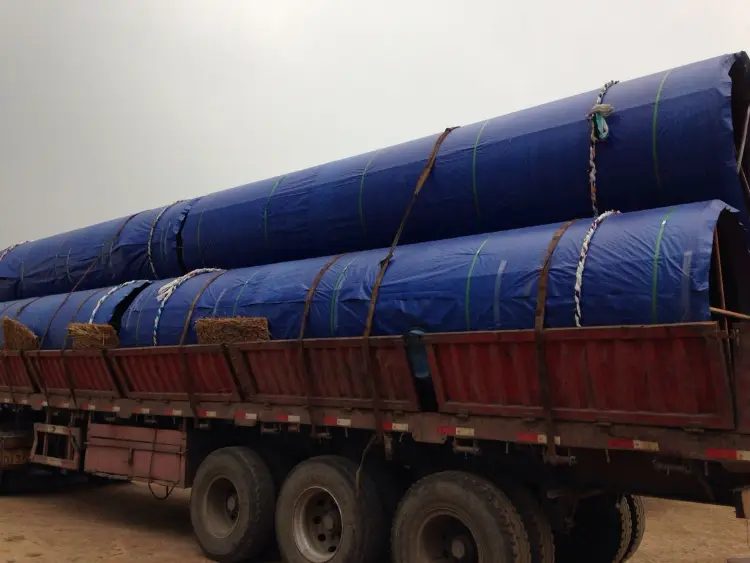
EN10025-6 S620QL1 ERW Pipe
EN10025-6 S620QL1 ERW Pipe | High Strength Quenched & Tempered Steel
Comprehensive technical data for S620QL1 steel according to EN 10025-6, covering chemical composition, mechanical and thermal properties, equivalent grades, and application guidance for ERW pipes and structural components.
Hot rolling, cold forming, electric resistance welding (ERW), quenching and tempering
- Phone : +8618037372205
- Email : [email protected]
- WhatsApp: Contact via Whtsapp
- WeChat: +8618037372205
EN10025-6 S620QL1 ERW Pipe Introduction
S620QL1 is a high-strength, quenched and tempered structural steel specified under EN 10025-6. It offers a minimum yield strength of 620 MPa (thickness ≤50 mm) combined with excellent low-temperature notch toughness (Q – quenched and tempered, L1 – impact energy 27 J at -40 °C). This grade provides good weldability, superior resistance to brittle fracture, and high strength-to-weight ratio, making it suitable for demanding welded structures. It is commonly supplied as plate, strip, and subsequently formed into ERW pipes. Typical applications include heavy-duty machinery, offshore structures, crane booms, bridges, and high-pressure piping systems. Delivery condition is quenched and tempered (Q+T), enabling consistent mechanical properties across sections.
EN10025-6 S620QL1 ERW Pipe Chemical Composition
The chemical composition of S620QL1 steel is designed to achieve high strength and toughness after quenching and tempering. Maximum limits encourage good weldability and low carbon equivalent values. Fine grain practice is ensured by aluminium, niobium, vanadium or titanium additions.
- CEV (carbon equivalent) is typically limited per product thickness and standard requirements.
- Options for improved atmospheric corrosion resistance are available upon agreement.
| Element | Standard value (max %) | Remarks |
|---|---|---|
| Carbon (C) | 0.20 | Max |
| Silicon (Si) | 0.80 | Max |
| Manganese (Mn) | 1.70 | Max |
| Phosphorus (P) | 0.020 | Max |
| Sulfur (S) | 0.010 | Max |
| Nitrogen (N) | 0.015 | Max |
| Boron (B) | 0.0050 | Max |
| Chromium (Cr) | 1.50 | Max |
| Copper (Cu) | 0.50 | Max |
| Molybdenum (Mo) | 0.70 | Max |
| Niobium (Nb) | 0.06 | Max |
| Nickel (Ni) | 2.0 | Max |
| Titanium (Ti) | 0.05 | Max |
| Vanadium (V) | 0.12 | Max |
| Zirconium (Zr) | 0.15 | Max |
| Aluminium (Al) | ≥0.020 total | Min for fine grain; acid soluble Al typically ≥0.015 |
EN10025-6 S620QL1 ERW Pipe Thermal and Electrical Physical Properties
Physical properties are representative for quenched and tempered S620QL1 steel and comparable structural steels. Values may slightly vary with temperature and exact chemical composition.
- Density: ~7.85 g/cm³ at 20 °C.
- Young's modulus: ~210 GPa at room temperature.
- Thermal expansion coefficient ~12 × 10⁻⁶ K⁻¹ up to 100 °C.
| Property | Standard requirement value | Unit | Test conditions |
|---|---|---|---|
| Density (ρ) | 7.85 | g/cm³ | 20 °C |
| Modulus of elasticity (E) | 210 | GPa | 20 °C |
| Shear modulus (G) | 80 | GPa | 20 °C |
| Poisson's ratio (ν) | 0.30 | - | 20 °C |
| Thermal expansion coefficient (α) | 12.0 | 10⁻⁶/K | 20–100 °C |
| Thermal expansion coefficient (α) | 12.5 | 10⁻⁶/K | 20–200 °C |
| Thermal expansion coefficient (α) | 13.0 | 10⁻⁶/K | 20–300 °C |
| Thermal conductivity (λ) | 45 | W/(m·K) | 20 °C |
| Specific heat capacity (c) | 460 | J/(kg·K) | 20 °C |
| Electrical resistivity (ρe) | 0.20 | μΩ·m | 20 °C |
EN10025-6 S620QL1 ERW Pipe Mechanical Properties
Mechanical properties are guaranteed in quenched and tempered condition. Values vary with product thickness. Impact energy is measured on longitudinal Charpy-V specimens at -40 °C for grade L1.
- Thickness ≤ 50 mm: minimum yield strength 620 MPa.
- Thickness 50–100 mm: minimum yield strength 580 MPa.
- Thickness 100–150 mm: minimum yield strength 560 MPa.
Bend test using mandrel diameter according to thickness.
| Property | Standard requirement value | Unit | Test conditions |
|---|---|---|---|
| Yield strength (ReH) | ≥620 | MPa | Thickness ≤ 50 mm |
| Yield strength (ReH) | ≥580 | MPa | Thickness 50–100 mm |
| Yield strength (ReH) | ≥560 | MPa | Thickness 100–150 mm |
| Tensile strength (Rm) | 700–890 | MPa | Thickness ≤ 100 mm |
| Tensile strength (Rm) | 650–830 | MPa | Thickness 100–150 mm |
| Elongation (A, L0=5.65√S0) | ≥14 | % | Thickness ≤ 50 mm, longitudinal |
| Elongation (A) | ≥13 | % | Thickness 50–100 mm, longitudinal |
| Bend test (180°) – mandrel diameter | 4t (t = thickness) | - | Thickness ≤ 16 mm |
| Bend test (180°) – mandrel diameter | 6t | - | Thickness > 16 mm |
| Impact energy (KV, -40 °C) | ≥27 | J | Longitudinal, Charpy-V |
| Impact energy (KV, -40 °C) | ≥16 | J | Transverse, Charpy-V |
EN10025-6 S620QL1 ERW Pipe Fully Equivalent Material Standards and Replaceable Grades
| Country/Region | Standard | Grade | Remarks |
|---|---|---|---|
| European Union | EN 10025-6 | S620QL1 | Original specification |
| United Kingdom | BS EN 10025-6 | S620QL1 | British adoption of European standard |
| Germany | DIN EN 10025-6 | S620QL1 | German adoption of European standard |
| France | NF EN 10025-6 | S620QL1 | French adoption of European standard |
| International (ISO) | ISO 4951-2 | E620E | Equivalent high strength Q&T steel with -40 °C impact (E-grade) |
EN10025-6 S620QL1 ERW Pipe Application Introduction
S620QL1 steel is designed for heavy-duty welded structures where weight savings and high resistance to brittle fracture are critical. Its excellent toughness at -40 °C makes it suitable for harsh climatic conditions and dynamic loading. It is widely used in the fabrication of ERW pipes, structural hollow sections, and crane components. Good weldability allows joining with conventional methods with appropriate preheat and consumables.
Product Applications: ERW structural pipes and hollow sections, Crane booms and mobile crane chassis, Offshore platform structures and module support frames, Bridges and high-rise building columns, Hydraulic cylinders and high-pressure piping systems
Processed into products: Welded pipe piles and foundation tubes, Boom segments and lattice parts for mobile cranes, Heavy lifting equipment frames, Wind turbine tower flange adaptors, Mining truck beds and structural components, Offshore structural nodes and bracings
Application industries: Construction and civil engineering, Offshore and marine engineering, Mining and earth-moving equipment, Transportation and heavy vehicle manufacturing, Energy and pressure equipment
EN10025-6 S620QL1 ERW Pipe Similar / Substitute Material Recommendations
| Country/Region | Standard | Grade | Remarks |
|---|---|---|---|
| European Union | EN 10025-6 | S620Q | Same strength, no guaranteed impact (Q-grade) |
| European Union | EN 10025-6 | S620QL | Same strength, -20 °C impact (QL-grade) |
| European Union | EN 10025-6 | S690QL1 | Higher strength (690 MPa), -40 °C impact |
| United States | ASTM A514 | Grade B / Grade P | Min yield 690 MPa, Q&T steel, similar weldability but higher strength |
| China | GB/T 16270 | Q620E | Equivalent strength and -40 °C impact, quenched and tempered |
| Japan | JIS G 3128 | SHY685N | 685 MPa yield, heavily cold worked or Q&T, similar toughness |
Notes:
- ERW pipes produced from S620QL1 plates or strips must comply with appropriate pipe manufacturing standards (e.g., API 2B, EN 10219). Mechanical properties might be slightly altered by cold forming; post-forming heat treatment may be required.
- Preheat and interpass temperature control are recommended during welding (typically 100–150 °C for thickness >10 mm). Low hydrogen welding consumables are suggested to avoid cold cracking.
- For thick sections, post-weld heat treatment (PWHT) is generally not required due to fine grain and tempered martensite microstructure, but stress relieving may be applied if needed, with attention to strength reduction.
- When replacing with equivalent grades, confirm chemical composition, mechanical properties, and impact requirements against the specific product standard.
- Share



