
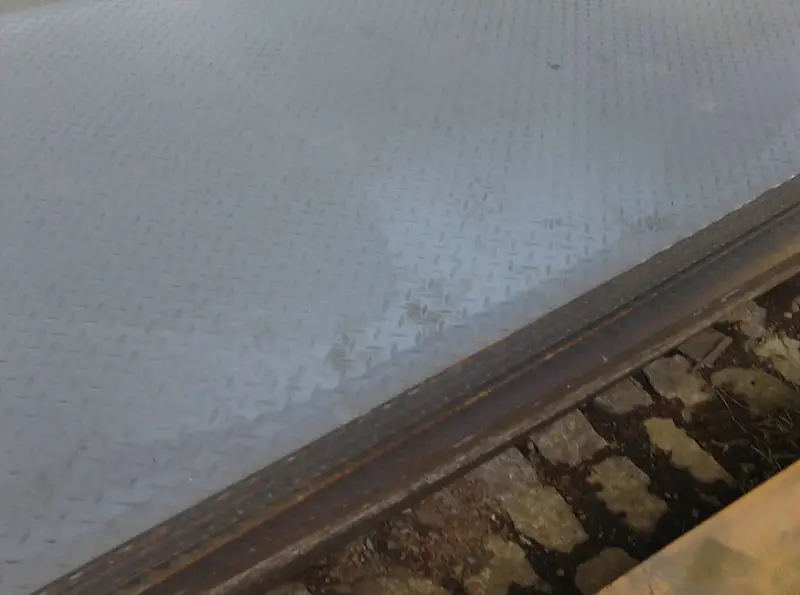
DIN 17102 TStE380 Weldable Fine Grain Structural Steel
DIN 17102 TStE380 Weldable Fine Grain Structural Steel - Premium High-Strength Plate
Comprehensive material data for TStE380 carbon and low-alloy high-strength steel plate per DIN 17102, including chemical composition, mechanical and physical properties, international equivalents, and application guide.
Hot rolling, normalized rolling, welding, bending, cutting, drilling, stamping
- Phone : +8618037372205
- Email : [email protected]
- WhatsApp: Contact via Whtsapp
- WeChat: +8618037372205
DIN 17102 TStE380 Weldable Fine Grain Structural Steel Introduction
TStE380 is a weldable fine-grain structural steel normalized rolled as specified in the German standard DIN 17102. It belongs to the group of carbon and low-alloy high-strength steels with improved atmospheric corrosion resistance and excellent weldability. With a minimum yield strength of 380 MPa for thicknesses up to 16 mm, it offers a good balance between strength, toughness, and formability. The fine grain structure is achieved through microalloying with elements such as niobium and vanadium, allowing the steel to meet strict requirements for structural applications subjected to dynamic loads. TStE380 is widely used in construction, bridge building, crane manufacturing, and heavy machinery where weight reduction and high load-bearing capacity are essential. The material is typically supplied in normalized condition and complies with the latest relevant safety and quality codes.
DIN 17102 TStE380 Weldable Fine Grain Structural Steel Chemical Composition
The chemical composition of TStE380 is controlled to ensure a fine grain structure and consistent mechanical properties. Maximum limits for impurities and microalloying elements like niobium and vanadium are specified for weldability and toughness.
| Chemical Element | Standard Value (%) | Remarks |
|---|---|---|
| Carbon (C) | ≤ 0.18 | Ladle analysis |
| Silicon (Si) | ≤ 0.50 | Ladle analysis |
| Manganese (Mn) | 1.00 – 1.60 | Ladle analysis |
| Phosphorus (P) | ≤ 0.035 | Ladle analysis |
| Sulfur (S) | ≤ 0.030 | Ladle analysis |
| Aluminium (Al) | ≥ 0.020 (total) | Min. for fine grain treatment |
| Niobium (Nb) | ≤ 0.05 | Microalloying element |
| Vanadium (V) | ≤ 0.10 | Microalloying element |
| Nitrogen (N) | ≤ 0.015 | Bound nitrogen |
| Copper (Cu) | ≤ 0.35 | Residual element |
| Chromium (Cr) | ≤ 0.30 | Residual; not intentionally added |
| Nickel (Ni) | ≤ 0.30 | Residual; not intentionally added |
| Molybdenum (Mo) | ≤ 0.08 | Residual; not intentionally added |
| Titanium (Ti) | optional, ≤ 0.05 | May be used for grain refinement |
DIN 17102 TStE380 Weldable Fine Grain Structural Steel Thermal and Electrical Physical Properties
Physical properties are typical for structural steels at room temperature unless noted. They may vary with composition and temperature.
| Property | Standard Required Value | Unit | Test Condition |
|---|---|---|---|
| Density (ρ) | ~7.85 | g/cm³ | At 20°C |
| Modulus of Elasticity (E) | ~210 | GPa | At 20°C |
| Shear Modulus (G) | ~81 | GPa | Calculated at 20°C |
| Poisson's Ratio (ν) | ~0.30 | – | At 20°C |
| Thermal Expansion Coefficient (α) | 11.1 × 10⁻⁶ | /K | 20–100°C |
| Thermal Expansion Coefficient (α) | 12.1 × 10⁻⁶ | /K | 20–200°C |
| Thermal Expansion Coefficient (α) | 12.9 × 10⁻⁶ | /K | 20–300°C |
| Thermal Conductivity (λ) | ~52 | W/(m·K) | At 20°C |
| Specific Heat Capacity | ~460 | J/(kg·K) | At 20°C |
| Electrical Resistivity (ρ_e) | ~0.25 | µΩ·m | At 20°C |
DIN 17102 TStE380 Weldable Fine Grain Structural Steel Mechanical Properties
Mechanical testing is performed on transverse specimens in normalized condition. Values vary with product thickness. For plates >16 mm and ≤40 mm, yield strength is reduced accordingly.
| Property | Standard Required Value | Unit | Test Condition |
|---|---|---|---|
| Yield Strength (ReH) | ≥ 380 | MPa | Thickness ≤ 16 mm, transverse |
| Yield Strength (ReH) | ≥ 360 | MPa | 16 < t ≤ 40 mm |
| Tensile Strength (Rm) | 530 – 680 | MPa | Thickness ≤ 40 mm |
| Elongation (A) | ≥ 21 | % | Gauge length 5.65√So, transverse |
| Elongation (A) | ≥ 19 | % | For 40 < t ≤ 63 mm |
| Impact Energy (KV) | ≥ 27 at -20°C | J | Charpy-V, longitudinal |
| Bend Test | Mandrel diameter = 3t, 180° | – | Transverse test piece, t = sample thickness |
DIN 17102 TStE380 Weldable Fine Grain Structural Steel Exact Equivalent Material Standards and Replaceable Grades
| Country/Region | Standard | Grade | Remarks |
|---|---|---|---|
| Europe (EN) | EN 10025-3 | S380N (1.8902) | Direct equivalent, normalized |
| International (ISO) | ISO 4950-1 | Fe E380 | Comparable high yield strength structural steel |
| China | GB/T 1591-2018 | Q420B / Q390B (similar, not identical) | Mechanical properties close, chemistry adjusted |
| Russia | GOST 19281 | 12G2S / 17GS (approximate) | Yield strength ~390 MPa |
| Japan | JIS G 3106 | SM490YA (approximate) | Yield 365 MPa, similar application |
| USA | ASTM A572 | Grade 60 (415 MPa) | Higher yield, but similar weldability; not normalized |
DIN 17102 TStE380 Weldable Fine Grain Structural Steel Application Introduction
TStE380 is designed for welded, highly stressed structural components where weight savings and high reliability are critical. Its good weldability and low-temperature toughness make it suitable for mobile and stationary structures.
Product Applications: Structural steel frameworks, Bridge girders and bearing plates, Crane booms and lattice masts, Excavator arms and buckets, Pipe-layer booms, Press frames and machine beds, Wind turbine tower shells, Storage tank shells (ambient temperature)
Processed into products: Welded I-beams and box columns, Flanges and stiffeners, Brackets and mounting plates, Boom sections and jibs, Chassis frames for heavy vehicles, Shear connectors, End plates for beams
Application industries: Construction & civil engineering, Heavy machinery & equipment, Bridge construction, Shipbuilding (limited to non-LQ portions), Offshore infrastructure, Mining and earth-moving equipment, Wind energy (tower sections, flanges), Transportation (trailers, rail frames)
DIN 17102 TStE380 Weldable Fine Grain Structural Steel Similar/Near-Equivalent Substitute Materials
| Country/Region | Standard | Grade | Remarks |
|---|---|---|---|
| Europe | EN 10025-3 | S420N | Higher strength, normalized; may replace in weight-critical designs |
| Europe | EN 10025-6 | S380Q (quenched & tempered) | Different delivery condition; higher toughness |
| Germany (superseded) | DIN 17102 | TStE420 | Same standard, yield strength 420 MPa |
| International | ISO 4951-2 | S380NC | Cold-rolled form, may be substitutable in some profiles |
| UK | BS 4360 | 50EE (superseded) | Historical equivalent, similar properties |
Notes:
Special Requirements: When ordering, specify normalizing rolling condition and any supplementary tests like ultrasonic testing (class S0/E0 according to EN 10160) or low-temperature impact testing at -40°C. The steel is not intended for hot-dip galvanizing without prior consultation due to possible liquid metal induced embrittlement. Welding procedures should follow established guidelines (e.g., EN 1011-2) with low-hydrogen consumables. This grade is gradually being replaced by EN 10025-3 S380N in new projects, but remains available from many stockists for maintenance and repair.
- Share



