
CCS Grade AQ51 Shipbuilding Steel Plate
CCS Grade AQ51 Shipbuilding Steel Plate - High Strength Quenched & Tempered Hull Structural Steel
Detailed material data for CCS Grade AQ51 shipbuilding steel plate: chemical composition, mechanical properties, physical properties, international equivalents, and application guide.
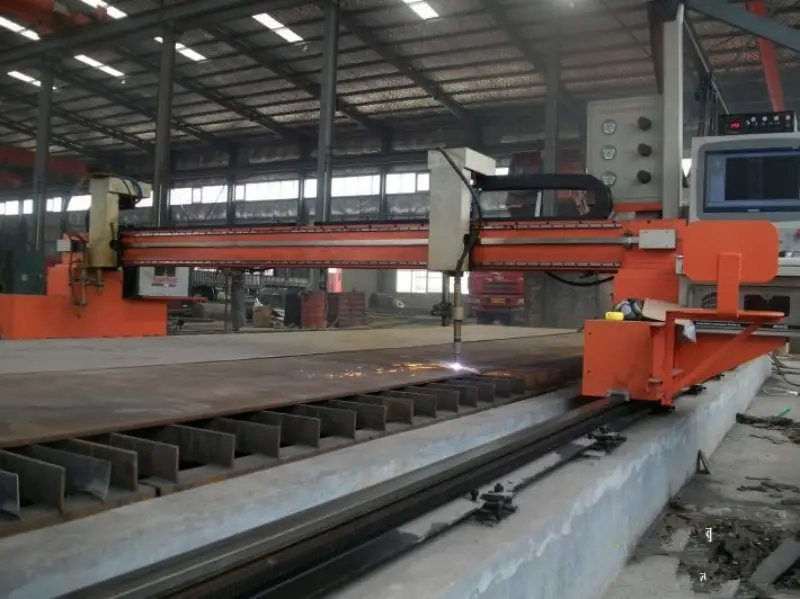
Hot rolling, quenching and tempering, cutting, bending, welding, forming
- Phone : +8618037372205
- Email : [email protected]
- WhatsApp: Contact via Whtsapp
- WeChat: +8618037372205
CCS Grade AQ51 Shipbuilding Steel Plate Introduction
CCS Grade AQ51 is a high-strength quenched and tempered hull structural steel certified by the China Classification Society (CCS). It belongs to the AH51/DH51/EH51 family with minimum yield strength of 510 MPa. The 'A' designates an impact test temperature of 0°C, and 'Q' indicates the quenching and tempering delivery condition. This steel offers excellent strength, good toughness at low temperatures, and reliable weldability, primarily used in the construction of ships, offshore platforms, and marine engineering structures. The steel is produced in accordance with the CCS Rules for the Classification of Sea-going Steel Ships and is typically supplied in the normalized or quenched and tempered condition as plate.
CCS Grade AQ51 Shipbuilding Steel Plate Chemical Composition
The chemical composition is based on ladle analysis according to CCS Rules. Elements like C, Mn, Si, P, S, and micro-alloying elements (Nb, V, Ti) are controlled to ensure strength and toughness after quenching and tempering.
- Carbon equivalent (Ceq) typically ≤ 0.38% for good weldability.
- Fine grain practice with acid-soluble aluminium (Als) and nitrogen content is required.
| Chemical Element | Standard Value (max unless range) | Remarks |
|---|---|---|
| C | 0.18 | Ladle analysis |
| Mn | 1.60 | Range 0.90-1.60 |
| Si | 0.10-0.50 | Deoxidation element |
| P | 0.025 | Max |
| S | 0.025 | Max |
| Cr | 0.20 | Max |
| Ni | 0.40 | Max |
| Mo | 0.08 | Max |
| Cu | 0.35 | Max |
| Al (acid soluble) | 0.015 min | Grain refinement |
| Nb | 0.05 | Micro-alloy |
| V | 0.10 | Micro-alloy |
| Ti | 0.02 | Max |
| N | 0.012 | Max |
CCS Grade AQ51 Shipbuilding Steel Plate Thermal and Electrical Physical Properties
The following physical properties are typical values for quenched and tempered high-strength low-alloy steel of this grade. Data is derived from recognized engineering references for similar 500 MPa yield strength steels, as physical properties are not explicitly standardized by CCS.
- Density is assumed at room temperature.
- Thermal and electrical properties are approximate and may vary with temperature and exact composition.
| Property | Typical Value | Unit | Test Condition / Remarks |
|---|---|---|---|
| Density (ρ) | 7.85 | g/cm³ | Room temperature |
| Elastic Modulus (E) | 205 | GPa | Room temperature |
| Shear Modulus (G) | 80 | GPa | Calculated |
| Poisson's Ratio (ν) | 0.3 | - | Typical for steel |
| Thermal Expansion Coeff. (α) | 12.0 (20-100°C) | 10⁻⁶/K | Mean value |
| Thermal Expansion Coeff. (α) | 12.8 (20-200°C) | 10⁻⁶/K | Mean value |
| Thermal Expansion Coeff. (α) | 13.5 (20-400°C) | 10⁻⁶/K | Mean value |
| Thermal Conductivity (λ) | 42 | W/(m·K) | At 100°C |
| Specific Heat Capacity | 460 | J/(kg·K) | Room temperature |
| Electrical Resistivity (ρ_e) | 0.22 | μΩ·m | Room temperature |
CCS Grade AQ51 Shipbuilding Steel Plate Mechanical Properties
Mechanical properties are specified for as-delivered (quenched and tempered) condition, tested on transverse specimens unless otherwise noted. The values depend on plate thickness. Impact test at 0°C (A-grade) with minimum energy of 34J (longitudinal).
- Yield strength (ReH) ≥ 510 MPa for thickness ≤ 50 mm.
- Tensile strength (Rm) in range 610-770 MPa.
- Elongation (A) ≥ 16% for thickness ≤ 50 mm.
| Property | Standard Requirement | Unit | Test Condition / Remarks |
|---|---|---|---|
| Yield Strength (ReH) | ≥ 510 | MPa | Thickness ≤ 50 mm, transverse |
| Tensile Strength (Rm) | 610 - 770 | MPa | Thickness ≤ 50 mm |
| Elongation (A) | ≥ 16 | % | Gauge length 5.65√So, thickness ≤ 50 mm |
| Impact Energy (KV) at 0°C | ≥ 34 (longitudinal) | J | Charpy V-notch, average of 3 specimens, individual min 24 J |
| Bend Test | d=2a (t ≤ 25 mm) | - | 180° bend; no cracks; d= mandrel diameter, a= specimen thickness |
| Bend Test | d=3a (25 < t ≤ 50 mm) | - | 180° bend |
CCS Grade AQ51 Shipbuilding Steel Plate Equivalent Designations and Substitutable Grades
| Country / Region | Standard / Classification Society | Grade | Remarks |
|---|---|---|---|
| International | IACS | AH51 | Unified Requirement UR W11 |
| USA / ABS | ABS Rules | AQ51 | Identical mechanical and chemical requirements |
| Norway / DNV | DNV Rules | NV A510 | Now DNV GL; grade A510 |
| UK / LR | Lloyd's Register | AH51 | Equivalent |
| France / BV | Bureau Veritas | AH51 | Equivalent |
| Italy / RINA | RINA Rules | AH51 | Equivalent |
| South Korea / KR | Korean Register | AH51 | Equivalent |
| Japan / NK | ClassNK | AH51 | Equivalent |
| China / GB | GB 712 | AQ51 | Identical to CCS AQ51 |
| Germany / GL | Germanischer Lloyd (now DNV GL) | AH51 | Equivalent |
CCS Grade AQ51 Shipbuilding Steel Plate Application Introduction
AQ51 steel plates are specifically designed for critical structural components in shipbuilding and marine engineering where high strength is required to reduce weight while maintaining safety. The material is suitable for cold forming, bending, and welding under controlled conditions with appropriate preheat and interpass temperatures. The quenched and tempered microstructure provides an excellent combination of strength and toughness. Common applications include:
Product Applications: Hull plates and stiffeners, Deck plates, Longitudinal and transverse bulkheads, Bottom and side shell plates, Heavy-lift crane booms (marine), Jack-up rig legs and spudcans
Processed into products: Ship hull plating (especially in high stress areas), Web frames and girders, Deck stringer plates, Stern frames and rudder horns, Brackets and connection plates, Offshore module support beams, Transition pieces in offshore wind structures
Application industries: Shipbuilding (commercial and naval vessels), Offshore oil and gas platforms, Renewable energy (offshore wind turbine foundations), Heavy engineering and bridge construction, Port and harbour structures
CCS Grade AQ51 Shipbuilding Steel Plate Similar Materials with Close Performance
| Country / Region | Standard | Grade | Remarks |
|---|---|---|---|
| China | GB/T 16270 | Q550D | High strength structural steel; yield ≥550 MPa, similar toughness |
| Europe | EN 10025-6 | S550QL | Quenched and tempered structural steel; min yield 550 MPa, good comparison for non-marine use |
| USA | ASTM A514/A514M | Grade B/H/F | High yield strength quenched and tempered alloy steel; yield ≥690 MPa, but higher strength; AQ51 often used as a stepping stone |
| Japan | JIS G 3128 | SHY685 | High yield strength steel for welded structures; yield ≥685 MPa, but similar concept |
Notes:
Welding: Preheating is generally not required for plate thicknesses up to 50 mm when using low-hydrogen electrodes and appropriate heat input. However, specific welding procedure qualification is necessary according to CCS Rules. Formability: The quenched and tempered condition provides good cold bending properties, but hot forming must be followed by re-quenching and tempering to restore mechanical properties. Certification: Material is supplied with CCS certificates, including inspection of chemical composition, tensile, impact, and bend tests. Supplementary testing (e.g., through-thickness properties to Z35, ultrasonic examination) can be specified upon order.
- Share



