
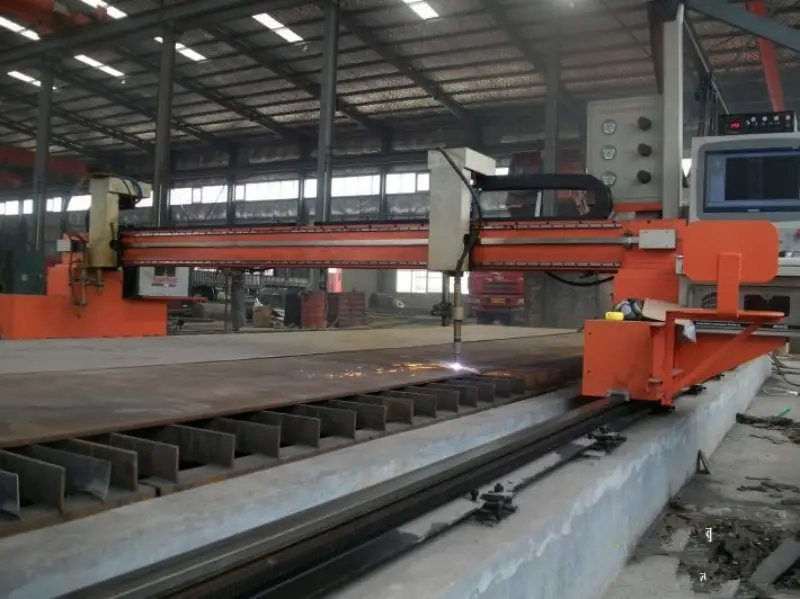
ASME SA709 Grade 100W Weathering Steel Plate
ASME SA709 Grade 100W Weathering Steel Plate - Properties and Applications
Comprehensive technical data for ASME SA709 Grade 100W steel plate covering chemical composition, mechanical and physical properties, thermal and electrical characteristics, equivalent and similar grades, and application guidance.
Hot-rolling, normalizing, quenching and tempering (optional)
- Phone : +8618037372205
- Email : [email protected]
- WhatsApp: Contact via Whtsapp
- WeChat: +8618037372205
ASME SA709 Grade 100W Weathering Steel Plate Introduction
ASME SA709 Grade 100W is a high-strength low-alloy weathering steel plate standardized under ASME SA709/SA709M. It is primarily designed for structural applications requiring yield strengths of at least 100 ksi (690 MPa) with enhanced atmospheric corrosion resistance. The steel develops a protective oxide layer (patina) when exposed to the environment, significantly reducing maintenance and painting needs. This grade belongs to the family of high-performance weathering steels and is widely used in bridge construction, heavy building frames, and other outdoor structures. Its chemical composition includes controlled additions of copper, chromium, nickel, and vanadium to ensure both strength and corrosion resistance. Typically supplied in plate form, it can be delivered in as-rolled, normalized, or quenched and tempered conditions. Weldability is good when proper procedures are followed, including preheating and low-hydrogen practices. The material's high strength-to-weight ratio contributes to lighter designs and cost savings in large-scale infrastructure projects. When notch toughness is required, Charpy V‑notch impact testing can be specified through supplementary requirements. ASME SA709 Grade 100W is essentially identical to ASTM A709 Grade 100W, making it globally recognized and interchangeable.
ASME SA709 Grade 100W Weathering Steel Plate Chemical Composition
The following table lists the specified chemical limits for ASME SA709 Grade 100W according to the standard. All values represent heat analysis (ladle analysis) unless otherwise noted. The alloy is designed to provide high strength and improved atmospheric corrosion resistance through controlled additions of copper, chromium, nickel, and vanadium. Product analysis tolerances apply as per the standard.
| Element | Content (wt%) | Remarks |
|---|---|---|
| Carbon (C) | 0.21 max | Typical range 0.10 – 0.19; lower carbon improves weldability |
| Manganese (Mn) | 0.80 – 1.25 | Contributes to strength and hardenability |
| Phosphorus (P) | 0.030 max | Residual element; controlled for toughness |
| Sulfur (S) | 0.030 max | Controlled to improve cleanliness and ductility |
| Silicon (Si) | 0.15 – 0.50 | Used for deoxidation; influences strength |
| Copper (Cu) | 0.25 – 0.55 | Essential for weathering (atmospheric) corrosion resistance |
| Chromium (Cr) | 0.90 – 1.25 | Enhances corrosion resistance and strength |
| Nickel (Ni) | 0.50 max | Improves toughness and corrosion resistance; sometimes specified 0.25–0.50 if needed |
| Vanadium (V) | 0.02 – 0.10 | Grain refiner and precipitation strengthener |
| Niobium (Nb) | 0.06 max | Optional microalloying; provides grain refinement |
| Aluminum (Al) | 0.06 max | Used for deoxidation; fine grain practice |
| Nitrogen (N) | 0.015 max | Low nitrogen ensures good toughness |
ASME SA709 Grade 100W Weathering Steel Plate Thermal and Electrical Physical Properties
Physical properties for a low-alloy high-strength steel like Grade 100W are not individually specified in the material standard but are representative of this class of steel. The values given below are typical for room temperature unless otherwise noted and can be used for engineering calculations. Slight variations may occur depending on actual heat treatment and composition.
| Property | Typical Value | Unit | Test Condition |
|---|---|---|---|
| Density (ρ) | 7.85 | g/cm³ | At 20 °C |
| Elastic modulus (E) | 200 | GPa | At 20 °C, static loading |
| Shear modulus (G) | 80 | GPa | At 20 °C, calculated |
| Poisson's ratio (ν) | 0.30 | – | Elastic range, room temperature |
| Thermal expansion coefficient (α) | 11.7 | ×10⁻⁶ /°C | 20–100 °C |
| Thermal expansion coefficient (α) | 12.5 | ×10⁻⁶ /°C | 20–200 °C |
| Thermal expansion coefficient (α) | 13.2 | ×10⁻⁶ /°C | 20–300 °C |
| Thermal conductivity (λ) | 45 | W/(m·K) | At 100 °C |
| Specific heat capacity (cp) | 460 | J/(kg·K) | At 20 °C |
| Electrical resistivity (ρ_e) | 0.20 | µΩ·m | At 20 °C |
ASME SA709 Grade 100W Weathering Steel Plate Mechanical Properties
Minimum mechanical properties for ASME SA709 Grade 100W plates tested in accordance with the standard. Values depend on plate thickness and test direction. Tensile testing is performed on specimens orientated transversely to the rolling direction when possible. Charpy V‑notch impact properties are optional and apply only when specified in the purchase order. Bending test is not mandatory for plates but may be required for formed components.
| Property | Standard Value | Unit | Test Condition |
|---|---|---|---|
| Yield Strength (ReH) | ≥ 690 (≥ 100) | MPa (ksi) | Plates ≤ 100 mm (4 in.) thickness |
| Tensile Strength (Rm) | 760 – 895 (110 – 130) | MPa (ksi) | Plates ≤ 100 mm (4 in.) thickness |
| Elongation (A) in 200 mm (8 in.) | ≥ 18 | % | Thickness ≤ 20 mm (0.75 in.) |
| Elongation (A) in 200 mm (8 in.) | ≥ 17 | % | 20 mm < thickness ≤ 50 mm (0.75–2 in.) |
| Elongation (A) in 200 mm (8 in.) | ≥ 17 | % | 50 mm < thickness ≤ 100 mm (2–4 in.) |
| Elongation (A) in 50 mm (2 in.) | ≥ 21 | % | Thickness ≤ 100 mm (typical for all conditions) |
| Charpy V-notch Impact (KV) | ≥ 27 (≥ 20) | J (ft·lbf) | At –20 °C (–4 °F) when supplementary S5 ordered; longitudinal direction |
ASME SA709 Grade 100W Weathering Steel Plate Fully Equivalent Standards and Grades
| Country/Region | Standard | Grade | Remarks |
|---|---|---|---|
| USA | ASTM A709/A709M | Grade 100W | Identical chemical composition and mechanical requirements; ASME SA709 is an adoption of ASTM A709. |
ASME SA709 Grade 100W Weathering Steel Plate Application Introduction
ASME SA709 Grade 100W is a premier choice for outdoor, unpainted applications where high strength and natural corrosion resistance reduce life‑cycle costs. Its combination of mechanical strength and weathering ability makes it ideal for critical infrastructure. The steel can be welded, bolted, and fabricated using conventional structural steel methods, though attention to preheat and welding consumables is needed. Typical applications range from long‑span bridges to high‑rise building frames.
Product Applications: Welded plate girders for bridges and viaducts, Built‑up H‑beams and box columns, Truss members and tie beams, Bridge decks and orthotropic deck plates, Outdoor storage tanks and silos, Crane runway beams and heavy lifting structures
Processed into products: Main bridge girder webs and flanges, Cross girders and diaphragms, Column base plates and splice plates, Box girder segments, Lattice tower legs, Heavy‑duty machinery frames, Piling and sheet piling (where atmospheric corrosion is the primary concern)
Application industries: Bridge Construction, Heavy Civil Engineering, Architectural and Building Structures, Offshore and Marine Structures (limited to atmospheric exposure), Heavy Equipment and Crane Manufacturing
ASME SA709 Grade 100W Weathering Steel Plate Similar Alternative Materials – High-Strength Structural Steels
| Country/Region | Standard | Grade | Remarks |
|---|---|---|---|
| USA | ASTM A709/A709M | Grade HPS 100W | High-performance steel with improved fracture toughness and weldability; similar strength and weathering capability. |
| Europe | EN 10025-6 | S690Q | Quenched and tempered high-strength structural steel (yield 690 MPa); no inherent atmospheric corrosion resistance (weathering) – requires painting or corrosion allowance. |
| Japan | JIS G 3128 | SHY685 | High-yield-strength steel for welded structures (yield 685 MPa); excellent toughness, but no intentional weathering alloy additions. |
| USA | ASTM A514/A514M | Grade B | Quenched and tempered alloy steel plate with minimum yield 690 MPa; used for structural and pressure vessel applications; not intended for weathering service. |
Notes:
- Charpy V‑notch toughness: When required, impact testing is conducted in accordance with the supplementary requirement S5 of ASTM A709. Typical absorbed energy values of 27 J at –20 °C are achievable with fine grain practice.
- Weldability: Grade 100W has a carbon equivalent (CE) around 0.45–0.55. Welding requires low‑hydrogen electrodes, proper preheat (typically 100–150 °C), and post‑weld cooling control to avoid hydrogen‑induced cracking.
- Weathering performance: The steel forms a stable patina in alternating wet/dry cycles. It is not recommended for continuously submerged or buried applications without protective coating.
- Availability: Thicknesses from 6 mm to 100 mm are commonly available in plate form. Wider and longer plates can be supplied for bridge fabrication.
- Certification: Material is normally supplied with mill test certificates per EN 10204 type 3.1 or 3.2, showing chemical and mechanical test results.
- Share



