
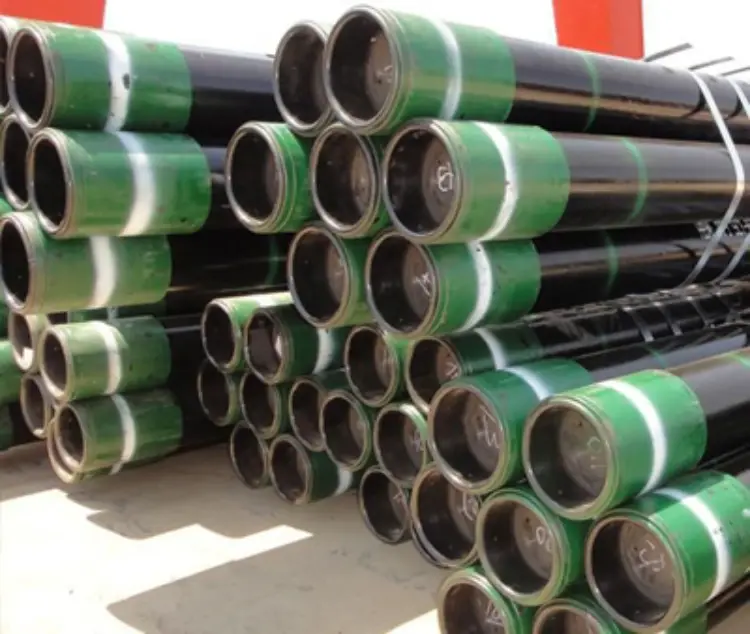
API 5L X70 Pipeline Steel
API 5L X70 Pipeline Steel: High-Strength Material for Critical Oil & Gas Transmission
Explore the comprehensive material properties, chemical composition, mechanical and thermal physical performance of API 5L X70 (L485) pipeline steel, including its international equivalents and applications.
Hot rolling, controlled rolling, TMCP, normalizing, welding (common for pipe forming)
- Phone : +8618037372205
- Email : [email protected]
- WhatsApp: Contact via Whtsapp
- WeChat: +8618037372205
API 5L X70 Pipeline Steel Introduction
API 5L X70 is a high-strength low-alloy (HSLA) steel grade developed for large-diameter oil and gas transmission pipelines under API Specification 5L. With a minimum specified yield strength of 485 MPa (70 ksi), it offers an excellent combination of high strength, good toughness, and weldability. X70 steel is typically supplied in thermo-mechanically controlled processed (TMCP) condition, often as seamless or welded pipes. Its low carbon content and micro-alloying with elements like niobium, vanadium, and titanium provide fine-grain strengthening and improved resistance to hydrogen-induced cracking (HIC) and stress corrosion cracking (SCC). X70 is widely used for long-distance, high-pressure gas and oil pipelines in onshore and offshore environments, meeting both PSL 1 and PSL 2 delivery conditions.
API 5L X70 Pipeline Steel Chemical Composition – API 5L X70 PSL 2
The following chemical requirements are per API 5L 46th Edition, Table 5 (PSL 2 pipe). For X70M (TMCP) and X70Q (quenched & tempered), the composition includes a maximum carbon equivalent depending on product type. All values are maximum unless a range is given.
- Micro-alloying elements like Nb, V, Ti are often added for grain refinement.
- Low phosphorus and sulfur ensure good ductility and HIC resistance for sour service.
| Chemical Element | Standard Value (max, % or range) | Remarks |
|---|---|---|
| Carbon (C) | 0.12 | For X70Q, max 0.18 |
| Manganese (Mn) | 1.65 | For X70Q, max 1.75 |
| Phosphorus (P) | 0.020 | PSL2 requirement |
| Sulfur (S) | 0.010 | PSL2 requirement |
| Silicon (Si) | 0.45 | Common for deoxidation |
| Nickel (Ni) | 0.50 | Max unless specified |
| Chromium (Cr) | 0.50 | Max unless specified |
| Molybdenum (Mo) | 0.50 | Max unless specified |
| Copper (Cu) | 0.50 | Max unless specified |
| Vanadium (V) | 0.10 | Included in V+Nb+Ti ≤ 0.15% |
| Niobium (Nb) | 0.07 | Included in V+Nb+Ti ≤ 0.15% |
| Titanium (Ti) | 0.06 | Included in V+Nb+Ti ≤ 0.15% |
| Aluminum (Al) | 0.060 | Total Al, usually added for grain refinement |
| Nitrogen (N) | 0.012 | Unless agreed otherwise |
| Vanadium + Niobium + Titanium (V+Nb+Ti) | ≤ 0.15% | Sum of micro-alloying elements |
| Carbon Equivalent (CEpcm) | ≤ 0.25 typ. | For PSL2 with t ≤ 25 mm; varies with thickness |
API 5L X70 Pipeline Steel Thermal and Electrical Physical Properties
The following physical properties are typical for API 5L X70 low-alloy steel at ambient temperature unless otherwise noted. These values are not specified in API 5L but provide essential design guidance. Density, modulus, and thermal expansion are critical for pipeline stress analysis.
- Properties are similar to other microalloyed C-Mn steels.
- The coefficient of thermal expansion increases with temperature.
| Property Item | Standard Reference Value | Unit | Test Condition / Temperature |
|---|---|---|---|
| Density (ρ) | 7.85 | g/cm³ | Room temperature |
| Elastic Modulus (E) | 205 | GPa | 20 °C |
| Shear Modulus (G) | 80 | GPa | Calculated from E and ν |
| Poisson's Ratio (ν) | 0.30 | — | Room temperature |
| Thermal Expansion Coefficient (α) | 1.20E-05 | 1/K | 20 – 100 °C |
| Thermal Expansion Coefficient (α) | 1.28E-05 | 1/K | 20 – 200 °C |
| Thermal Expansion Coefficient (α) | 1.35E-05 | 1/K | 20 – 400 °C |
| Thermal Conductivity (λ) | 50 | W/(m·K) | 20 °C |
| Thermal Conductivity (λ) | 46 | W/(m·K) | 200 °C |
| Thermal Conductivity (λ) | 42 | W/(m·K) | 400 °C |
| Specific Heat Capacity (cp) | 460 | J/(kg·K) | 20 °C |
| Specific Heat Capacity (cp) | 520 | J/(kg·K) | 200 °C |
| Specific Heat Capacity (cp) | 580 | J/(kg·K) | 400 °C |
| Electrical Resistivity (ρe) | 1.50E-07 | Ω·m | 20 °C, approx. 0.15 μΩ·m |
API 5L X70 Pipeline Steel Mechanical Properties – API 5L X70 PSL 2
Mechanical properties are specified per API 5L Table 7 (PSL 2). Yield strength (Rt0.5) and tensile strength (Rm) are determined in the transverse direction for pipe body. Elongation is calculated using 5d gauge length or strip specimens. Impact test values vary by pipe diameter and service temperature. The values below represent common requirements for X70M seamless or welded pipes.
| Property Item | Standard Required Value | Unit | Test Condition |
|---|---|---|---|
| Yield Strength (Rt0.5) | 485 – 635 | MPa | Transverse strip specimen, 0.5% total extension |
| Tensile Strength (Rm) | 570 – 760 | MPa | Transverse strip specimen |
| Yield to Tensile Ratio (Rt0.5/Rm) | ≤ 0.93 | — | For PSL2 in sour service or as agreed |
| Elongation (A) | ≥ 22 | % | 5d gauge length (for 12.7 mm wall, approx. 16% in 2 in.) – can vary; formula: A=1940*(Axs0.2)/U^0.9 |
| Elongation in 2 in. (50 mm) | ≥ 18 (typical) | % | Rectangular specimen, nominal wall thickness |
| Charpy Impact (KV) at 0 °C | ≥ 40 (avg), ≥ 30 (single) | J | Full-size specimen, transverse, PSL2 |
| Charpy Impact (KV) at -20 °C | ≥ 27 (avg), ≥ 20 (single) | J | Optional for arctic applications |
| Shear Area (DWTT) at 0 °C | ≥ 85 | % | Drop Weight Tear Test for large diameter pipes |
| Hardness (HV10) | ≤ 300 (weld), ≤ 250 (base metal) | HV | PSL2 for sour service |
API 5L X70 Pipeline Steel Equivalent Material Standards and Replaceable Grades
| Country/Region | Standard | Grade | Remarks |
|---|---|---|---|
| International | ISO 3183 | L485 | Direct equivalent for PSL2 line pipe, same yield class |
| Europe | EN 10208-2 | L485MB | PSL2 X70 with TMCP, similar chemistry and properties; M indicates thermomechanical rolling |
| Canada | CSA Z245.1 | Grade 483 Cat II | Canadian line pipe standard, Cat II aligns with PSL2 |
| Australia/New Zealand | AS/NZS 2885 | X70 | Often references API 5L directly; no unique grade code |
| Russia/GOST | GOST R 52079 (based on ISO 3183) | K55 (if equivalent to L485) | Use L485 per GOST, but direct adoption varies |
| DNV (offshore) | DNVGL-ST-F101 | SAWL 485 or SMLS 485 | Submarine pipeline systems; similar mechanical requirements |
API 5L X70 Pipeline Steel Application Introduction
API 5L X70 is engineered for demanding pipeline applications. Its high strength-to-weight ratio allows reduced wall thickness and lower overall project cost while maintaining safe operating pressure. The steel is suitable for sweet and sour (with additional testing) environments and is compatible with a wide range of welding procedures. Common design codes include ASME B31.8 (Gas Transmission) and ASME B31.4 (Liquid Pipelines).
Product Applications: Seamless and welded line pipe (HFW, LSAW, SSAW), Induction bends and cold-formed fittings, Piping system components for onshore and offshore terminals, Casings for pipeline crossings and thrust boring
Processed into products: Mainline pipe sections for gas and oil transmission, Pig launchers and receivers, Tie-in spools and risers, Compressor station piping and headers, Metallurgical bonded clad pipes (for corrosive service), Forged flanges (A694 F70) and fittings (A860 WPHY 70)
Application industries: Oil & Gas Upstream (gathering lines), Gas Transmission (long-distance, high-pressure networks), Refinery & Petrochemical (transfer lines), Water Injection and Disposal Systems, Offshore Platform Piping (topside and risers), Geothermal and CO2 Transport (with specific requirements)
API 5L X70 Pipeline Steel Similar / Substitute Materials Recommendation
| Country/Region | Standard | Grade | Remarks |
|---|---|---|---|
| USA/International | API 5L | X65 (L450) | Lower strength grade (450 MPa yield), suitable for lower pressure but better economy; may replace X70 with increased wall thickness |
| USA/International | API 5L | X80 (L555) | Higher strength grade (555 MPa yield), used for higher pressure or thinner wall; requires more stringent welding control |
| Europe | EN 10028-3 | P460NH (or P460NL1) | Boiler/pressure vessel steel with similar strength, used for storage tanks and pressure equipment (not intended for line pipe) |
| USA | ASTM A694 | F70 | Flanges and fittings forged material compatible with X70 line pipe; matching yield strength |
| USA | ASTM A860 | WPHY 70 | Wrought high-yield butt-welding fittings matching X70 pipe |
| International | DNVGL-ST-F101 | SAWL 450 (X65 level) | Submarine pipe with lower strength, alternative when X70 is not required |
Notes:
Additional requirements for sour service: When X70 pipe is ordered for H2S-containing environments, supplementary HIC (Hydrogen Induced Cracking) and SSC (Sulfide Stress Cracking) testing per NACE TM0284 and NACE MR0175 are applied. Strain-based design: For geohazard areas, X70 can be supplied with enhanced uniform elongation and a low yield-to-tensile ratio. Welding consumables: Typically require E7010/E8010 cellulosic electrodes or ER70S-6/ER80S-Ni for fill passes, matching the overmatch criteria. Traceability: All PSL2 pipes must be traceable to heat number and include certified material test reports (CMTR).
- Share



