
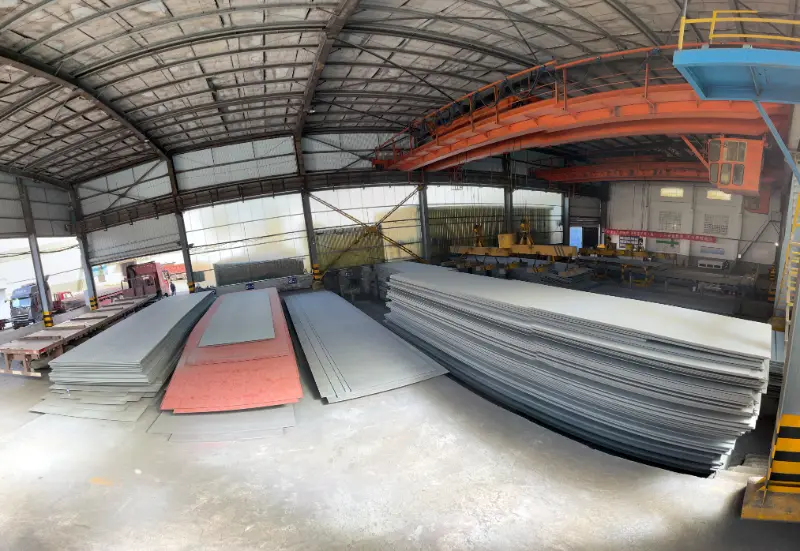
API 5L PSL1 X56 (L390) Pipeline Steel Plate
API 5L PSL1 X56 (L390) Pipeline Steel Plate: Grade, Data, and Global Equivalents
In-depth reference for API 5L PSL1 X56 (L390) pipeline steel plate. Includes chemical composition, mechanical properties, thermal/physical data, international equivalent grades, similar materials, and application guidance.
Hot rolling, controlled rolling, thermomechanical controlled processing (TMCP), normalizing, quenching and tempering (as agreed). Used for pipe manufacturing via longitudinal or spiral welding.
- Phone : +8618037372205
- Email : [email protected]
- WhatsApp: Contact via Whtsapp
- WeChat: +8618037372205
API 5L PSL1 X56 Pipeline Steel Plate Introduction
API 5L PSL1 X56 (also designated L390) is a high-strength low-alloy pipeline steel specified by the American Petroleum Institute. With a minimum yield strength of 390 MPa, it is widely used for manufacturing welded line pipes in oil and gas transportation systems. Manufactured as steel plate or coil, it is delivered under product specification level 1 (PSL1) with standard quality controls. The grade offers an optimized balance of strength, weldability, and toughness for moderate service conditions. It is typically produced via thermomechanical controlled processing (TMCP) or controlled rolling to achieve fine grain size and excellent mechanical properties. International equivalents include ISO 3183 L390 and EN 10208-2 L390MB, ensuring global material consistency.
API 5L PSL1 X56 Pipeline Steel Plate Chemical Composition
The chemical composition limits of API 5L PSL1 X56 are defined in API Spec 5L, Table 4 (PSL1 pipe body). These limits apply to the steel used for pipe plates. Typical micro-alloying elements V, Nb, and Ti are often added to achieve the required strength, with a combined maximum of 0.15%. Residual elements such as Cu, Ni, Cr, Mo are not explicitly restricted unless specified for hydrogen-induced cracking resistance.
| Chemical Element | Standard Value (max) | Remarks |
|---|---|---|
| C | 0.26 | Maximum |
| Mn | 1.40 | Maximum |
| P | 0.030 | Maximum |
| S | 0.030 | Maximum |
| V | 0.07 | Maximum; when added alone or in combination |
| Nb | 0.05 | Maximum; when added alone or in combination |
| Ti | 0.04 | Maximum; when added alone or in combination |
| V+Nb+Ti | 0.15 | Maximum sum if any of these elements are intentionally added |
API 5L PSL1 X56 Pipeline Steel Plate Thermal and Electrical Physical Properties
The following physical properties are not specified by API 5L but are typical for low‑alloy carbon steel of this category at ambient temperature. These values are provided for design guidance and may vary with heat treatment and composition. Properties at elevated temperatures can be estimated using standard steel literature.
| Property | Typical Value | Unit | Test Condition |
|---|---|---|---|
| Density (ρ) | 7.85 | g/cm³ | 20 °C |
| Modulus of Elasticity (E) | 205 | GPa | 20 °C |
| Shear Modulus (G) | 80 | GPa | 20 °C |
| Poisson's Ratio (ν) | 0.29 | - | 20 °C |
| Thermal Expansion Coefficient (α) | 11.9 (20–100 °C) 12.5 (20–200 °C) 12.9 (20–300 °C) | 10⁻⁶/°C | Temperature ranges as indicated |
| Thermal Conductivity (λ) | 50 | W/(m·K) | 20 °C |
| Specific Heat Capacity | 460 | J/(kg·K) | 20 °C |
| Electrical Resistivity (ρ_e) | 0.15 | 10⁻⁶ Ω·m | 20 °C |
API 5L PSL1 X56 Pipeline Steel Plate Mechanical Properties
The tensile properties apply to the base metal of pipe manufactured from X56 steel plate (PSL1). Tests are performed on transverse strip specimens per API 5L. Yield strength (Rt0.5) and tensile strength are mandatory requirements. Elongation is calculated using the formula given in the standard, which depends on specimen cross-sectional area and specified minimum tensile strength. A typical value for a 10 mm thick strip is around 20%. Note that Charpy impact testing is not mandatory for PSL1 unless specified by supplementary requirements.
| Property | Required Value | Unit | Test Condition |
|---|---|---|---|
| Yield Strength (Rt0.5) | ≥ 390 | MPa | Transverse strip; pipe body |
| Tensile Strength (Rm) | ≥ 490 | MPa | Transverse strip; pipe body |
| Elongation (A) | Af = 625 A₀^0.2 / UTS^0.9 | % | Gauge length 2 in (50.8 mm); A₀ = original cross‑sectional area (mm²); UTS = specified min. tensile strength (MPa) |
| Elongation (Typical example) | ≈ 20 | % | Strip 10 × 38 mm (A₀ = 380 mm²), UTS = 490 MPa |
API 5L PSL1 X56 Pipeline Steel Plate Exactly Equivalent Material Standards and Substitutable Grades
| Country/Region | Standard | Grade | Remarks |
|---|---|---|---|
| USA/International | API Spec 5L | X56 (PSL1) | Original designation; also referred to as L390 |
| International | ISO 3183 | L390 (PSL1) | Identical technical delivery conditions |
| Europe | EN 10208-2 | L390MB | EN requirements include mandatory impact testing; normally equivalent for PSL1 with supplementary Charpy |
| China | GB/T 21237 | L390 | Steel plates for welded line pipe; equivalent to API 5L X56 |
API 5L PSL1 X56 Pipeline Steel Plate Application Introduction
API 5L X56 steel plate is primarily intended for fabrication of longitudinally and spirally welded line pipes used in onshore and offshore oil and gas transportation systems. Its combination of strength, formability, and weldability makes it suitable for a variety of demanding applications.
Product Applications: Spiral submerged arc welded (SSAW) pipes, Longitudinal submerged arc welded (LSAW) pipes, Electric resistance welded (ERW) pipes
Processed into products: Pipeline sections for crude oil, natural gas, and refined product lines, Bends, tees, and reducers (after pipe forming), Offshore risers and flowlines (subject to supplementary toughness requirements), Pressure vessel shells (when certified to additional standards), Structural tubes and hollow sections
Application industries: Oil & Gas (pipeline systems), Petrochemical, Energy (transmission lines), Construction and civil engineering (structural supports)
API 5L PSL1 X56 Pipeline Steel Plate Closely Related / Similar Substitute Materials
| Country/Region | Standard | Grade | Remarks |
|---|---|---|---|
| USA/International | API Spec 5L | X52 (L360) | Lower strength (YS ≥ 360 MPa); used when design pressure is slightly lower |
| USA/International | API Spec 5L | X60 (L415) | Higher strength (YS ≥ 415 MPa); can substitute X56 with re‑evaluation of welding and toughness |
| Europe | EN 10208-2 | L415MB | Strength class above X56; may require adjusted welding procedures |
| China | GB/T 21237 | L415 | Higher strength alternative; analogous to API X60 |
Notes:
Supplementary requirements: When Charpy impact toughness or sour service (HIC/SSC) is required, additional specifications (e.g., PSL2, supplementary requirements SR5, SR18) must be invoked. The information provided is based on the latest edition of API Spec 5L (46th Ed., 2018). For exact design data, refer to the specific purchase specification and material test certificate.
- Share



