
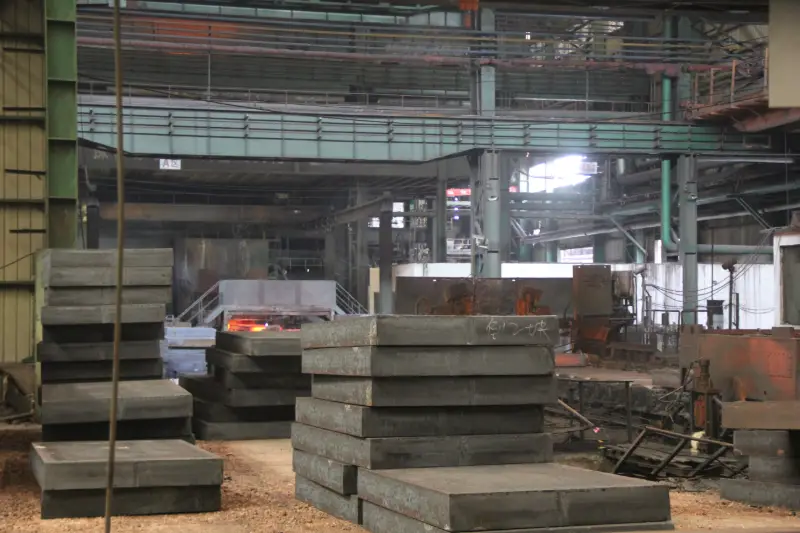
A516 Gr70+304L Clad Steel Plate
A516 Gr70+304L Clad Steel Plate: High-Strength Carbon-Manganese Base with 304L Stainless Cladding for Pressure Vessels
ASTM A516 Grade 70 carbon steel plate clad with ASTM A240 304L austenitic stainless steel, combining excellent low-temperature toughness and weldability with superior corrosion resistance for demanding industrial applications.
Hot rolling, explosion bonding, weld overlay; subsequent fabrication by welding, forming, machining, bending, and rolling
- Phone : +8618037372205
- Email : [email protected]
- WhatsApp: Contact via Whtsapp
- WeChat: +8618037372205
A516 Gr70+304L Clad Steel Plate Introduction
A516 Gr70+304L clad steel plate is a bimetallic composite material consisting of a backing (base) layer of ASTM A516 Grade 70 carbon-manganese steel and a cladding (lining) layer of ASTM A240 304L (UNS S30403) austenitic stainless steel, metallurgically bonded by hot rolling, explosion bonding, or weld overlay processes. The base provides high strength and toughness at moderate and low temperatures, suitable for pressure vessels and boilers, while the 304L clad offers excellent corrosion and oxidation resistance in a wide range of chemical environments. The combination results in a cost-effective solution that reduces the need for solid stainless steel construction, maintaining structural integrity under pressure and temperature cycles. Key features:
- Base metal with minimum yield strength 260 MPa (38 ksi) and tensile strength 485-620 MPa (70-90 ksi).
- 304L clad with low carbon content to avoid sensitization during welding, providing intergranular corrosion resistance.
- Excellent bonding integrity and through-thickness properties.
- Compliant with ASTM A264 (stainless chromium-nickel steel clad plate) or equivalent international standards.
A516 Gr70+304L Clad Steel Plate Chemical Composition
Chemical composition of the base metal (A516 Gr70) and cladding metal (304L) according to ASTM A516/A516M and ASTM A240/A240M. The clad plate overall chemistry is influenced by both layers, but the cladding is specified to a certain minimum thickness. For design, the clad layer must meet the corrosion-resistant alloy composition.
Base metal (A516 Gr70, heat analysis max unless range):
| Chemical Element | Value (Base A516 Gr70) | Value (Clad 304L) | Remarks |
|---|---|---|---|
| Carbon (C) | 0.27 max (≤25 mm), 0.28 max (>25-50 mm), 0.30 max (>50-100 mm), 0.31 max (>100-200 mm) | 0.030 max | Base: depending on thickness; Clad: low carbon for weldability |
| Manganese (Mn) | 0.85-1.20 (≤25 mm), 0.85-1.20 (>25 mm) heat analysis | 2.00 max | Base may require 0.85-1.20% for plates ≤40 mm per A516; typically 0.90-1.20% |
| Phosphorus (P) | 0.025 max | 0.045 max | |
| Sulfur (S) | 0.025 max | 0.030 max | |
| Silicon (Si) | 0.15-0.40 (typical for killed steel) | 0.75 max | Base is killed, silicon ranges 0.15-0.40% |
| Chromium (Cr) | — | 18.0-20.0 | Clad: 304L chromium content |
| Nickel (Ni) | — | 8.0-12.0 | Clad: 304L nickel content |
| Nitrogen (N) | — | 0.10 max | |
| Iron (Fe) | Balance | Balance |
A516 Gr70+304L Clad Steel Plate Thermal and Electrical Physical Properties
Physical properties vary with temperature. Values reported at 20°C unless specified otherwise. Composite thermal conductivity and expansion are often approximated by the rule of mixtures based on thickness fraction, but design values should be taken from the base or clad as appropriate.
| Property | Value (A516 Gr70 Base Metal) | Value (304L Clad Metal) | Unit | Conditions / Notes |
|---|---|---|---|---|
| Density (ρ) | 7.85 | 7.93 | g/cm³ | At 20°C |
| Elastic Modulus (E) | 205 | 193 | GPa | At 20°C |
| Shear Modulus (G) | 80 | 77 | GPa | Calculated from E and Poisson's ratio |
| Poisson's Ratio (ν) | 0.29 | 0.29 | — | At 20°C, typical |
| Thermal Expansion Coefficient (α) | 12.2 (0-100°C), 13.2 (0-200°C), 13.9 (0-300°C) | 16.5 (0-100°C), 17.5 (0-300°C), 18.5 (0-500°C) | µm/m·°C | Mean coefficient; base carbon steel, clad 304L |
| Thermal Conductivity (λ) | 52 (at 20°C), 48 (at 100°C), 42 (at 300°C) | 15 (at 100°C), 17.5 (at 300°C), 21.5 (at 500°C) | W/m·K | Typical values; base decreases with temperature, clad increases |
| Specific Heat Capacity (cp) | 486 (at 20°C), 520 (at 100°C), 565 (at 300°C) | 500 (at 20°C), 530 (at 100°C), 580 (at 300°C) | J/kg·K | Approximate values |
| Electrical Resistivity (ρ_e) | 0.17 (at 20°C) | 0.72 (at 20°C) | µΩ·m | Base carbon steel, clad 304L |
A516 Gr70+304L Clad Steel Plate Mechanical Properties
Mechanical properties of the base metal A516 Gr70 in normalized condition and the clad plate as per ASTM A264 requirements. Bond shear strength is a critical property for clad plates. Typical values for room temperature unless noted. Note: Tensile testing of clad plate is performed on the full thickness specimen; reported strength values reflect the base metal properties when clad thickness is ≤20% of total.
| Property | Required Value (Base A516 Gr70) | Unit | Test Conditions / Remarks |
|---|---|---|---|
| Yield Strength (ReH), min | 260 | MPa | Base metal, transverse, for plates ≤200 mm, room temperature; also expressed as 38 ksi |
| Tensile Strength (Rm) | 485 - 620 | MPa | Base metal; 70-90 ksi |
| Elongation (A), min | 21 (in 200 mm), 27 (in 50 mm) | % | Base metal, standard gauge lengths; values may vary with thickness |
| Bend Test (Clad Plate) | No cracking or separation of cladding | — | 180° bend, diameter = 3× plate thickness (outer bend on clad side or base side as specified) |
| Impact Energy (KV), min | 27 (average of 3 specimens) | J | Base metal Charpy V-notch, -50°C (-58°F), longitudinal; for thickness > 40 mm, transverse may be specified |
| Shear Strength (Bond) | ≥ 140 (typical ASTM A264 requirement) | MPa | Clad interface shear test; minimum 20 ksi |
| Hardness (Base metal) | ≤ 200 | HBW | Typical after normalizing; not mandatory but often reported |
A516 Gr70+304L Clad Steel Plate Complete Equivalent Material Standards and Substitutable Grades
| Country/Region | Standard | Grade | Remarks |
|---|---|---|---|
| USA | ASTM A264 / ASME SA-264 | A516 Gr70 + 304L | Identical; clad plate specification |
| Japan | JIS G3601 | SLA32/SUS304L | Similar combination; SLA32 base comparable to A516 Gr70 |
| China | GB/T 8165 | Q345R + S30403 (022Cr19Ni10) | Base Q345R is similar to A516 Gr70; clad S30403 equals 304L |
| European Union | EN 13445 (design) / EN 10028-2+EN 10028-7 | P265GH + 1.4307 | P265GH base close to A516 Gr70; 1.4307 is 304L |
| Russia | GOST 10885 | 10G2S1 + 08Kh18N10T | Base 10G2S1 similar to A516 Gr70; clad 08Kh18N10T (321) but low carbon 304L type available |
A516 Gr70+304L Clad Steel Plate Application Introduction
A516 Gr70+304L clad plate is widely used in industrial sectors where strength, toughness, and corrosion resistance are simultaneously required. The carbon steel base provides cost savings compared to solid stainless steel, while the thin cladding layer ensures durability against aggressive media. Typical application areas include:
Product Applications: Pressure vessels (autoclaves, separators, reactors, columns), Heat exchangers (shell and tube, plate type), Storage tanks (for chemicals, acids, alkalis), Digesters and bleach towers in pulp mills, FGD (Flue Gas Desulfurization) absorbers and chimneys, Cryogenic storage vessels (LNG, liquid nitrogen) with internal stainless cladding, Caustic soda evaporators
Processed into products: Shell courses and heads of pressure vessels, Tube sheets and baffles in heat exchangers, Nozzle reinforcements and flanges (clad overlay), Internal trays and support rings, Lining for ducts and stacks, Transition joints and cladded pipes
Application industries: Oil and gas (upstream and downstream), Chemical and petrochemical processing, Power generation (fossil and nuclear), Desalination and water treatment, Pulp and paper, Pharmaceutical and food processing (where product purity required), Marine and offshore structures
A516 Gr70+304L Clad Steel Plate Similar or Substitute Materials
| Country/Region | Standard | Grade | Remarks |
|---|---|---|---|
| USA | ASTM A264 | A516 Gr65 + 304L | Lower strength base but similar corrosion resistance; may be acceptable if design allows |
| USA | ASTM A265 | A516 Gr70 + 316L | Nickel-chromium-molybdenum clad for higher pitting resistance in chloride environments |
| China | GB/T 8165 | Q245R + S30403 | Lower strength base; suitable for less demanding pressure applications |
| European Union | EN 10028-2 + EN 10028-7 | P355GH + 1.4307 | Higher strength base (P355GH) with same corrosion-resistant clad, for higher design stress |
Notes:
Supplementary information:
- Clad plate is typically specified with a minimum cladding thickness of 2-3 mm, but can be 5 mm or more depending on corrosion allowance.
- Bond integrity must be verified by ultrasonic testing per ASTM A578 or A435.
- Welding procedures must address both the base and clad metals; use of 309L or 308L filler for the first layer to avoid dilution issues, followed by 304L filler for the clad side.
- Post-weld heat treatment (PWHT) may be required for the base metal under ASME code; care must be taken to avoid sensitization of the 304L clad (low carbon minimizes risk).
- Maximum service temperature limited by base metal (typically 500°C) and the clad oxidation resistance (up to 800°C intermittent).
- Composite expansion differences must be considered in design of fixed tube heat exchangers.
- Share



