
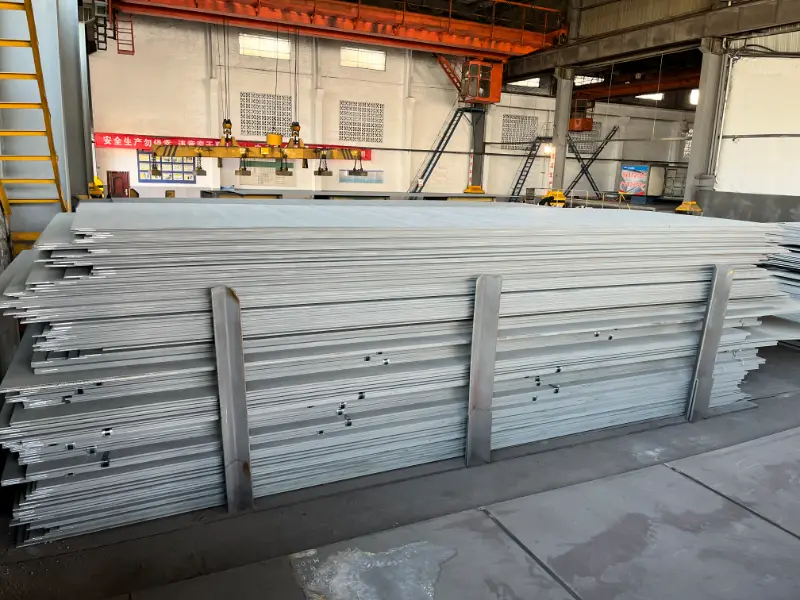
12Cr18Ni9 (1Cr18Ni9) Austenitic Stainless Steel Plate/Coil
12Cr18Ni9 (1Cr18Ni9) Austenitic Stainless Steel Plate/Coil: Properties, Equivalents and Applications
Comprehensive material analysis of 12Cr18Ni9 (formerly 1Cr18Ni9) austenitic stainless steel plate and coil under GB/T 4237, including chemical composition, mechanical properties, thermal and electrical physical properties, international equivalents, and application guidance.
Solution annealing, pickling, cold rolling, hot rolling, temper rolling, cutting, forming, welding, machining
- Phone : +8618037372205
- Email : [email protected]
- WhatsApp: Contact via Whtsapp
- WeChat: +8618037372205
12Cr18Ni9 Austenitic Stainless Steel Plate/Coil Introduction
12Cr18Ni9 (former designation 1Cr18Ni9) is a widely used austenitic stainless steel standardized in China under GB/T 4237 for hot-rolled and cold-rolled stainless steel plates, sheets and strips. This grade offers an excellent balance of corrosion resistance, formability and mechanical properties at moderate cost.
- Key features: good oxidation resistance up to 870°C, non-magnetic in annealed condition, excellent weldability by all common methods, and outstanding deep drawability.
- Typical composition: approximately 18% chromium and 9% nickel, ensuring stable austenitic structure and resistance to many organic and inorganic chemicals.
- The material is generally supplied in solution-annealed condition and intended for a broad range of applications from kitchen equipment to architectural trim and industrial components.
12Cr18Ni9 Austenitic Stainless Steel Plate/Coil Chemical Composition
Chemical composition as specified in GB/T 4237 for 12Cr18Ni9 austenitic stainless steel. These limits ensure the desired austenitic structure, corrosion resistance and mechanical properties. All values are in weight percent. The carbon content up to 0.12% distinguishes this grade from the common 304 (≤0.08%) and provides slightly higher strength at elevated temperatures.
| Element | Standard Value (%) | Remarks |
|---|---|---|
| C | ≤0.12 | Increases strength but may affect intergranular corrosion resistance if sensitised |
| Si | ≤1.00 | Deoxidation element, improves oxidation resistance |
| Mn | ≤2.00 | Austenite stabiliser, improves hot workability |
| P | ≤0.045 | Impurity, controlled to avoid embrittlement |
| S | ≤0.030 | Impurity, controlled to improve hot workability and corrosion resistance |
| Ni | 8.00 – 11.00 | Primary austenite former and corrosion resistance enhancer |
| Cr | 17.00 – 19.00 | Key element for passivation and oxidation/corrosion resistance |
| N | Not specified | May be present as residual; not intentionally added in this grade |
12Cr18Ni9 Austenitic Stainless Steel Plate/Coil Thermal and Electrical Physical Properties
Typical physical properties of 12Cr18Ni9 at room temperature and selected elevated temperatures. These values are widely accepted for this class of 18Cr-9Ni austenitic stainless steel and are essential for design calculations. The data are not part of the delivery specification but derived from published literature and engineering databases for similar grades like 1.4301 / 304.
| Property | Standard/Typical Value | Unit | Test Condition / Remarks |
|---|---|---|---|
| Density (ρ) | 7.93 | g/cm³ | At 20 °C |
| Modulus of Elasticity (E) | 200 | GPa | At 20 °C, tension |
| Shear Modulus (G) | 77 | GPa | At 20 °C, calculated from E and Poisson's ratio |
| Poisson's Ratio (ν) | 0.30 | — | At 20 °C, elastic range |
| Thermal Expansion Coefficient (α) | 16.5 | 17.5 | 18.5 | 10⁻⁶/K | 20–100 °C | 20–300 °C | 20–500 °C |
| Thermal Conductivity (λ) | 16.2 | 21.5 | W/(m·K) | At 100 °C | At 500 °C |
| Specific Heat Capacity (cp) | 500 | J/(kg·K) | At 20 °C |
| Electrical Resistivity (ρe) | 0.73 | μΩ·m | At 20 °C, annealed condition |
12Cr18Ni9 Austenitic Stainless Steel Plate/Coil Mechanical Properties
Minimum mechanical properties for solution-annealed 12Cr18Ni9 plate/strip as per GB/T 4237. Testing is performed at room temperature on transverse specimens. The values apply to thicknesses typically ≤75 mm for hot-rolled plate and appropriate gauges for cold-rolled products. Hardness limits are quoted for reference and do not form part of the acceptance criteria for all product forms.
| Property | Standard Requirement Value | Unit | Test Condition / Remarks |
|---|---|---|---|
| Yield Strength (ReH/Rp0.2) | ≥205 | MPa | Room temperature, transverse direction; 0.2% proof strength is generally used for austenitic grades |
| Tensile Strength (Rm) | 520 – 750 | MPa | Room temperature, transverse direction |
| Elongation (A) | ≥40 | % | Gauge length 50 mm (or proportional test piece) for plate thickness ≥3 mm |
| Hardness | ≤187 HBW or ≤90 HRB or ≤200 HV | For information; not a mandatory requirement for all product forms in GB/T 4237, but typically referenced |
12Cr18Ni9 Austenitic Stainless Steel Plate/Coil Completely Equivalent Material Standards and Alternative Designations
There is no exact international equivalent for 12Cr18Ni9 due to its specific carbon content (≤0.12%). The following standards and grades are the closest approximations, but users should verify the exact chemical and property requirements for the intended application. In many cases, 304/304L may be substituted if the higher carbon of 12Cr18Ni9 is not required for strength.
| Country/Region | Standard | Designation | Remarks |
|---|---|---|---|
| China | GB/T 4237 | 12Cr18Ni9 (1Cr18Ni9) | Original designation |
| China | GB/T 20878 | S30408 (06Cr19Ni10) | Newer designation for 304, carbon ≤0.08, lower strength |
| USA | ASTM A240/A240M | 304H (S30409) | Carbon 0.04–0.10, close to 12Cr18Ni9 in carbon; often used at elevated temperatures |
| EU | EN 10088-2 | 1.4301 (X5CrNi18-10) | Carbon ≤0.07, lower than 12Cr18Ni9; 1.4307 is the low-carbon variant |
| Japan | JIS G4304/G4305 | SUS304 | Carbon ≤0.08, lower strength; SUS304H not a standard JIS grade, closest is SUS304J1 or SUS304J2 |
12Cr18Ni9 Austenitic Stainless Steel Plate/Coil Application Introduction
12Cr18Ni9 is favoured for general-purpose corrosion-resistant applications where moderate strength at room and slightly elevated temperatures is sufficient. Its higher carbon content (compared to 304) provides slightly better tensile properties at temperatures up to 870°C, making it suitable for some heat-resistant components. The material is easily formed, welded, and finished, which leads to widespread use across many industries.
Product Applications: Kitchen sinks and countertops, Food preparation tables and utensils, Storage tanks for beverages and milk, Commercial catering equipment (grills, fryers, worktops), Architectural metal panels, elevator cabins, escalator cladding, Oven and furnace components (below 850°C), Automotive body trim, wheel covers, hubcaps, Welded tube for fluid transportation (non-aggressive media), Ventilation ducts and chimney liners
Processed into products: Deep-drawn kitchen sink bowls, Stamped and formed housing panels for appliances, Laser-cut and bent decorative profiles, Welded storage tank shells and bottoms, Tube sheets for heat exchangers, Pressed automotive exhaust manifold heat shields, Spun and polished lighting reflectors, Roll-formed architectural flashing and coping
Application industries: Food and beverage processing equipment, Building and construction (facades, wall cladding, handrails), Household appliances (refrigerator panels, washing machine drums), Architectural decoration and interior design, Automotive (trim, exhaust system components, catalytic converter shields), Chemical and petrochemical (non-critical vessels, piping), Heat exchangers, low-pressure boiler components, General fabrication and OEM parts
12Cr18Ni9 Austenitic Stainless Steel Plate/Coil Similar or Alternative Materials for Potential Substitute
These materials have comparable corrosion resistance and mechanical properties in many applications. The choice depends on specific carbon requirements, strength at elevated temperatures, and cost considerations. 304 is the most common alternative; 304H provides better high-temperature strength similar to 12Cr18Ni9.
| Country/Region | Standard | Designation | Remarks |
|---|---|---|---|
| China | GB/T 4237 | 06Cr19Ni10 (304) | Lower carbon (≤0.08%), similar corrosion resistance, widely interchangeable in non-elevated temperature service |
| China | GB/T 4237 | 06Cr18Ni11Ti (321) | Titanium-stabilised, better intergranular corrosion resistance after welding; may replace 12Cr18Ni9 when elevated temperature strength is needed |
| USA | ASTM A240/A240M | 304 (S30400) | Standard universal austenitic grade; verify carbon if strength requirements are marginal |
| EU | EN 10088-2 | 1.4301 (X5CrNi18-10) | Routinely used in place of 12Cr18Ni9 in Europe, but lower strength at high temperature |
| International | ISO 15510 | X5CrNi18-9 | Close chemical match, carbon ≤0.07, typical as general-purpose stainless |
Notes:
Welding considerations: While 12Cr18Ni9 is readily weldable, the higher carbon content can promote sensitisation (chromium carbide precipitation) in the heat-affected zone if multi-pass welding or prolonged exposure to 450–850°C occurs. For thicker sections (>3 mm) or critical service, post-weld solution annealing or the use of low-carbon (e.g., 304L) is recommended. Surface finishes: Available in standard mill finishes: No.1 (hot-rolled, annealed and pickled), 2B (cold-rolled, annealed, pickled and skin-passed), BA (bright annealed), and various polished finishes (No.4, No.8). Certification: Material can be supplied with mill test certificate complying with EN 10204 3.1 or equivalent Chinese standard requirements. Magnetic properties: The material is essentially non-magnetic in the solution-annealed condition but may become slightly magnetic after cold working due to the formation of martensite.
- Share



