
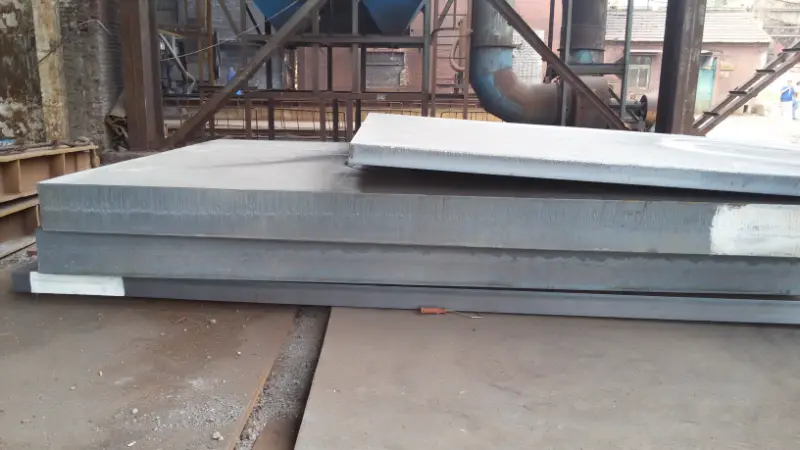
06Cr25Ni20 (0Cr25Ni20) 310S Stainless Steel Plate & Coil
06Cr25Ni20 (0Cr25Ni20) 310S Stainless Steel Plate & Coil - GB/T 4237 Properties & Equivalents
Complete datasheet for 06Cr25Ni20 (0Cr25Ni20) austenitic stainless steel plate and coil according to GB/T 4237, including chemical composition, mechanical and physical properties, international equivalents, and applications.
Hot rolling, cold rolling, welding, forming, machining, deep drawing
- Phone : +8618037372205
- Email : [email protected]
- WhatsApp: Contact via Whtsapp
- WeChat: +8618037372205
06Cr25Ni20 310S Stainless Steel Plate & Coil Introduction
06Cr25Ni20 (formerly designated 0Cr25Ni20) is a high-chromium, high-nickel austenitic stainless steel specified in GB/T 4237 for hot-rolled stainless steel plates and coils. It is the Chinese equivalent to the widely known 310S (UNS S31008). The alloy exhibits excellent resistance to oxidation at elevated temperatures up to approximately 1100°C in continuous service, combined with good high-temperature strength and resistance to carburization and sulfidation. Its fully austenitic microstructure remains stable over a wide temperature range, providing outstanding creep resistance. The low carbon content minimizes intergranular carbide precipitation, making it suitable for welded fabrications in high-temperature service without post-weld heat treatment. Typical uses include furnace components, heat treatment baskets, radiant tubes, and chemical processing equipment. The material is supplied in the solution-annealed condition to ensure optimum ductility and corrosion resistance.
06Cr25Ni20 310S Stainless Steel Plate & Coil Chemical Composition according to GB/T 4237
The chemical composition of 06Cr25Ni20 is balanced to provide a stable austenitic structure and superior oxidation resistance. The low carbon content (≤0.08%) suppresses carbide precipitation during welding, while the high chromium (24–26%) and nickel (19–22%) contents ensure excellent high-temperature corrosion resistance and structural stability. Maximum limits for impurities like phosphorus and sulfur are strictly controlled to maintain hot workability and weld quality.
| Element | Standard Value (weight %) | Remarks |
|---|---|---|
| Carbon (C) | ≤ 0.08 | Low carbon grade for improved intergranular corrosion resistance |
| Silicon (Si) | ≤ 1.50 | Improves oxidation resistance; higher levels may be specified for certain applications |
| Manganese (Mn) | ≤ 2.00 | Austenite stabilizer |
| Phosphorus (P) | ≤ 0.045 | Impurity, restricted |
| Sulfur (S) | ≤ 0.030 | Impurity, restricted for better hot workability |
| Chromium (Cr) | 24.00 – 26.00 | Essential for oxidation and corrosion resistance |
| Nickel (Ni) | 19.00 – 22.00 | Stabilizes austenite and enhances high-temperature strength |
06Cr25Ni20 310S Stainless Steel Plate & Coil Thermal and Electrical Physical Properties
The following physical properties are typical for 06Cr25Ni20 (310S) in the annealed condition. These values are representative for general engineering calculations and may vary slightly depending on the exact composition and processing conditions. The alloy has relatively low thermal conductivity and high thermal expansion compared to carbon steels, which should be considered in thermal stress analyses. The stable austenitic structure yields non-magnetic behavior (relative permeability < 1.02).
| Property | Standard Required/Typical Value | Unit | Test Condition |
|---|---|---|---|
| Density (ρ) | 7.98 | g/cm³ | At 20°C |
| Modulus of Elasticity (E) | 200 | GPa | At 20°C |
| Shear Modulus (G) | 77 | GPa | At 20°C |
| Poisson's Ratio (ν) | 0.30 | - | At 20°C |
| Thermal Expansion Coefficient (α) | 15.5 | µm/m·°C | Between 20°C and 100°C |
| Thermal Expansion Coefficient (α) | 17.5 | µm/m·°C | Between 20°C and 500°C |
| Thermal Expansion Coefficient (α) | 18.5 | µm/m·°C | Between 20°C and 1000°C |
| Thermal Conductivity (λ) | 14.2 | W/m·K | At 100°C |
| Thermal Conductivity (λ) | 18.5 | W/m·K | At 500°C |
| Thermal Conductivity (λ) | 23.5 | W/m·K | At 1000°C |
| Specific Heat Capacity | 500 | J/kg·K | At 20°C |
| Electrical Resistivity (ρe) | 0.78 | µΩ·m | At 20°C |
06Cr25Ni20 310S Stainless Steel Plate & Coil Mechanical Properties at Room Temperature for Plate/Coil in Solution Annealed Condition
The mechanical properties listed below are minimum requirements per GB/T 4237 for plates and coils in the solution-annealed condition, unless otherwise stated. The material exhibits a good combination of high tensile strength, yield strength, and excellent ductility, which facilitates fabrication operations such as deep drawing and bending. Hardness values are also relatively low, enabling good machinability among austenitic grades. Impact toughness is typically very high at ambient and elevated temperatures.
| Property | Standard Required Value | Unit | Test Condition |
|---|---|---|---|
| Tensile Strength (Rm) | ≥ 520 | MPa | Room temperature, transverse specimen |
| Yield Strength (Rp0.2) | ≥ 205 | MPa | Room temperature, transverse specimen |
| Elongation after Fracture (A) | ≥ 40 | % | Gauge length 50mm (or as specified), transverse |
| Brinell Hardness (HBW) | ≤ 187 | - | Room temperature |
| Rockwell Hardness (HRB) | ≤ 90 | - | Room temperature |
| Vickers Hardness (HV) | ≤ 200 | - | Room temperature |
06Cr25Ni20 310S Stainless Steel Plate & Coil Fully Equivalent Material Standards and Replaceable Grades
| Country/Region | Standard | Designation/Grade | Remarks |
|---|---|---|---|
| China | GB/T 4237 | 06Cr25Ni20 (0Cr25Ni20) | Original specification; plate/coil |
| USA | ASTM A240/A240M | 310S (UNS S31008) | Identical chemistry and similar mechanical properties |
| Germany/Europe | EN 10088-2 | 1.4845 / X8CrNi25-21 | Fully equivalent; available in various product forms |
| Japan | JIS G4304 | SUS310S | Essentially interchangeable |
| International | ISO 15510 | X8CrNi25-21 | Unified standard; matches chemistry and properties |
06Cr25Ni20 310S Stainless Steel Plate & Coil Application Introduction
06Cr25Ni20 (310S) is predominantly used in high-temperature environments where oxidation resistance and structural integrity are critical. Its excellent creep resistance and carburization resistance make it a preferred material for furnace components, while its good weldability facilitates fabrication of complex assemblies. It is also employed in certain corrosive chemical environments at ambient temperatures, although its cost usually limits use to demanding applications.
Product Applications: Plate and coil for fabricating furnace linings and chambers, Radiant tubes and muffles, Heat treatment baskets, trays, and jigs, Boiler and heat exchanger components (fire tubes, superheater supports), Conveyor system parts in continuous ovens, Klin furniture, Batch and continuous annealing line components
Processed into products: Furnace burners and nozzles, Recuperator tubes, Support structures for heat treatment, Expansion bellows in high-temperature piping, Welded wire mesh belts, Thermocouple protection tubes, Catalytic converter substrates (aftermarket performance)
Application industries: Industrial heating and furnace construction, Petrochemical and chemical processing, Power generation (coal, gas, nuclear, and waste-to-energy plants), Automotive exhaust systems (high-performance), Food processing equipment (high-temperature baking/conveyor lines), Aerospace (heat shields and ducting), Waste incineration plants
06Cr25Ni20 310S Stainless Steel Plate & Coil Similar and Alternative Materials with Comparable Performance
| Country/Region | Standard | Designation/Grade | Remarks |
|---|---|---|---|
| USA | ASTM A240 | 310 (UNS S31000) | Higher carbon (≤0.25%) provides better creep strength but lower intergranular corrosion resistance; suitable for non-welded components |
| Global | ASTM A240 / EN 10095 | 253MA® (UNS S30815, 1.4835) | Higher nitrogen and rare earth additions enhance high-temperature strength and oxidation resistance; excellent for demanding furnace applications |
| Global | ASTM A240 | 309S (UNS S30908, 1.4833) | Lower nickel (~12-15%) and chromium (~22-24%), slightly reduced cost but lower maximum service temperature; good alternative for less severe oxidation conditions |
| China | GB/T 4237 | 06Cr25Ni20 (with controlled N) | Specific heats with nitrogen addition (up to 0.11%) can increase strength while maintaining low carbon level, sometimes offered as a variation |
Notes:
Additional considerations for 06Cr25Ni20:
- Maximum continuous service temperature in oxidizing atmosphere: ~1100°C; intermittent service up to 1035°C.
- Not recommended for use in highly carburizing or reducing sulfur-bearing atmospheres above 550°C due to potential embrittlement.
- The material is non-magnetic in the annealed condition; slight magnetism may be induced by cold deformation.
- For heavy sections, slow cooling after solution annealing is avoided to prevent sigma phase embrittlement.
- When welding, low heat input and matching filler metal (e.g., AWS ER310) are recommended to preserve corrosion resistance and avoid cracking.
- Surface condition (e.g., pickled, 2B, No.1) can be specified as per GB/T 4237 classification.
- Share



