
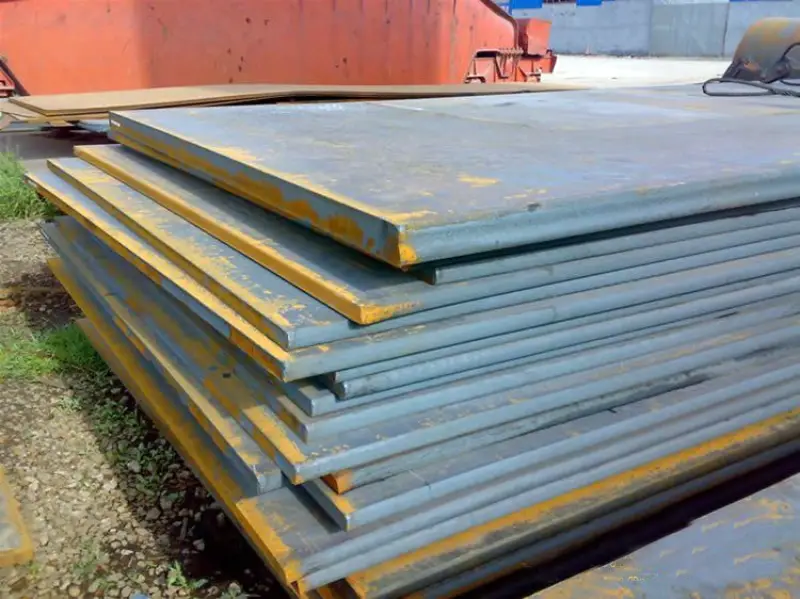
022Cr19Ni10N (00Cr18Ni10N) Austenitic Stainless Steel
022Cr19Ni10N (00Cr18Ni10N) Austenitic Stainless Steel: High-Strength Nitrogen-Enhanced Grade for Corrosion Resistance
Explore the properties, chemistry, and applications of 022Cr19Ni10N (304N type) austenitic stainless steel under GB/T 4237. Data includes mechanical and physical performance, equivalent grades, and usage guidance.
Welding, bending, deep drawing, stamping, machining, polishing, pickling
- Phone : +8618037372205
- Email : [email protected]
- WhatsApp: Contact via Whtsapp
- WeChat: +8618037372205
022Cr19Ni10N Austenitic Stainless Steel Introduction
022Cr19Ni10N (formerly 00Cr18Ni10N) is a low-carbon, nitrogen-strengthened austenitic stainless steel specified in GB/T 4237 for hot-rolled plates and coils. By adding nitrogen (0.10–0.16%), it achieves higher yield and tensile strengths compared to standard 304L grades while maintaining excellent corrosion resistance and formability. Its low carbon content minimizes sensitization during welding. This grade is widely used in chemical processing, food equipment, architectural panels, and structural components requiring both high strength and good weldability without post-weld annealing. It is typically supplied in the solution-annealed condition.
022Cr19Ni10N Austenitic Stainless Steel Chemical Composition
Chemical limits as per GB/T 4237 and referenced GB/T 20878. The nitrogen addition improves strength and pitting resistance equivalently. The low carbon content enhances intergranular corrosion resistance after welding.
| Element | Specified Value (%) | Remarks |
|---|---|---|
| Carbon (C) | ≤ 0.03 | Low carbon for weldability |
| Silicon (Si) | ≤ 1.00 | |
| Manganese (Mn) | ≤ 2.00 | |
| Phosphorus (P) | ≤ 0.045 | |
| Sulfur (S) | ≤ 0.030 | |
| Chromium (Cr) | 18.00 – 20.00 | Provides corrosion resistance |
| Nickel (Ni) | 8.00 – 11.00 | Stabilizes austenite |
| Nitrogen (N) | 0.10 – 0.16 | Strength enhancer |
022Cr19Ni10N Austenitic Stainless Steel Thermal and Electrical Physical Properties
Typical physical data for 022Cr19Ni10N in the annealed condition at room temperature unless specified. These values are based on published standard references and general engineering data for similar nitrogen-strengthened 304 grades.
| Property | Typical Value | Unit | Test Condition |
|---|---|---|---|
| Density (ρ) | 8.0 | g/cm³ | 20°C |
| Modulus of elasticity (E) | 200 | GPa | 20°C |
| Shear modulus (G) | 77 | GPa | 20°C |
| Poisson's ratio (ν) | 0.30 | - | 20°C |
| Mean coefficient of thermal expansion (α) | 16.5 | 10⁻⁶/K | 20 – 100°C |
| Mean coefficient of thermal expansion (α) | 17.5 | 10⁻⁶/K | 20 – 300°C |
| Mean coefficient of thermal expansion (α) | 18.0 | 10⁻⁶/K | 20 – 500°C |
| Thermal conductivity (λ) | 15.0 | W/(m·K) | 100°C |
| Thermal conductivity (λ) | 18.8 | W/(m·K) | 500°C |
| Specific heat capacity | 500 | J/(kg·K) | 20°C |
| Electrical resistivity (ρ_e) | 0.72 | μΩ·m | 20°C |
022Cr19Ni10N Austenitic Stainless Steel Mechanical Properties
Minimum specified values according to GB/T 4237 for solution-annealed plates of thickness ≤ 80 mm. Actual properties may vary with thickness and product form. Hardness values are for reference.
| Property | Specified Requirement | Unit | Testing Condition |
|---|---|---|---|
| Yield strength (Rp0.2) | ≥ 275 | MPa | Transverse, room temperature |
| Tensile strength (Rm) | ≥ 550 | MPa | Transverse, room temperature |
| Elongation after fracture (A) | ≥ 35 | % | Gauge length 50 mm |
| Bend test (bend diameter) | d = 2a (no cracks) | - | 180° bend, thickness a |
| Hardness (HBW) | ≤ 217 | - | After solution annealing |
| Hardness (HRB) | ≤ 95 | - | After solution annealing |
| Hardness (HV) | ≤ 220 | - | After solution annealing |
022Cr19Ni10N Austenitic Stainless Steel Fully Equivalent Standards and Substitutable Grades
| Country/Region | Standard | Grade | Remarks |
|---|---|---|---|
| USA | ASTM A240/A240M | 304N (UNS S30451) | Identical chemical and property requirements |
| Japan | JIS G4304 | SUS304N1 | Same nitrogen range; fully interchangeable |
| Europe | EN 10088-2 | 1.4315 (X2CrNiN18-10) | Slightly wider N range, fully equivalent for engineering use |
| International | ISO 15510 | X2CrNiN18-9 | Matches 022Cr19Ni10N closely |
022Cr19Ni10N Austenitic Stainless Steel Application Introduction
022Cr19Ni10N combines high strength, excellent corrosion resistance, and good weldability, making it a preferred choice in demanding environments. Its nitrogen alloying allows for lighter designs without sacrificing corrosion performance, widely adopted in modern engineering projects.
Product Applications: Pressure vessels and storage tanks, Heat exchangers and condensers, Piping systems for corrosive fluids, Architectural cladding and roofing panels, Food processing equipment (tanks, mixers, conveyors), Cryogenic storage and transport containers, Chemical reactors and columns
Processed into products: Welded shells and heads of pressure vessels, Tube sheets and baffle plates in heat exchangers, Flanges, nozzles, and fittings, Stamped and deep-drawn kitchen sinks and bowls, Structural support beams and brackets in corrosive atmospheres, Outdoor sculptures and signboards, Evaporators and crystallizers in pharmaceutical lines
Application industries: Chemical processing, Petrochemical and refining, Food and beverage production, Pharmaceutical manufacturing, Architecture and construction, Cryogenic engineering, Water treatment, Energy and power generation
022Cr19Ni10N Austenitic Stainless Steel Similar or Near-Equivalent Alternative Materials
| Country/Region | Standard | Grade | Remarks |
|---|---|---|---|
| China | GB/T 4237 | 022Cr19Ni10 (304L) | No nitrogen; lower strength but same corrosion resistance |
| China | GB/T 4237 | 06Cr19Ni10 (304) | Higher carbon; more prone to sensitization, lower yield strength |
| USA | ASTM A240 | 304L (UNS S30403) | Common low-carbon alternative without nitrogen strengthening |
| Europe | EN 10088-2 | 1.4307 (X2CrNi18-9) | 304L equivalent; lower strength, similar corrosion resistance |
| Japan | JIS G4304 | SUS304L | Low carbon; suitable when nitrogen strengthening is not required |
Notes:
- For thickness > 80 mm, mechanical properties shall be agreed upon.
- Intergranular corrosion test (Practice E per GB/T 4334) may be specified upon request.
- Surface condition and edge delivery shall follow order agreements.
- Welding procedures should consider the nitrogen content to avoid porosity; low heat input and proper filler metal (e.g., 308L or 308N) recommended.
- Share



