
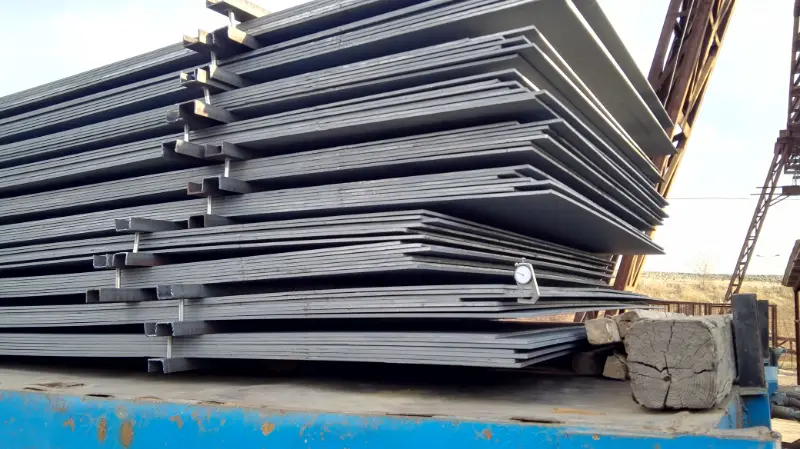
X3CrNb17 (1.4511) Ferritic Stainless Steel
X3CrNb17 (1.4511) Ferritic Stainless Steel Plate/Coil - EN 10088-1 Grade Data Sheet
Complete material properties of X3CrNb17 (1.4511) ferritic stainless steel according to EN 10088-1, with chemical composition, mechanical and physical data, international equivalents, and application guidance.
Hot rolling, cold rolling, annealing, pickling, skin passing, slitting, cutting
- Phone : +8618037372205
- Email : [email protected]
- WhatsApp: Contact via Whtsapp
- WeChat: +8618037372205
X3CrNb17 Ferritic Stainless Steel Introduction
X3CrNb17, also identified by the numeric designation 1.4511 in accordance with EN 10088-1, is a niobium-stabilized ferritic stainless steel. The addition of niobium (Nb) effectively binds carbon and nitrogen, enhancing intergranular corrosion resistance after welding and preventing sensitization. This grade offers good corrosion resistance in mildly aggressive environments, excellent resistance to chloride-induced stress corrosion cracking (SCC), and magnetic properties typical of ferritic structures. It is delivered primarily in the form of plate and coil.
- Low carbon content for improved weldability
- Niobium stabilization for as-welded corrosion resistance
- Good formability and deep drawing characteristics
- High thermal conductivity compared to austenitic grades
- Economic alternative where high temperature strength is not critical
X3CrNb17 Ferritic Stainless Steel Chemical Composition according to EN 10088-1
The chemical composition of X3CrNb17 is defined to ensure a stable ferritic structure and adequate corrosion resistance. Niobium is added at least 10 times the carbon content to effectively stabilize the steel against intergranular attack. Impurity elements are tightly controlled to maintain ductility and weldability.
| Element | Content | Remarks |
|---|---|---|
| Carbon (C) | ≤ 0.05 % | Low carbon improves weldability |
| Silicon (Si) | ≤ 1.00 % | Deoxidizer, may slightly improve oxidation resistance |
| Manganese (Mn) | ≤ 1.00 % | Austenite former, kept low to maintain ferritic structure |
| Phosphorus (P) | ≤ 0.040 % | Maximum impurity limit |
| Sulfur (S) | ≤ 0.015 % | Enhanced machinability not intended |
| Chromium (Cr) | 16.00 – 18.00 % | Primary element for corrosion resistance |
| Nickel (Ni) | ≤ 0.50 % | Residual element, low content for ferritic stability |
| Niobium (Nb) | 10×C min to 1.00 max % | Stabilizing element; ties up carbon and nitrogen |
X3CrNb17 Ferritic Stainless Steel Thermal and Electrical Physical Properties
Physical properties are according to EN 10088-1 informative data for 1.4511. These values are typical for ferritic stainless steels and are valid at room temperature unless a temperature range is specified. Ferritic grades have higher thermal conductivity and lower thermal expansion than austenitic types.
| Property | Value | Unit | Test Condition |
|---|---|---|---|
| Density (ρ) | 7700 | kg/m³ | 20°C |
| Elastic Modulus (E) | 220 | GPa | 20°C |
| Shear Modulus (G) | ≈ 85 | GPa | Calculated from E and ν, 20°C |
| Poisson's Ratio (ν) | 0.30 | — | Typical at 20°C |
| Thermal Expansion Coefficient (α) | 10.5 | ×10⁻⁶/K | 20 – 100°C |
| Thermal Expansion Coefficient (α) | 11.0 | ×10⁻⁶/K | 20 – 200°C |
| Thermal Expansion Coefficient (α) | 11.5 | ×10⁻⁶/K | 20 – 300°C |
| Thermal Expansion Coefficient (α) | 12.0 | ×10⁻⁶/K | 20 – 400°C |
| Thermal Expansion Coefficient (α) | 12.5 | ×10⁻⁶/K | 20 – 500°C |
| Thermal Conductivity (λ) | 25 | W/(m·K) | 20°C |
| Thermal Conductivity (λ) | 26 | W/(m·K) | 100°C |
| Thermal Conductivity (λ) | 27 | W/(m·K) | 200°C |
| Thermal Conductivity (λ) | 28 | W/(m·K) | 300°C |
| Thermal Conductivity (λ) | 29 | W/(m·K) | 400°C |
| Specific Heat Capacity (cp) | 460 | J/(kg·K) | 20 – 100°C |
| Electrical Resistivity (ρe) | 0.60 | Ω·mm²/m | 20°C |
X3CrNb17 Ferritic Stainless Steel Mechanical Properties at Room Temperature
The mechanical properties below are valid for annealed condition (typically 2D/2B finish) according to EN 10088-2. Values depend on product thickness. The steel exhibits moderate strength with good ductility, suitable for cold forming operations.
| Property | Value | Unit | Test Condition |
|---|---|---|---|
| Yield Strength (Rp0.2) | ≥ 230 | MPa | t ≤ 12 mm, annealed, transverse |
| Tensile Strength (Rm) | 420 – 600 | MPa | t ≤ 12 mm, annealed, transverse |
| Elongation (A80mm) | ≥ 20 | % | Thickness < 3 mm, annealed, transverse (gauge length 80 mm) |
| Elongation (A) | ≥ 20 | % | Thickness ≥ 3 mm and ≤ 12 mm, annealed, transverse (gauge length 5.65√S0) |
| Bend Test | 180° (d = 2a) | — | t ≤ 12 mm; no cracks; a = specimen thickness |
X3CrNb17 Ferritic Stainless Steel Fully Equivalent Material Standards and Replaceable Grades
The following table lists standards and grades that are technically identical or aligned with EN X3CrNb17 (1.4511). The ISO designation is a direct equivalent. For other regions, exact matches may not exist, but the listed grades can be considered full equivalents in their respective systems.
| Country/Region | Standard | Grade | Remarks |
|---|---|---|---|
| International (ISO) | ISO 15510 | X3CrNb17 | Identical chemical and mechanical requirements |
| European Union | EN 10088-1/2 | 1.4511 / X3CrNb17 | Original standard designation |
X3CrNb17 Ferritic Stainless Steel Application Introduction
X3CrNb17 is widely used where good corrosion resistance in combination with cost-effectiveness and magnetic properties is required. It performs well in atmospheric environments, mild aqueous solutions, and oxidizing conditions. The niobium stabilization allows for satisfactory post-weld corrosion resistance without the need for post-weld heat treatment.
Key advantages:
- Excellent resistance to stress corrosion cracking in chloride environments
- Good deep drawability for complex shapes
- Higher thermal conductivity vs. austenitics, beneficial for heat exchangers
- Decorative appeal with various surface finishes
Product Applications: Automotive exhaust manifolds, catalytic converter shells, mufflers, Washing machine outer tubs and inner drums, Architectural panels, decorative profiles, street furniture, Catering sinks, worktops, commercial kitchen equipment, Flue gas piping and chimney elements
Processed into products: Deep-drawn and bent exhaust components, Formed and welded casing parts for appliances, Precision-folded architectural sheets, Laser-cut decorative panels, Welded tubular structures for heat exchange
Application industries: Automotive (exhaust systems, trim), Household appliances (washing machine drums, dishwasher interiors, oven linings), Architecture and construction (roofing, cladding, elevator interiors), Catering and food industry (sinks, tables, conveyors), Energy and environment (flue gas ducts, chimney liners)
X3CrNb17 Ferritic Stainless Steel Similar or Alternative Materials for Substitution
The grades listed below have comparable corrosion resistance and are often considered as substitution candidates. However, subtle differences in composition (e.g., presence of molybdenum, slightly different chromium content) may influence specific properties. Engineering judgment is advised when replacing X3CrNb17 with these alternatives.
| Country/Region | Standard | Grade | Remarks |
|---|---|---|---|
| China | GB/T 3280 | 022Cr17NbTi (S11763?) / 10Cr17Nb (S11763) | 10Cr17Nb has higher carbon; 022Cr17NbTi provides similar stabilization but with Ti addition. |
| USA | ASTM A240 | UNS S43600 (Type 436) | Contains 0.75-1.25% Mo and Nb; slightly higher corrosion resistance but more expensive. |
| Japan | JIS G4304/4305 | SUS 436L | Similar Nb-stabilized grade, often with Mo addition; check exact chemistry. |
| Germany/Europe | EN 10088-2 | 1.4509 (X2CrTiNb18) | Titanium and niobium stabilized; higher chromium (17.5-18.5%), comparable weldability. |
Notes:
Welding: Suitable for all common welding processes except oxyacetylene. Preheating is not required; interpass temperature should be kept below 150°C to avoid grain growth. Use matching or slightly over-alloyed filler (e.g., 1.4509 or 1.4370).
Heat treatment: Annealing at 760–820°C followed by rapid cooling (air or water) restores ductility. Avoid long exposure in the 400–550°C range (475°C embrittlement risk).
Forming: Good formability in annealed condition; partly suited for drawing and stretch forming. Cold working increases strength and reduces ductility, so intermediate annealing may be required for severe forming.
- Share



