
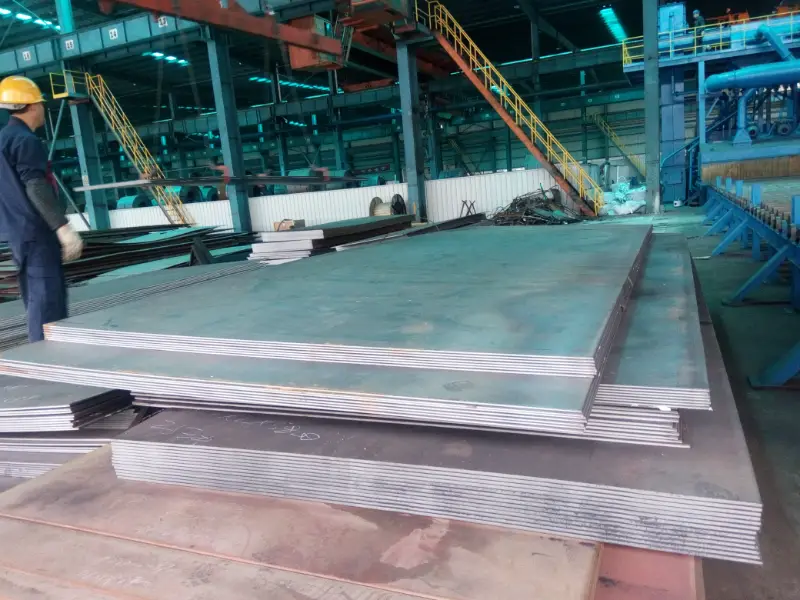
X2CrMoTi29-4 (1.4592) Super Ferritic Stainless Steel
X2CrMoTi29-4 (1.4592) Super Ferritic Stainless Steel: High Cr, Mo & Ti Stabilized
Explore the properties, chemistry, and applications of X2CrMoTi29-4, a high-chromium, molybdenum-bearing super ferritic stainless steel stabilized with titanium. Ideal for aggressive chloride environments like seawater, chemical processing, and desalination.
Hot rolling, cold rolling, annealing, pickling, welding (with precautions), forming
- Phone : +8618037372205
- Email : [email protected]
- WhatsApp: Contact via Whtsapp
- WeChat: +8618037372205
X2CrMoTi29-4 Super Ferritic Stainless Steel Introduction
X2CrMoTi29-4, designated as 1.4592 under EN 10088-1, is a super ferritic stainless steel characterized by its high chromium (approx. 29%) and molybdenum (approx. 4%) content, along with titanium stabilization. This grade offers exceptional resistance to pitting and crevice corrosion in chloride-containing media, including seawater and aggressive chemical environments. Its fully ferritic microstructure provides excellent resistance to stress corrosion cracking (SCC), making it a cost-effective alternative to more expensive nickel-based alloys and duplex stainless steels in many applications. With good mechanical strength and fabricability, it is commonly supplied as plate and coil for use in heat exchangers, condenser tubing, and chemical reactors.
X2CrMoTi29-4 Super Ferritic Stainless Steel Chemical Composition
Chemical composition according to EN 10088-1 for steel designation X2CrMoTi29-4. The grade is titanium-stabilized to improve intergranular corrosion resistance after welding. All elements must comply with the specified limits.
| Element | Standard Value (%) | Remarks |
|---|---|---|
| Carbon (C) | ≤ 0.025 | Max |
| Silicon (Si) | ≤ 1.00 | Max |
| Manganese (Mn) | ≤ 1.00 | Max |
| Phosphorus (P) | ≤ 0.040 | Max |
| Sulfur (S) | ≤ 0.015 | Max |
| Chromium (Cr) | 28.00 – 30.00 | |
| Molybdenum (Mo) | 3.50 – 4.50 | |
| Nickel (Ni) | ≤ 0.50 | Max |
| Titanium (Ti) | ≥ 4×(C+N)+0.15; ≤ 1.00 | Stabilization addition |
| Nitrogen (N) | ≤ 0.030 | Max |
X2CrMoTi29-4 Super Ferritic Stainless Steel Thermal and Electrical Physical Properties
Typical physical properties at room temperature unless otherwise stated. These values are representative for super ferritic stainless steels of this class; actual values may vary slightly with processing conditions.
| Property | Standard Value | Unit | Test Conditions |
|---|---|---|---|
| Density (ρ) | 7.7 | g/cm³ | 20 °C |
| Elastic modulus (E) | 200 | GPa | 20 °C |
| Shear modulus (G) | 77 | GPa | 20 °C |
| Poisson's ratio (ν) | 0.30 | – | 20 °C |
| Thermal expansion coefficient (α) | 10.0 – 11.0 | ×10⁻⁶/K | 20–100 °C |
| Thermal conductivity (λ) | 16 – 20 | W/(m·K) | 20 °C |
| Specific heat capacity (cp) | 440 – 500 | J/(kg·K) | 20 °C |
| Electrical resistivity (ρ_e) | 0.60 – 0.70 | Ω·mm²/m | 20 °C |
X2CrMoTi29-4 Super Ferritic Stainless Steel Mechanical Properties
Minimum mechanical properties for solution annealed plate/coil as per EN 10088-2 (thickness ≤ 8 mm). Higher thicknesses or alternative product forms may exhibit slightly different values. Testing is typically performed at room temperature.
| Property | Standard Required Value | Unit | Test Conditions |
|---|---|---|---|
| Yield strength (Rp0.2) | ≥ 450 | MPa | Room temperature, transverse |
| Tensile strength (Rm) | 560 – 750 | MPa | Room temperature, transverse |
| Elongation (A80) | ≥ 20 | % | Gauge length 80 mm, transverse |
| Impact energy (KV) | ≥ 50 (expected, not mandatory in all standards) | J | Room temperature, Charpy V-notch |
| Hardness | ≤ 250 | HBW | Solution annealed condition |
| Bend test (mandrel diameter) | No cracks at 2× thickness (typical) | D = 2t | 180° transverse bend |
X2CrMoTi29-4 Super Ferritic Stainless Steel Complete Equivalent Material Standards and Substitute Grades
| Country/Region | Standard | Designation | Remarks |
|---|---|---|---|
| European Union | EN 10088-1 (and EN 10088-2) | X2CrMoTi29-4 (1.4592) | Original designation |
| USA | ASTM A240/A240M | UNS S44735 (29-4C) | Ti+Nb stabilized variant |
| International | ISO 15510 | X2CrMoTi29-4 | Same as EN |
| Japan | JIS G 4304/G 4305 | SUS 447J1? (not exact; check) | Composition may differ; 30Cr-2Mo without Ti |
X2CrMoTi29-4 Super Ferritic Stainless Steel Application Introduction
X2CrMoTi29-4 is chosen for its outstanding resistance to chloride pitting and crevice corrosion, combined with immunity to chloride stress corrosion cracking. It is a cost-effective material for aggressive aqueous environments where high-alloy austenitic or nickel-base alloys would be unnecessarily expensive. Typical applications include:
Product Applications: Seawater-cooled heat exchangers, Condenser tubing and tube sheets, Desalination evaporator shells, Flue gas desulfurization absorber components, Chemical storage tanks, Piping and fittings for corrosive media
Processed into products: Heat exchanger tube bundles, Welded plate heat exchangers, Expansion joints and bellows, Pump shafts and impellers, Valve bodies and trim, Spray nozzles and distributors
Application industries: Desalination (multi-stage flash, reverse osmosis), Chemical processing (sulfuric acid, organic acids piping and tanks), Power generation (condenser tubes, FGD scrubbers), Marine engineering (seawater cooling systems, heat exchangers), Oil and gas (offshore topside seawater handling), Food and beverage processing (high-corrosion areas)
X2CrMoTi29-4 Super Ferritic Stainless Steel Recommended Similar/Alternative Materials
| Country/Region | Standard | Designation | Remarks |
|---|---|---|---|
| Europe | EN 10088-1 | X2CrNiMoN22-5-3 (1.4462 Duplex) | Higher yield strength, good chloride resistance, but less SCC resistant than super ferritic |
| USA | ASTM A240 | UNS S44660 (25-4-4) | Super ferritic with 25Cr-4Mo-4Ni; contains Ni for toughness |
| Europe | EN 10088-1 | X1CrNiMoCuN25-25-5 (1.4538, Alloy 904L) | Austenitic with high Ni, better formability, different cost |
| Global | UNS | S44627 (Sea-Cure) | 26Cr-3.5Mo, Ti stabilized, similar corrosion resistance |
Notes:
Welding of X2CrMoTi29-4 should be performed with matching or overmatching filler metals, such as ER 29-4 or equivalent. Preheating is generally not required, but interpass temperatures should be kept below 150°C to prevent embrittlement. Post-weld heat treatment may be necessary to restore corrosion resistance. Due to the ferritic structure, the material can undergo 475°C embrittlement and sigma phase formation if exposed to temperatures 300–550°C for extended periods. It is not suitable for continuous service above 350°C. Forming operations should consider the material's lower ductility compared to austenitic grades, especially at low temperatures.
- Share



