
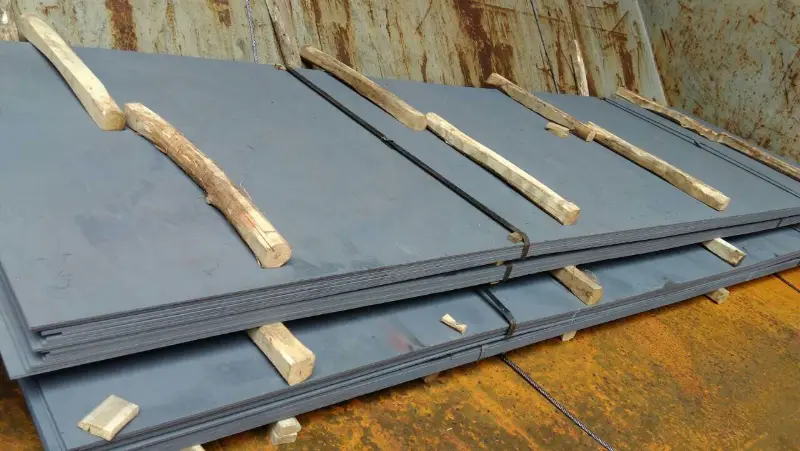
X1CrNiMoCu12-7-3 (1.4423) Martensitic Stainless Steel
X1CrNiMoCu12-7-3 (1.4423) Martensitic Stainless Steel: High Strength & Corrosion Resistant Alloy
In-depth material analysis of X1CrNiMoCu12-7-3 (EN 10088-1), a low-carbon super martensitic stainless steel with 12% Cr, 7% Ni, 3% Mo, and Cu. Covers chemical composition, mechanical properties, physical data, international equivalents, and applications in oil & gas, marine, and chemical industries. Ideal for high-strength, corrosion-resistant components.
Hot rolling, cold rolling, quenching and tempering, machining, welding, forming
- Phone : +8618037372205
- Email : [email protected]
- WhatsApp: Contact via Whtsapp
- WeChat: +8618037372205
X1CrNiMoCu12-7-3 Martensitic Stainless Steel Introduction
X1CrNiMoCu12-7-3 (EN grade 1.4423) is a low-carbon super martensitic stainless steel characterized by an excellent combination of high strength, good toughness, and superior corrosion resistance. Its chemical composition, with approximately 12% chromium, 7% nickel, 3% molybdenum, and copper additions, provides enhanced resistance to pitting and crevice corrosion in chloride-containing environments. After quenching and tempering (+QT condition), the material achieves a minimum yield strength of 650 MPa and tensile strength of 750–950 MPa, while retaining good ductility and low-temperature impact toughness. The ultra-low carbon content (C ≤ 0.020%) ensures good weldability without the need for preheating, making it suitable for complex fabrications. This grade is widely used in offshore, petrochemical, and seawater handling applications where high mechanical loads and aggressive media are present. It is supplied as hot-rolled or cold-rolled plates and coils, meeting the requirements of EN 10088-2 and EN 10088-3.
X1CrNiMoCu12-7-3 Martensitic Stainless Steel Chemical Composition
The chemical composition as specified in EN 10088-1 for grade X1CrNiMoCu12-7-3 (1.4423). The low carbon content ensures weldability, while chromium, molybdenum, and copper contribute to corrosion resistance and high strength. Nitrogen is strictly controlled to avoid brittleness.
| Chemical element | Standard value (wt%) | Remarks |
|---|---|---|
| Carbon (C) | ≤ 0.020 | Ultra-low carbon for weldability |
| Silicon (Si) | ≤ 0.50 | |
| Manganese (Mn) | ≤ 0.50 | |
| Phosphorus (P) | ≤ 0.030 | |
| Sulfur (S) | ≤ 0.010 | Low sulfur for toughness |
| Chromium (Cr) | 11.5 – 13.5 | Provides corrosion resistance |
| Nickel (Ni) | 6.5 – 8.0 | Enhances toughness and promotes martensitic structure |
| Molybdenum (Mo) | 2.0 – 3.0 | Improves pitting and crevice corrosion resistance |
| Copper (Cu) | 0.5 – 1.0 | Additional corrosion resistance and strength |
| Nitrogen (N) | ≤ 0.020 | Controlled for ductility |
X1CrNiMoCu12-7-3 Martensitic Stainless Steel Thermal and Electrical Physical Properties
Typical physical properties of X1CrNiMoCu12-7-3 at room temperature. These values are representative for martensitic stainless steels in the heat-treated condition and may vary slightly with processing. Thermal expansion and conductivity values are important for design in thermal cycling applications.
| Property | Standard requirement value | Unit | Test condition |
|---|---|---|---|
| Density (ρ) | 7.80 | g/cm³ | At 20 °C |
| Elastic modulus (E) | 200 | GPa | At 20 °C |
| Shear modulus (G) | 77 | GPa | At 20 °C |
| Poisson ratio (ν) | 0.30 | — | At 20 °C |
| Thermal expansion coefficient (α) | 10.5 | 10⁻⁶ /K | 20 – 100 °C |
| Thermal conductivity (λ) | 15.0 | W/m·K | At 20 °C |
| Specific heat capacity (cp) | 500 | J/kg·K | At 20 °C |
| Electrical resistivity (ρe) | 0.80 | µΩ·m | At 20 °C |
X1CrNiMoCu12-7-3 Martensitic Stainless Steel Mechanical Properties
Mechanical properties for X1CrNiMoCu12-7-3 in the quenched and tempered (+QT) condition according to EN 10088-2 for flat products. Values are valid for plate thickness up to 20 mm, tested in longitudinal direction. The material exhibits high strength with adequate toughness even at low temperatures.
| Property | Standard requirement value | Unit | Test condition |
|---|---|---|---|
| Yield strength (Rp0.2) | ≥ 650 | MPa | +QT, t ≤ 20 mm, longitudinal |
| Tensile strength (Rm) | 750 – 950 | MPa | +QT, t ≤ 20 mm, longitudinal |
| Elongation after fracture (A) | ≥ 15 | % | Gauge length 5.65√S₀, longitudinal |
| Impact energy (KV) | ≥ 40 at -40 °C | J | Charpy-V, transverse |
X1CrNiMoCu12-7-3 Martensitic Stainless Steel Fully Equivalent Material Standards and Substitute Grades
| Country/Region | Standard | Designation | Remarks |
|---|---|---|---|
| Europe | EN 10088-2 / EN 10088-3 | X1CrNiMoCu12-7-3 (1.4423) | Same grade – flat and long products |
| USA | ASTM A240 / ASTM A182 | UNS S41425 | Martensitic stainless steel plate, sheet, and forgings with identical chemical composition |
| International | ISO 15510 | X1CrNiMoCu12-7-3 | Identical to EN grade |
X1CrNiMoCu12-7-3 Martensitic Stainless Steel Application Introduction
X1CrNiMoCu12-7-3 combines high strength, good ductility, and excellent corrosion resistance, making it ideal for demanding environments. It is often chosen for critical components in offshore, marine, and chemical sectors where reliability and longevity are essential.
Product Applications: Pressure vessels and tanks, Piping systems and flanges, Valve bodies and pump casings, Fasteners (bolts, studs, nuts), Heat exchanger plates, Structural profiles
Processed into products: Subsea christmas tree components, Pump and compressor shafts, Impellers and propellers, Valve stems and gates, Bolting for flanges in corrosive service, Riser and manifold parts, Hydropower turbine runners
Application industries: Oil & gas extraction and processing, Marine and shipbuilding, Chemical and petrochemical plants, Pulp & paper industry, Power generation (including hydropower), Desalination plants
X1CrNiMoCu12-7-3 Martensitic Stainless Steel Closely Similar / Alternative Material Recommendations
| Country/Region | Standard | Designation | Remarks |
|---|---|---|---|
| Europe | EN 10088-2 | X4CrNiMo16-5-1 (1.4418) | Higher Cr and Mo content; similar strength and toughness but better corrosion resistance, often used in similar oil & gas applications |
| Europe | EN 10088-2 | X2CrNi13-4 (1.4429) | Lower Mo and Cu; slightly lower strength and pitting resistance, but still suitable for moderate corrosive environments |
| USA | ASTM A240 | UNS S17400 (17-4PH) | Precipitation-hardening martensitic stainless; offers higher strength but requires aging heat treatment and has different corrosion resistance profile |
Notes:
- The material offers good weldability without preheating due to its low carbon content. Post-weld heat treatment is recommended to restore toughness in thick sections.
- Heat treatment: quenching from 950–1050 °C followed by tempering at 550–650 °C, adjusted to achieve desired strength-toughness balance.
- Available surface finishes: hot-rolled, cold-rolled, pickled, and passivated.
- Compliant with NACE MR0175/ISO 15156 for sour service within specified hardness limits.
- Share



