
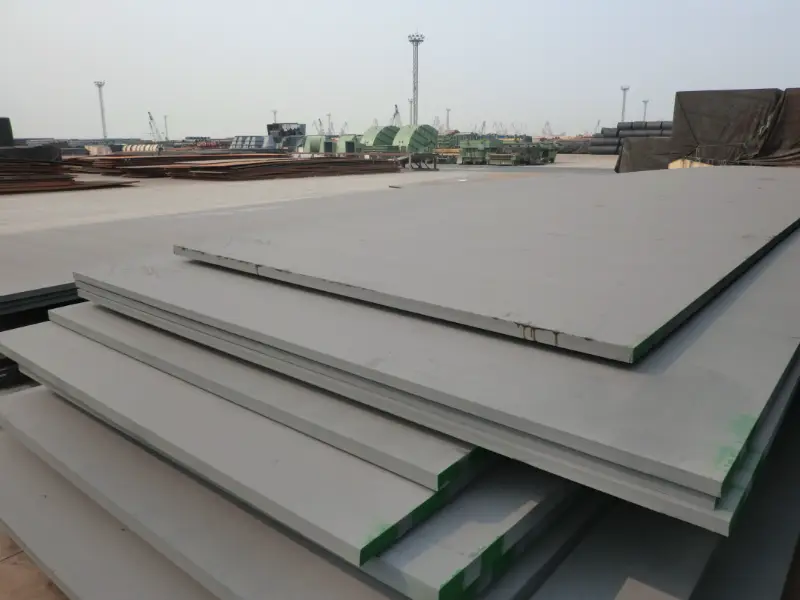
X17CrNi16-2 (1.4057) Martensitic Stainless Steel
X17CrNi16-2 (1.4057) Martensitic Stainless Steel: Properties, Equivalents & Applications per EN 10088-1
Explore detailed technical data for X17CrNi16-2 (1.4057) martensitic stainless steel, including chemical composition, mechanical properties at room temperature, thermal and electrical physical properties, international equivalents, and application guidelines. Ideal for high-strength corrosion-resistant components.
Hot rolling, cold rolling, quenching and tempering, annealing, machining, welding (with precautions)
- Phone : +8618037372205
- Email : [email protected]
- WhatsApp: Contact via Whtsapp
- WeChat: +8618037372205
X17CrNi16-2 Martensitic Stainless Steel Introduction
X17CrNi16-2, designated as 1.4057 according to EN 10088-1, is a high-strength martensitic stainless steel containing approximately 0.17% carbon, 16% chromium, and 2% nickel. This grade combines good corrosion resistance in mild environments with high mechanical properties achieved through quenching and tempering. The material is widely supplied as hot-rolled plate and cold-rolled coil in the quenched and tempered condition (+QT). Typical heat treatment involves oil quenching from 950–1050°C followed by tempering at 650–750°C, resulting in a tempered martensitic microstructure with tensile strengths in the range of 900–1100 MPa and yield strengths above 650 MPa. Its moderate nickel content provides improved toughness and hardenability compared to plain 12–13% Cr martensitic steels. X17CrNi16-2 is used in applications requiring higher strength than austenitic grades while maintaining sufficient corrosion resistance, such as pump shafts, valve parts, gear components, and fasteners exposed to mildly corrosive environments. It is not recommended for strongly acidic or chloride-rich media where pitting resistance is insufficient. This grade is available under various international equivalents including AISI 431, SUS431, and ISO X17CrNi16-2.
X17CrNi16-2 Martensitic Stainless Steel Chemical Composition according to EN 10088-1
The chemical composition given below is the cast analysis and applies to all product forms covered by the material standard. The balance is iron (Fe) with possible trace elements. Elements not listed are not controlled but may be present as residuals. The narrow carbon range ensures consistent hardenability and response to heat treatment.
| Element | Standard Value (min–max or max) | Remarks |
|---|---|---|
| Carbon (C) | 0.12–0.22 | Key hardenable element |
| Silicon (Si) | ≤ 1.00 | |
| Manganese (Mn) | ≤ 1.50 | |
| Phosphorus (P) | ≤ 0.040 | |
| Sulfur (S) | ≤ 0.030 | |
| Chromium (Cr) | 15.0–17.0 | Primary corrosion resistance element |
| Nickel (Ni) | 1.50–2.50 | Improves toughness and hardenability |
| Iron (Fe) | Balance |
X17CrNi16-2 Martensitic Stainless Steel Thermal and Electrical Physical Properties
The physical properties presented are typical values for X17CrNi16-2 (1.4057) in the heat-treated condition. They are compiled from EN 10088-1 general references and widely accepted data for similar Cr-Ni martensitic steels. Slight variations may occur depending on exact composition and processing.
| Property | Standard Value | Unit | Test Condition / Temperature |
|---|---|---|---|
| Density (ρ) | 7.7 | g/cm³ | Room temperature |
| Elastic Modulus (E) | 215 | GPa | Room temperature |
| Shear Modulus (G) | 80 | GPa | Room temperature, calculated |
| Poisson's Ratio (ν) | 0.3 | – | Room temperature |
| Thermal Expansion Coefficient (α) | 10.5 | ×10⁻⁶/K | 20–100°C |
| Thermal Expansion Coefficient (α) | 11.0 | ×10⁻⁶/K | 20–200°C |
| Thermal Expansion Coefficient (α) | 11.5 | ×10⁻⁶/K | 20–400°C |
| Thermal Conductivity (λ) | 25 | W/(m·K) | 20°C |
| Specific Heat Capacity (c) | 460 | J/(kg·K) | 20°C |
| Electrical Resistivity (ρ_e) | 0.60 | µΩ·m | 20°C |
X17CrNi16-2 Martensitic Stainless Steel Mechanical Properties
The mechanical properties of X17CrNi16-2 (1.4057) are strongly dependent on the heat treatment condition and product thickness. The values below correspond to the quenched and tempered (+QT) condition as delivered for flat products per EN 10088-2. Impact energy (KV) is not normally specified for plate/coil but is given for bars as an informative reference. Testing is performed at room temperature on longitudinal specimens unless otherwise stated.
| Property | Standard Value | Unit | Test Condition |
|---|---|---|---|
| Tensile Strength (R_m) | 900–1100 | MPa | Thickness ≤ 75 mm, +QT900 condition, longitudinal |
| Yield Strength (R_p0.2) | ≥ 650 | MPa | Thickness ≤ 75 mm, +QT900 condition, longitudinal |
| Elongation (A) | ≥ 10 | % | Thickness ≤ 75 mm, gauge length 5.65√S₀, longitudinal |
| Impact Energy (KV₂) | ≥ 27 (typical for bars) | J | For informative purpose from EN 10088-3 (bar) at 20°C, longitudinal |
X17CrNi16-2 Martensitic Stainless Steel Full Equivalent Material Standards and Designations
The following table lists materials that are considered direct equivalents to X17CrNi16-2 (1.4057), sharing the same nominal composition and equivalent application properties. Minor differences in allowed composition or mechanical properties may exist depending on the standard.
| Country / Region | Standard | Designation | Remarks |
|---|---|---|---|
| European Union | EN 10088-1 | X17CrNi16-2 (1.4057) | Original specification |
| International | ISO 15510 | X17CrNi16-2 (ISO 1.4057) | Identical to EN |
| USA | ASTM A276 / A479 / A240 | UNS S43100 (AISI 431) | C ≤ 0.20, Cr 15.0–17.0, Ni 1.25–2.50; directly comparable |
| Japan | JIS G4303 / G4304 | SUS431 | Equivalent composition and properties |
| China | GB/T 20878 / GB/T 1220 | 14Cr17Ni2 (old 1Cr17Ni2) | Similar composition, widely used equivalent |
| United Kingdom (obsolete) | BS 970-1 | 431S29 | Former British specification |
X17CrNi16-2 Martensitic Stainless Steel Application Introduction
X17CrNi16-2 (1.4057) is a versatile martensitic stainless steel suitable for parts that require high strength and adequate corrosion resistance in mildly aggressive environments. Its main advantage over standard 12% Cr grades is the nickel addition, which increases toughness and through-hardening capability.
Product Applications: High-pressure pump shafts and impellers, Valve stems, seats, and bodies, Hydraulic and pneumatic cylinder rods, Aerospace fasteners and landing gear components, Marine propeller shafts and rudder parts, Cutting tools and cutlery, Moulds for plastic injection with moderate corrosion protection
Processed into products: Precision-finished compressor blades, High-strength studs and nuts for chemical equipment, Gears and splined shafts, Surgical forceps and scissors, Wear-resistant liners and guides, Fasteners for subsea equipment
Application industries: Chemical and petrochemical processing, Oil & gas (valves, fittings, pump components), Aerospace (fasteners, structural parts), Marine engineering (propeller shafts, hardware), Medical instruments (surgical tools that require strength), General mechanical engineering (high-strength bolts, shafts, gears)
X17CrNi16-2 Martensitic Stainless Steel Similar / Alternative Materials for Reference
The following stainless steels are close in composition or property profiles but are not directly equivalent to X17CrNi16-2. They may serve as substitutes in certain applications, though property adjustments may be required.
| Country / Region | Standard | Designation | Remarks |
|---|---|---|---|
| EU | EN 10088-1 | X20Cr13 (1.4021) | Lower Cr (12-14%), Ni ≤ 0.6; lower corrosion resistance but similar hardenability. |
| EU | EN 10088-1 | X30Cr13 (1.4028) | Higher C (0.26-0.35), similar Cr, Ni ≤ 0.6; greater wear resistance, less toughness. |
| EU | EN 10088-1 | X14CrMoS17 (1.4104) | Contains 0.2-0.35% S and 0.30-0.50% Mo; improved machinability, lower Ni. |
| USA | ASTM A276 | 420F (UNS S42020) | Free-machining martensitic with S addition; not an exact match. |
| EU | EN 10088-1 | X6CrNi17-1 (1.4059) | Lower C (≤0.08), Cr 16-18, Ni 1.2-1.8; better corrosion resistance, lower strength after temper. |
Notes:
Heat treatment: For optimal properties, the steel is quenched from 950–1050°C in oil or air and tempered at 650–750°C. Avoid tempering in the 450–600°C range to prevent embrittlement. Welding: Welding is possible with appropriate preheating (200–300°C) and post-weld heat treatment (quench and temper recommended) using matching or similar filler (e.g., AWS E/ER410NiMo). Corrosion resistance: Offers good resistance to atmospheric corrosion, fresh water, and mildly acidic environments; not suitable for chloride-rich media or reducing acids. Passivation can improve surface protection. Machining: In quenched and tempered condition, machinability is moderate; suitable for all conventional machining operations. Better machinability can be achieved in the annealed condition before final heat treatment.
- Share



