
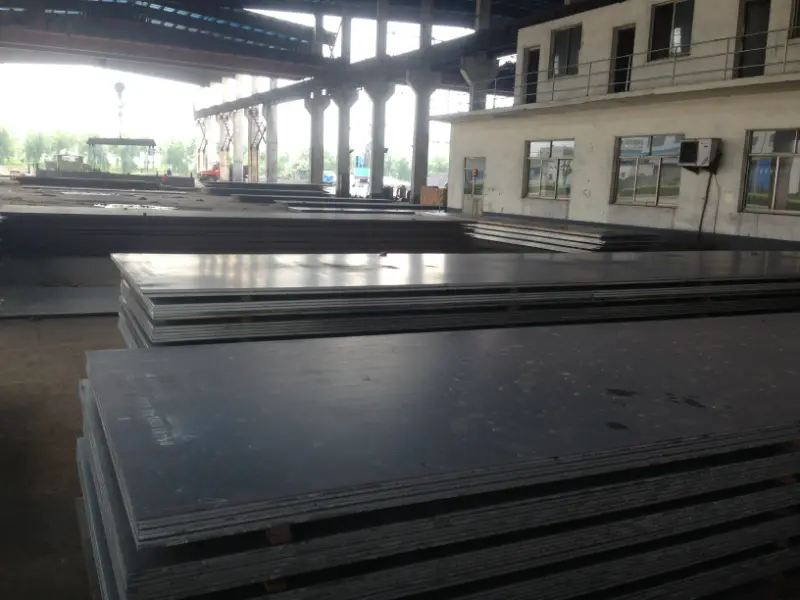
SUS304LN Stainless Steel Plate/Coil
SUS304LN Austenitic Stainless Steel: High-Strength, Low-Carbon, Nitrogen-Enhanced Alloy for Versatile Applications
Comprehensive data sheet for JIS G4304/G4305 SUS304LN austenitic stainless steel plate and coil, covering chemical composition, mechanical and physical properties, international equivalents, and application guidance for engineers and fabricators.
Hot rolling, cold rolling, solution annealing, pickling, cutting, forming, bending, deep drawing, welding, machining
- Phone : +8618037372205
- Email : [email protected]
- WhatsApp: Contact via Whtsapp
- WeChat: +8618037372205
SUS304LN Stainless Steel Plate/Coil Introduction
SUS304LN is a nitrogen-enhanced, low-carbon austenitic stainless steel standardized in JIS G4304 (hot-rolled plates/sheets/strips) and JIS G4305 (cold-rolled plates/sheets/strips). The addition of 0.12–0.22% nitrogen significantly improves yield and tensile strength compared to standard 304L, while the very low carbon content (≤0.030%) preserves excellent intergranular corrosion resistance after welding or stress relieving.
- Maintains good formability and weldability typical of 304 grades.
- Offers higher mechanical strength in the solution-annealed condition without compromising ductility.
- Widely used in chemical process equipment, food and beverage industries, architecture, and pressure vessels where higher strength-to-weight ratio is desired.
- Delivers performance equivalent to UNS S30453 and EN 1.4311.
SUS304LN Stainless Steel Plate/Coil Chemical Composition
The chemical requirements for SUS304LN are defined in JIS G4304 and G4305. The alloy features a controlled low carbon content to prevent chromium carbide precipitation and intentional nitrogen addition to boost strength. All values are mass percentages based on the product standards.
| Element | Standard Value (Weight %) | Remarks |
|---|---|---|
| Carbon (C) | ≤0.030 | Low carbon for improved intergranular corrosion resistance |
| Silicon (Si) | ≤1.00 | Deoxidizer |
| Manganese (Mn) | ≤2.00 | Austenite stabilizer and deoxidizer |
| Phosphorus (P) | ≤0.045 | Impurity control |
| Sulfur (S) | ≤0.030 | Improves machinability; kept low for weldability |
| Nickel (Ni) | 8.50 – 11.50 | Primary austenite former |
| Chromium (Cr) | 18.00 – 20.00 | Essential for corrosion resistance |
| Nitrogen (N) | 0.12 – 0.22 | Solid solution strengthener |
SUS304LN Stainless Steel Plate/Coil Thermal and Electrical Physical Properties
The following data represent typical physical properties for SUS304LN / 1.4311 in the annealed condition. These values are not normative in JIS G4304/G4305 but are widely accepted for engineering calculations and are based on published technical literature.
| Property | Typical Value | Unit | Test Condition |
|---|---|---|---|
| Density (ρ) | 7.93 | g/cm³ | At 20°C |
| Modulus of Elasticity (E) | 193 | GPa | At 20°C |
| Shear Modulus (G) | 77 | GPa | At 20°C |
| Poisson's Ratio (ν) | 0.30 | - | At 20°C |
| Thermal Expansion Coefficient (α) | 16.5 | 10⁻⁶/K | 20–100°C |
| Thermal Expansion Coefficient (α) | 17.5 | 10⁻⁶/K | 20–200°C |
| Thermal Expansion Coefficient (α) | 18.0 | 10⁻⁶/K | 20–300°C |
| Thermal Expansion Coefficient (α) | 18.5 | 10⁻⁶/K | 20–400°C |
| Thermal Conductivity (λ) | 15.0 | W/(m·K) | At 20°C |
| Thermal Conductivity (λ) | 21.5 | W/(m·K) | At 500°C |
| Specific Heat Capacity | 500 | J/(kg·K) | 0–100°C |
| Electrical Resistivity (ρₑ) | 0.72 | µΩ·m | At 20°C |
SUS304LN Stainless Steel Plate/Coil Mechanical Properties
Mechanical properties are based on JIS G4304 and G4305 for plate and coil at room temperature. Values are minimum requirements unless otherwise specified. Elongation test pieces vary with thickness; A50 and A200 refer to gauge length of 50 mm and 200 mm respectively. Hardness is a supplementary requirement.
| Property | Standard Requirement | Unit | Test Condition / Thickness Range |
|---|---|---|---|
| Yield Strength (0.2% offset) | ≥245 | N/mm² (MPa) | All thicknesses in specification, solution treated |
| Tensile Strength | ≥550 | N/mm² (MPa) | All thicknesses, solution treated |
| Elongation (50 mm gauge) | ≥40 | % | Thickness ≤ 8 mm |
| Elongation (50 mm gauge) | ≥30 | % | Thickness > 8 mm to 40 mm |
| Elongation (50 mm gauge) | ≥25 | % | Thickness > 40 mm to 80 mm |
| Elongation (50 mm gauge) | ≥20 | % | Thickness > 80 mm to 160 mm |
| Elongation (50 mm gauge) | ≥18 | % | Thickness > 160 mm to 200 mm |
| Elongation (200 mm gauge, cold-rolled sheet) | ≥25 | % | Cold-rolled sheet 0.3–6.0 mm, gauge length 200 mm |
| Hardness | ≤187 | HBW | Typical maximum for thick sections |
| Hardness | ≤90 | HRB | Alternative for thinner material |
| Bend Test (180°) | No cracks | - | Bend diameter = plate thickness; for sheets ≤ 8 mm |
SUS304LN Stainless Steel Plate/Coil Fully Equivalent Material Standards and Substitutable Grades
| Country/Region | Standard | Grade | Remarks |
|---|---|---|---|
| Japan | JIS G4304 / G4305 | SUS304LN | Original specification, hot and cold rolled plates/coils |
| USA | ASTM A240 / A240M | UNS S30453 (304LN) | Plate, sheet, and strip for pressure vessels and general applications |
| USA | ASME SA-240 | 304LN | Same as ASTM with additional boiler code endorsement |
| European Union | EN 10088-2 | X2CrNiN18-10 (1.4311) | Stainless steel sheets, plates and strips for general purposes |
| China | GB/T 3280 | 022Cr19Ni10N | Cold-rolled stainless steel sheet and strip, equivalent to 304LN |
| International | ISO 15510 | X2CrNiN18-9 | International standard, slightly broader composition but equivalent in practice |
SUS304LN Stainless Steel Plate/Coil Application Introduction
SUS304LN combines the corrosion resistance of 304L with the elevated strength of nitrogen-alloyed grades. Its high yield strength allows lighter component design without sacrificing safety, making it ideal for weight-sensitive or high-pressure applications. The material is fully weldable by conventional methods and does not require post-weld annealing for most service environments.
Product Applications: Storage tanks and silos for liquids, chemicals, and food products, Process vessels, reactors, and columns, Shell-and-tube heat exchangers and plate heat exchangers, Piping systems and flanges for corrosive fluids, Architectural cladding, roofing, and decorative panels, Kitchen equipment: sinks, countertops, cooking appliances, LNG and liquid nitrogen transport vessels, Automotive exhaust manifolds and catalytic converter shells
Processed into products: Tank shells and heads (welded construction), Pressure vessel nozzles and manways, Heat exchanger tube sheets, baffles, and channels, Flanges, elbows, reducers (pipe fittings), Stamped and deep-drawn parts: sinks, bowls, housings, Bent structural sections and mounting brackets, Weld neck and slip-on flanges, Expansion joints and bellows
Application industries: Chemical processing, Food and beverage production, Pharmaceutical equipment, Oil and gas (non-sour, non-marine environments), Architecture, building and construction, Cryogenic and LNG storage, Pressure vessel and heat exchanger fabrication, Automotive exhaust and fuel systems
SUS304LN Stainless Steel Plate/Coil Similar or Closely Related Alternative Materials
| Country/Region | Standard | Grade | Remarks |
|---|---|---|---|
| Japan | JIS G4304/4305 | SUS304 (UNS S30400) | Standard 18-8 stainless without nitrogen or low carbon; lower strength, lower intergranular corrosion resistance after welding compared to 304LN. |
| Japan | JIS G4304/4305 | SUS304L (UNS S30403) | Low carbon version of 304, good intergranular resistance; lower strength than 304LN. |
| Japan | JIS G4304/4305 | SUS304N (UNS S30451) | High nitrogen 304 with strength similar to 304LN, but carbon may be higher (typically ≤0.08), reducing weld zone corrosion resistance. |
| USA | ASTM A240 | 316L (UNS S31603) | Molybdenum-bearing low carbon austenitic; better pitting resistance but higher cost; slightly lower strength in annealed condition. |
| European Union | EN 10088-2 | X2CrNi18-9 (1.4307) | Standard 304L, not nitrogen strengthened; mechanical properties are lower. |
Notes:
Processing note: For optimal corrosion resistance, remove surface contamination and heat tint after welding by pickling and passivation. Weldability: Standard welding processes (TIG, MIG, SAW, SMAW) can be used with filler metal matching the base metal strength (e.g., ER308L, ER347). Certification: When ordered to JIS G4304 or G4305, material is typically supplied with mill test certificates (MTC) confirming compliance with chemical and mechanical requirements. Surface finishes: Hot-rolled plate is normally supplied with No. 1 finish; cold-rolled coil with 2B or 2D. Custom finishes available upon request.
- Share



