
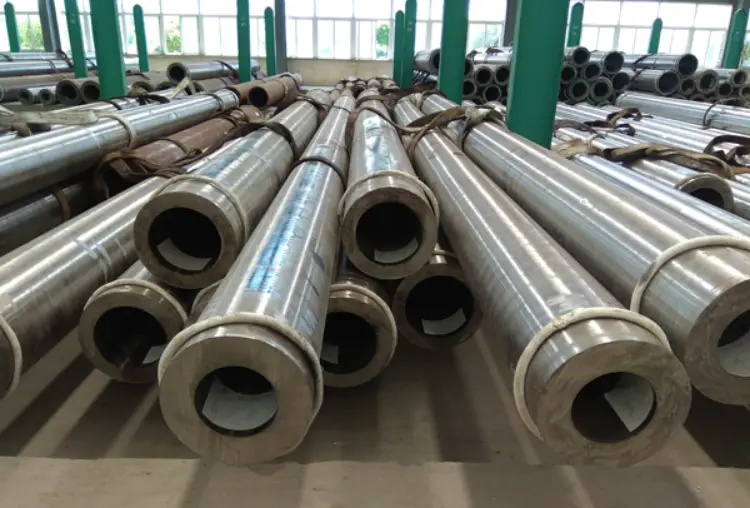
SM400C Steel (JIS G3106) for ERW Pipe
JIS G3106 SM400C Steel for Welded Structures – ERW Pipe Grade Properties & Equivalents
Complete material data for SM400C steel according to JIS G3106, used for ERW pipes in welded structures. Includes chemical composition, mechanical and physical properties, international equivalents, and application guidelines.
Suitable for welding (all common methods), forming, machining, and hot-dip galvanizing
- Phone : +8618037372205
- Email : [email protected]
- WhatsApp: Contact via Whtsapp
- WeChat: +8618037372205
SM400C Steel for ERW Pipe Introduction
JIS G3106 SM400C is a weldable structural carbon steel grade primarily supplied as hot-rolled plates, sheets, strips, and sections, commonly used for the production of ERW (Electric Resistance Welded) pipes. The designation 'SM400C' indicates a minimum tensile strength of 400 MPa and a Charpy impact test requirement at 0°C (C class). This steel offers a balanced combination of strength, ductility, and excellent weldability, making it suitable for general structural applications, bridges, ships, and various welded components. It is characterized by controlled chemical composition with low carbon equivalent to ensure good welding performance without preheating in moderate thicknesses. ERW pipes made from SM400C are widely utilized in construction, machinery, and piping systems under static and dynamic loads.
SM400C Steel for ERW Pipe Chemical Composition
The chemical composition of SM400C is defined by JIS G3106 for ladle analysis. Tight control of carbon and manganese ensures good weldability. Phosphorus and sulfur are limited to enhance toughness and formability. Silicon is a deoxidizing element. The table presents maximum values unless a range is specified.
| Element | Standard Value (wt%) | Remarks |
|---|---|---|
| Carbon (C) | ≤0.20 | Ladle analysis |
| Silicon (Si) | ≤0.35 | Ladle analysis |
| Manganese (Mn) | 0.60 - 1.40 | Ladle analysis |
| Phosphorus (P) | ≤0.035 | Ladle analysis |
| Sulfur (S) | ≤0.035 | Ladle analysis |
| Ceq | ≤0.44 (typical) | Carbon equivalent, not mandatory, for guidance only |
SM400C Steel for ERW Pipe Thermal and Electrical Physical Properties
The following physical properties are typical for low-carbon structural steels like SM400C and are not part of JIS G3106 requirements. They are provided for design and engineering purposes. Density is used for weight calculations, thermal expansion for thermal stress analysis, and thermal conductivity for heat transfer.
| Property | Typical Value | Unit | Test Condition |
|---|---|---|---|
| Density (ρ) | 7.85 | g/cm³ | Room temperature |
| Elastic modulus (E) | 205 | GPa | Room temperature |
| Shear modulus (G) | 79 | GPa | Room temperature, calculated |
| Poisson's ratio (ν) | 0.29 | - | Room temperature |
| Thermal expansion coeff. (α) | 11.7 × 10⁻⁶ | /K | 20–100°C |
| Thermal expansion coeff. (α) | 12.5 × 10⁻⁶ | /K | 20–200°C |
| Thermal expansion coeff. (α) | 13.5 × 10⁻⁶ | /K | 20–400°C |
| Thermal conductivity (λ) | 53 | W/(m·K) | Room temperature |
| Specific heat capacity (cp) | 486 | J/(kg·K) | Room temperature |
| Electrical resistivity (ρe) | 0.19 | Ω·mm²/m | Room temperature |
SM400C Steel for ERW Pipe Mechanical Properties
Mechanical properties depend on product thickness. The values below are extracted from JIS G3106:2015 for flat products.
- Yield strength (ReH) decreases with increasing thickness.
- Tensile strength (Rm) is specified as 400–510 MPa for all thicknesses.
- Elongation (A) varies with thickness and test piece orientation.
- Charpy impact test at 0°C is mandatory for grade C, average ≥27 J (min single 20 J).
| Property | Standard Required Value | Unit | Test Condition |
|---|---|---|---|
| Yield strength (ReH) | ≥245 | MPa | t ≤ 16 mm |
| Yield strength (ReH) | ≥235 | MPa | 16 mm < t ≤ 40 mm |
| Yield strength (ReH) | ≥215 | MPa | 40 mm < t ≤ 100 mm |
| Tensile strength (Rm) | 400 – 510 | MPa | All thicknesses |
| Elongation (A) | ≥18 (No.5 test piece) | % | t ≤ 5 mm, transverse |
| Elongation (A) | ≥22 (No.5 test piece) | % | 5 mm < t ≤ 16 mm, transverse |
| Elongation (A) | ≥24 (No.1A test piece) | % | 16 mm < t ≤ 50 mm, transverse |
| Charpy impact (KV2) | ≥27 (average), ≥20 (single) | J | 0°C, V-notch, longitudinal, full-size specimen |
| Bend test (180°) | d=1.5a (for t ≤ 16 mm), d=2.0a (t > 16 mm) | - | No cracks on outside of bent portion |
SM400C Steel for ERW Pipe Exact Equivalent Materials and Recommended Substitutes
| Country/Region | Standard | Grade | Remarks |
|---|---|---|---|
| Japan | JIS G3106 | SM400C | Original specification, full equivalence |
| China | GB/T 700 | Q235C | Similar chemical composition, impact at 0°C, tensile 370–500 MPa; check thickness tolerance |
| European Union | EN 10025-2 | S235J0 | Yield min 235 MPa, tensile 360–510 MPa, impact at 0°C; direct substitute for many applications |
| United States | ASTM A36 / A36M | A36 | Tensile 400–550 MPa; impact test at 0°C optional under supplementary requirement S5; widely accepted |
| International | ISO 630-2 | E235C | Fe 360C equivalent, yield 235 MPa, impact 27J at 0°C; equivalent mechanical properties |
SM400C Steel for ERW Pipe Application Introduction
SM400C ERW pipes are utilized across multiple sectors where weldable structural steel with moderate strength and guaranteed low-temperature toughness is required. Their circular hollow sections provide excellent strength-to-weight ratio and are ideal for structural frameworks, mechanical components, and fluid transport lines under moderate pressure.
- Construction Industry: Columns, beams, trusses, scaffolding, and roof structures.
- Shipbuilding: Hull stiffeners, piping systems, and deck supports.
- Machinery: Machine frames, agricultural equipment, conveyors, and automotive parts.
- Infrastructure: Bridge railings, lamp posts, sign gantries, and guardrails.
- General Engineering: Handrails, fences, greenhouse structures, and furniture.
Product Applications: Structural ERW steel pipes (circular, square, rectangular), Hollow sections for building frames, Scaffolding tubes, Mechanical tubing for hydraulic cylinders, Furniture and storage racking, Greenhouse frames
Processed into products: Welded columns and beams, Bicycle and motorcycle frames, Conveyor rollers and idlers, Guardrail posts and crash barriers, Heat exchanger support frames, Pipe trusses for roofs and bridges, Base plates and brackets
Application industries: Construction and civil engineering, Shipbuilding and marine, Machinery and industrial equipment, Transportation and automotive, Energy and pipeline, Agriculture and forestry
SM400C Steel for ERW Pipe Similar / Nearby Substitute Material Recommendations
| Country/Region | Standard | Grade | Remarks |
|---|---|---|---|
| Japan | JIS G3106 | SM400A | Same strength level but no impact requirement; suitable for ambient temperature static structures |
| Japan | JIS G3106 | SM400B | Impact at 20°C; better toughness than A but not as strict as C; may replace SM400C if operating temperature is above 0°C |
| Japan | JIS G3106 | SM490A/B/C | Higher strength (490 MPa class), may be used for weight saving but weldability slightly different; check Ceq |
| European Union | EN 10025-2 | S235JR | Impact at 20°C, otherwise similar; can substitute SM400C in non-critical cold temperature applications |
| China | GB/T 700 | Q235B | Impact at 20°C; suitable when 0°C toughness is not mandatory; frequent substitution in Asian markets |
Notes:
For ERW pipe production, the base SM400C steel should have a carbon equivalent (Ceq) typically below 0.40% to avoid hardening in the heat-affected zone. Post-weld heat treatment is generally not required for thicknesses up to 50 mm. Surface condition: may be supplied black, pickled and oiled, or galvanized. Inspection certificates often include EN 10204 type 3.1. Users requiring improved atmospheric corrosion resistance may consider weathering steel grades like SMA400 series per JIS G3114, but not from JIS G3106.
- Share



