
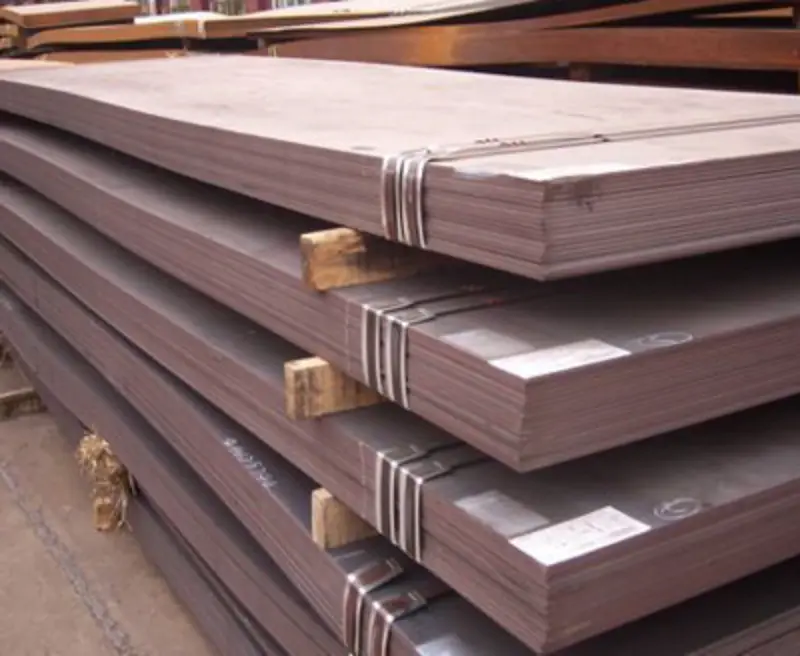
SEW092 QStE260N Automobile Structure Steel Plate
SEW092 QStE260N Automobile Structure Steel Plate: Fine-Grain High-Strength Steel for Automotive Lightweight Design
Explore QStE260N micro-alloyed automobile structural steel under SEW092—detailed chemical composition, mechanical and thermal properties, international equivalents, and application guidance for chassis and body components.
Cold forming, bending, drawing, punching, welding, machining
- Phone : +8618037372205
- Email : [email protected]
- WhatsApp: Contact via Whtsapp
- WeChat: +8618037372205
SEW092 QStE260N Automobile Structure Steel Plate Introduction
QStE260N is a fine-grain, weldable structural steel designed for cold forming in automotive applications. Supplied under the German standard SEW092 in normalized or normalized-rolled condition (indicated by 'N'), it offers a minimum yield strength of 260 MPa, good toughness, excellent weldability, and reliable formability. Its balanced chemical composition with micro-alloying elements (Nb, V, Ti) ensures consistent mechanical properties even after hot rolling. This steel is particularly suited for lightweight structural members where weight reduction without sacrificing safety is critical. Typical delivery includes hot-rolled strip, sheet, or plate with controlled surface finish for direct press-forming and welding operations.
SEW092 QStE260N Automobile Structure Steel Plate Chemical Composition
The ladle analysis of QStE260N according to SEW092 controls low carbon for weldability, medium manganese for strength, and micro-alloying (Nb, V, Ti) for grain refinement and precipitation hardening. Aluminium is added for deoxidation and grain size control. The limits ensure a balance between strength, ductility, and formability.
| Chemical Element | Standard Value (wt%) | Remarks |
|---|---|---|
| Carbon (C) | ≤0.10 | Essential for strength; kept low to ensure good weldability |
| Silicon (Si) | ≤0.50 | Deoxidizer; contributes to solid-solution strengthening |
| Manganese (Mn) | ≤1.20 | Increases strength and hardenability; aids grain refinement |
| Phosphorus (P) | ≤0.030 | Impurity; low level to avoid cold brittleness |
| Sulfur (S) | ≤0.025 | Impurity; controlled for improved toughness and formability |
| Aluminium (Al total) | ≥0.015 | Grain refining element; minimum for full deoxidation |
| Niobium (Nb) | ≤0.09 | Micro-alloying for precipitation strengthening and grain refinement |
| Vanadium (V) | ≤0.20 | Optional micro-alloy; adds strength through carbonitride formation |
| Titanium (Ti) | ≤0.15 | Micro-alloy for grain pinning and improved weldability |
| Nitrogen (N) | ≤0.012 (typical) | Not always specified; controlled to stabilize micro-alloy precipitates |
SEW092 QStE260N Automobile Structure Steel Plate Thermal and Electrical Physical Properties
Typical physical properties for low-carbon micro-alloyed steel at room temperature and elevated temperatures, useful for design calculations involving thermal loads or electrical conductivity. These values are representative for fine-grain structural steels and may vary slightly with processing.
| Property | Typical Value | Unit | Test Conditions |
|---|---|---|---|
| Density (ρ) | 7.85 | g/cm³ | Ambient temperature |
| Elastic modulus (E) | 210 | GPa | Tensile modulus, room temperature |
| Shear modulus (G) | 81 | GPa | Calculated from E and Poisson ratio |
| Poisson ratio (ν) | 0.3 | - | Elastic deformation range |
| Thermal expansion coefficient (α) | 12.0 × 10⁻⁶ | 1/K | 20–100 °C |
| Thermal conductivity (λ) | 50 | W/(m·K) | At 20 °C |
| Specific heat capacity | 460 | J/(kg·K) | At 20 °C |
| Electrical resistivity (ρ_e) | 0.15 | μΩ·m | At 20 °C |
SEW092 QStE260N Automobile Structure Steel Plate Mechanical Properties
Mechanical properties are evaluated on transverse test pieces in the normalized or normalized-rolled delivery condition. Values depend on product thickness. SEW092 specifies minimum yield and tensile strengths along with elongation requirements to guarantee cold formability and structural performance. Bend tests confirm ductility without cracking.
| Property | Required Value | Unit | Test Conditions |
|---|---|---|---|
| Yield strength (ReH) | ≥260 | MPa | Thickness ≤16 mm, transverse |
| Tensile strength (Rm) | 360–480 | MPa | Thickness ≤16 mm, transverse |
| Elongation after fracture (A80) | ≥24 | % | Thickness ≤3 mm, gauge length L0=80 mm |
| Elongation after fracture (A5) | ≥26 | % | Thickness >3 mm, gauge length L0=5.65√S0 |
| Bend test (180°) | No cracks; recommended mandrel diameter 0.5 × thickness | - | Up to 16 mm thickness; room temperature |
SEW092 QStE260N Automobile Structure Steel Plate Fully Equivalent Material Standards and Substitute Grades
| Country/Region | Standard | Grade | Remarks |
|---|---|---|---|
| European Union | EN 10149-2 | S260NC | Direct equivalent for cold-forming fine-grain steel; normalized/normalized rolled condition |
| Germany | SEW 092 | QStE260N | Original German standard grade |
| International (ISO) | ISO 6930-2 | HR260 | Hot-rolled fine-grain structural steel for cold forming, approximately equivalent |
| France | NF A36-231 | E260C | Comparable normalized fine-grain steel; minor chemistry differences |
SEW092 QStE260N Automobile Structure Steel Plate Application Introduction
With its combination of strength, cold formability, and weldability, QStE260N is an established material for automotive structural parts. It supports lightweight design strategies by enabling thinner gauges without compromising safety, and it integrates seamlessly into modern manufacturing environments (robotic welding, press lines). Common heat treatment such as normalizing is typically already performed at the mill, eliminating the need for post-processing.
Product Applications: Hot-stamped and cold-formed chassis beams, Body-in-white structural reinforcements (A/B-pillars, rocker panels), Wheel rims and discs, Engine and transmission cradles, Suspension control arms and trailing arms, Cross members and side members for truck frames
Processed into products: Longitudinal chassis beams, Cross car beams, Bumper reinforcement beams, Seat frame profiles, Stamped brackets and mounting plates, Drawable hub components
Application industries: Automotive (passenger cars, commercial vehicles), Transportation (buses, trailers), Agricultural and construction machinery (cabs, frames)
SEW092 QStE260N Automobile Structure Steel Plate Similar/Alternative Material Recommendations
| Country/Region | Standard | Grade | Remarks |
|---|---|---|---|
| Germany | SEW 092 | QStE300N | Higher yield strength (≥300 MPa); similar formability and welding behavior |
| European Union | EN 10149-2 | S315MC | Thermo-mechanically rolled fine-grain steel with slightly higher strength and good formability |
| European Union | EN 10149-2 | S355MC | Higher strength micro-alloyed steel; suitable when increased load capacity is needed |
| USA | ASTM A1011 | HSLAS Grade 45 Class 1 or 2 | High-strength low-alloy steel with comparable yield ~310 MPa; requires thickness and processing adjustment |
Notes:
QStE260N under SEW092 is a well-defined grade for automotive thin-gauge applications. When ordering, specify the required surface quality (e.g., un-pickled or pickled and oiled) and permissible tolerances. For components subjected to fatigue loading, consider shot peening or edge rounding to improve durability. Actual mechanical properties may be adjusted through controlled rolling, always refer to the mill test certificate for batch-specific values. Welding recommendations follow standard practices for micro-alloyed fine-grain steels (e.g., low hydrogen processes, no preheating for thickness below 30 mm).
- Share



