
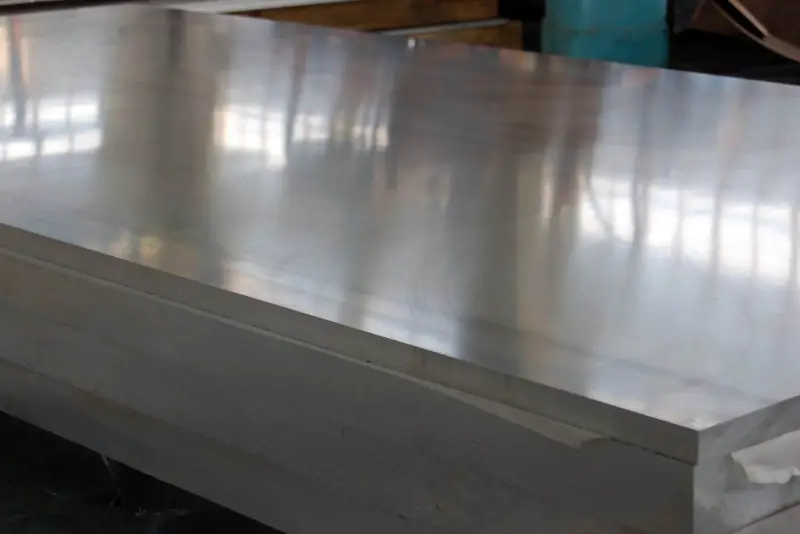
Q500D High Strength Quenched & Tempered Steel Plate
Q500D High Strength Quenched & Tempered Steel Plate - GB/T 16270 for Heavy Machinery & Structures
Complete material data for Q500D steel according to GB/T 16270: chemical composition, mechanical properties, thermal and electrical physical properties, international equivalents, similar grades, and application guidance.
Hot rolling, quenching and tempering, flame cutting, welding, cold bending
- Phone : +8618037372205
- Email : [email protected]
- WhatsApp: Contact via Whtsapp
- WeChat: +8618037372205
Q500D High Strength Quenched & Tempered Steel Plate Introduction
Q500D is a high-strength low-alloy structural steel plate defined in Chinese standard GB/T 16270. It is supplied in the quenched and tempered (Q+T) condition, delivering a minimum yield strength of 500 MPa with excellent low-temperature impact toughness at -20 °C. The steel offers a balanced combination of strength, weldability, and cold forming capability, making it suitable for demanding structural applications. Typical thicknesses range from 6 mm to 150 mm, and the material is widely used in construction machinery, bridge building, offshore engineering, and pressure vessel manufacturing.
Q500D High Strength Quenched & Tempered Steel Plate Chemical Composition
The table lists the specified chemical composition for Q500D as defined in GB/T 16270. Maximum values are indicated unless a range is specified. Elements like Al are required for fine grain practice. The steel is fully killed and fine-grained, ensuring good toughness and weldability.
| Chemical Element | Standard Value (max, %) | Remarks |
|---|---|---|
| Carbon, C | ≤ 0.18 | |
| Silicon, Si | ≤ 0.60 | |
| Manganese, Mn | ≤ 1.70 | |
| Phosphorus, P | ≤ 0.020 | |
| Sulfur, S | ≤ 0.010 | |
| Chromium, Cr | ≤ 0.80 | |
| Nickel, Ni | ≤ 0.80 | |
| Molybdenum, Mo | ≤ 0.30 | |
| Copper, Cu | ≤ 0.50 | |
| Niobium, Nb | ≤ 0.06 | |
| Vanadium, V | ≤ 0.08 | |
| Titanium, Ti | ≤ 0.05 | |
| Boron, B | ≤ 0.005 | |
| Aluminium (total or acid soluble), Al | ≥ 0.015 | Fine grain treatment |
| Nitrogen, N | ≤ 0.015 |
Q500D High Strength Quenched & Tempered Steel Plate Thermal & Electrical Physical Properties
The following physical properties are typical for low-alloy quenched and tempered steel of the Q500D type at room temperature unless stated otherwise. Values may vary slightly depending on exact composition and heat treatment condition. These data are useful for thermal and structural analysis.
| Property | Standard Required Value | Unit | Test Condition / Remarks |
|---|---|---|---|
| Density (ρ) | 7.85 | g/cm³ | At 20 °C |
| Modulus of elasticity (E) | 205 – 210 | GPa | Room temperature |
| Shear modulus (G) | ≈ 80 | GPa | Calculated from E and ν |
| Poisson's ratio (ν) | 0.3 | Room temperature | |
| Thermal expansion coefficient (α) | 12.0 | 10⁻⁶ /K | 20 – 100 °C |
| 12.5 | 10⁻⁶ /K | 20 – 200 °C | |
| 13.0 | 10⁻⁶ /K | 20 – 300 °C | |
| Thermal conductivity (λ) | 45 – 48 | W/(m·K) | At 100 °C |
| 42 – 45 | W/(m·K) | At 200 °C | |
| 38 – 42 | W/(m·K) | At 300 °C | |
| Specific heat capacity (cp) | 460 – 480 | J/(kg·K) | 20 – 100 °C |
| Electrical resistivity (ρ_e) | 0.20 – 0.25 | µΩ·m | Room temperature |
Q500D High Strength Quenched & Tempered Steel Plate Mechanical Properties
Mechanical properties are obtained from GB/T 16270 for the quenched and tempered condition. The values apply to plates with thickness ≤ 50 mm unless otherwise noted. For larger thicknesses, slight reductions in strength and elongation may be agreed upon. The impact test temperature is -20 °C with a minimum absorbed energy of 47 J (longitudinal). Bending test requirements are based on the plate thickness a.
| Property | Standard Required Value | Unit | Test Condition / Remarks |
|---|---|---|---|
| Yield strength (ReH) | ≥ 500 | MPa | Thickness ≤ 50 mm |
| ≥ 480 | MPa | Thickness > 50 mm to 100 mm | |
| ≥ 450 | MPa | Thickness > 100 mm to 150 mm | |
| Tensile strength (Rm) | 610 – 770 | MPa | Thickness ≤ 50 mm |
| 590 – 770 | MPa | Thickness > 50 mm to 100 mm | |
| 570 – 750 | MPa | Thickness > 100 mm to 150 mm | |
| Elongation (A) | ≥ 17 | % | Thickness ≤ 50 mm, gauge length 5.65√S0 |
| ≥ 16 | % | Thickness > 50 mm to 100 mm | |
| ≥ 15 | % | Thickness > 100 mm to 150 mm | |
| Impact energy (KV2, longitudinal) | ≥ 47 | J | At -20 °C |
| Bending test (bend angle 180°) | d = 3a | Thickness ≤ 16 mm | |
| d = 4a | Thickness > 16 mm to 50 mm | ||
| d = 5a | Thickness > 50 mm to 100 mm |
Q500D High Strength Quenched & Tempered Steel Plate Fully Equivalent Material Standards & Substitution Grades
| Country / Region | Standard | Grade | Remarks |
|---|---|---|---|
| International (ISO) | ISO 4950-2 | E500DD | Same strength class and -20 °C impact requirement; minimum impact energy 27 J instead of 47 J, otherwise fully comparable. |
| Europe (EN) | EN 10025-6 | S500Q | Equivalent quenched & tempered steel with comparable chemical composition. Note that S500Q standard impact test is at 0 °C (27 J); for -20 °C performance use S500QL ( -40 °C) if higher toughness needed. |
| Japan (JIS) | JIS G 3140 | SBHS500 | High strength steel for bridge construction; yield strength 500 MPa with toughness class corresponding to -20 °C. Closely matches Q500D in mechanical properties and chemical limits. |
Q500D High Strength Quenched & Tempered Steel Plate Application Introduction
Q500D steel is selected for its high strength-to-weight ratio and reliable notch toughness at low temperatures. It is typically used in welded fabrications subjected to heavy static and dynamic loads. The steel can be cold formed with adequate bending radii and welded using all common methods, provided low-hydrogen practices and appropriate preheat/interpass temperatures are employed. Post-weld heat treatment is generally not required but may be applied to relieve residual stresses.
Product Applications: Welded structural assemblies for heavy machines, Crane booms and outriggers, Excavator arms and buckets, Load-bearing bridge components, Offshore platform substructures, Mine haul truck chassis, High-pressure vessel shells
Processed into products: Flanges and webs of welded I-beams and box girders, Brackets and reinforcing plates, Crane telescopic sections, Hydraulic cylinder housing, Crawler crane track frames, Wind turbine tower internal platforms and flanges, Shipbuilding structural parts (e.g., deck plating)
Application industries: Heavy construction machinery (mobile cranes, excavators, piling rigs), Bridge engineering (girder webs and flanges, truss members), Offshore and marine structures (jack-up rigs, ship unloaders), Mining equipment (dump truck bodies, crusher frames), Pressure vessels and storage tanks (where high strength is required), Wind energy (tower sections, nacelle frames)
Q500D High Strength Quenched & Tempered Steel Plate Similar / Comparable Material Recommendations
| Country / Region | Standard | Grade | Remarks |
|---|---|---|---|
| China | GB/T 16270 | Q550D | Higher strength (550 MPa yield) with similar low-temperature toughness; suitable for weight reduction designs. |
| China | GB/T 16270 | Q460D | Lower strength but often more readily available; can replace Q500D when strength requirements are slightly lower. |
| China | GB/T 16270 | Q690D | Significantly higher strength (690 MPa yield) for ultra-high strength applications; requires careful welding procedures. |
| Europe | EN 10025-6 | S500QL | Toughness class down to -40 °C; can substitute Q500D where lower temperature service is required. |
| USA | ASTM A514 / A517 | Grade B / Grade F | Quenched & tempered alloy steels with similar strength levels (690 MPa yield) but different alloy concepts; often used in structural and pressure vessel applications. |
Notes:
When ordering Q500D to GB/T 16270, the required delivery condition (quenched + tempered) and impact test temperature (-20 °C) must be clearly stated. Supplementary requirements such as ultrasonic testing (per GB/T 2970), through-thickness tensile testing (Z-quality), or restrictions on certain elements can be agreed upon at the time of enquiry and order. Welding procedures should follow the recommendations of the steel manufacturer; typical preheat for thicker sections (>50 mm) ranges from 100 °C to 150 °C. The material can normally be hot-dip galvanized without significant loss of mechanical properties.
- Share



