
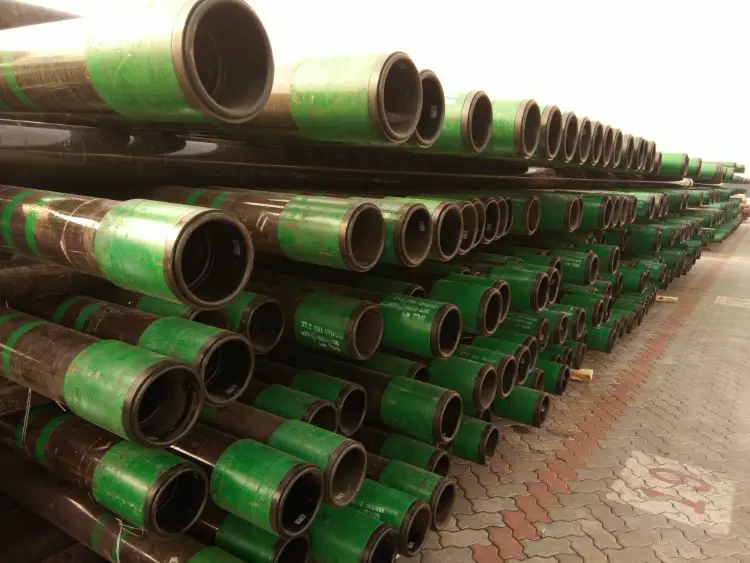
Q420C Steel for SSAW Pipe Material
Q420C Steel for SSAW Pipe: GB/T 1591 HSLA Grade Data Sheet and International Equivalents
Complete property profile of Q420C low-alloy high-strength structural steel per GB/T 1591, used for spiral submerged arc welded pipes. Includes chemical composition, tensile properties, physical constants, equivalent grades across EN, ASTM, and typical applications.
Hot rolling, controlled rolling, normalizing, spiral forming and submerged arc welding (for SSAW pipe), cold forming, machining, welding
- Phone : +8618037372205
- Email : [email protected]
- WhatsApp: Contact via Whtsapp
- WeChat: +8618037372205
Q420C Steel for SSAW Pipe Introduction
Q420C is a low-alloy high-strength structural steel grade defined in Chinese standard GB/T 1591. With a minimum yield strength of 420 MPa for thicknesses up to 16 mm and guaranteed impact energy of 34 J at 0 °C, it exhibits an excellent combination of strength, toughness, and weldability. The controlled rolling or normalizing delivery condition ensures fine-grained microstructure, making Q420C particularly suitable for spiral submerged arc welded (SSAW) pipes employed in oil & gas transmission, water mains, and large-diameter structural applications. Its balanced chemistry with microalloying elements such as Nb, V, and Ti contributes to grain refinement and precipitation hardening, achieving the required mechanical properties without compromising formability. Q420C demonstrates reliable performance under low-temperature service conditions, meeting the demands of infrastructure projects that require robust and economic steel solutions.
Q420C Steel for SSAW Pipe Chemical Composition of Q420C per GB/T 1591
The table lists maximum and minimum weight percentages of alloying and residual elements as specified in GB/T 1591 for Q420C quality. Microalloying additions of niobium, vanadium, and titanium are used individually or in combination to achieve high strength and good toughness. Phosphorus and sulfur are strictly limited to improve weldability and ductility.
| Element | Standard Value (wt.%) | Remarks |
|---|---|---|
| Carbon (C) | ≤0.20 | Key strengthening element |
| Silicon (Si) | ≤0.60 | Deoxidizer |
| Manganese (Mn) | ≤1.70 | Enhances strength and hardenability |
| Phosphorus (P) | ≤0.030 | Low for improved toughness |
| Sulfur (S) | ≤0.030 | Controlled for weldability |
| Niobium (Nb) | ≤0.07 | Grain refiner, microalloying |
| Vanadium (V) | ≤0.20 | Precipitation hardening |
| Titanium (Ti) | ≤0.20 | Grain refinement, deoxidation |
| Chromium (Cr) | ≤0.30 | Residual element |
| Nickel (Ni) | ≤0.80 | Improves toughness |
| Copper (Cu) | ≤0.55 | Atmospheric corrosion resistance |
| Molybdenum (Mo) | ≤0.20 | Permitted residual |
| Nitrogen (N) | ≤0.015 | Controlled for aging |
| Aluminium (Alt) | ≥0.015 | Grain refinement, deoxidation |
| Boron (B) | ≤0.004 | Optional microalloying |
Q420C Steel for SSAW Pipe Thermal and Electrical Physical Properties of Q420C
These values are representative for low-alloy structural steels and were derived from published literature and experience with similar HSLA grades. They are not mandated by GB/T 1591 but serve as engineering guidelines for design calculations involving thermal expansion, heat transfer, or electrical resistivity.
| Property | Typical Value | Unit | Test Condition / Remarks |
|---|---|---|---|
| Density (ρ) | 7.85 | g/cm³ | At 20 °C |
| Elastic modulus (E) | 205 | GPa | Tensile modulus, room temperature |
| Shear modulus (G) | 80 | GPa | Calculated from E and ν |
| Poisson's ratio (ν) | 0.30 | — | Room temperature |
| Thermal expansion coefficient (α) | 12.0 | 10⁻⁶/K | Average 20 – 100 °C |
| Thermal conductivity (λ) | 50 | W/(m·K) | At 20 °C |
| Specific heat capacity | 480 | J/(kg·K) | At 20 °C |
| Electrical resistivity (ρ_e) | 0.23 | μΩ·m | At 20 °C |
Q420C Steel for SSAW Pipe Mechanical Properties of Q420C
Tensile and impact testing are performed according to GB/T 1591 requirements. Yield strength values vary with product thickness; therefore multiple rows are shown for each thickness interval. Elongation after fracture (A) is based on a gauge length of 5.65√S0. Charpy V-notch impact tests are conducted on standard full-sized specimens at 0 °C. Bending tests use longitudinal specimens with mandrel diameters as indicated.
| Property | Specified Value | Unit | Test Condition / Thickness Range |
|---|---|---|---|
| Yield strength (ReH) | ≥420 | MPa | Thickness ≤ 16 mm |
| Yield strength (ReH) | ≥400 | MPa | Thickness 16 – 40 mm |
| Yield strength (ReH) | ≥380 | MPa | Thickness 40 – 63 mm |
| Yield strength (ReH) | ≥370 | MPa | Thickness 63 – 80 mm |
| Yield strength (ReH) | ≥370 | MPa | Thickness 80 – 100 mm |
| Yield strength (ReH) | ≥360 | MPa | Thickness 100 – 150 mm |
| Yield strength (ReH) | ≥350 | MPa | Thickness 150 – 200 mm |
| Yield strength (ReH) | ≥340 | MPa | Thickness 200 – 250 mm |
| Tensile strength (Rm) | 520 – 680 | MPa | Thickness ≤ 100 mm |
| Tensile strength (Rm) | 500 – 660 | MPa | Thickness 100 – 150 mm |
| Tensile strength (Rm) | 490 – 650 | MPa | Thickness 150 – 200 mm |
| Tensile strength (Rm) | 480 – 640 | MPa | Thickness 200 – 250 mm |
| Elongation after fracture (A) | ≥18 | % | Thickness ≤ 16 mm |
| Elongation after fracture (A) | ≥18 | % | Thickness 16 – 40 mm |
| Elongation after fracture (A) | ≥18 | % | Thickness 40 – 63 mm |
| Elongation after fracture (A) | ≥18 | % | Thickness 63 – 100 mm |
| Elongation after fracture (A) | ≥18 | % | Thickness 100 – 150 mm |
| Elongation after fracture (A) | ≥17 | % | Thickness 150 – 200 mm |
| Elongation after fracture (A) | ≥17 | % | Thickness 200 – 250 mm |
| Bending test (180°) | d = 2a | - | Longitudinal, thickness ≤ 16 mm |
| Bending test (180°) | d = 3a | - | Longitudinal, 16 mm < thickness ≤ 100 mm |
| Bending test (180°) | d = 4a | - | Longitudinal, 100 mm < thickness ≤ 200 mm |
| Charpy V-notch impact (KV2) | ≥34 | J | 0 °C, longitudinal, full-size |
Q420C Steel for SSAW Pipe Completely Equivalent Material Standards and Replaceable Grades
| Country/Region | Standard | Grade | Remarks |
|---|---|---|---|
| China | GB/T 1591 | Q420C | Base grade; 0 °C impact 34 J min |
| Europe | EN 10025-2:2019 | S420J0 (1.0590) | Comparable hot-rolled structural steel; 0 °C impact 27 J min, chemical composition differs slightly; often used as functional equivalent |
| Europe | EN 10025-3:2019 | S420N (1.8902) | Normalized fine-grain steel; -20 °C impact 40 J; better toughness, but can substitute with re-normalization |
| USA | ASTM A572/A572M | Grade 60 [415] | 415 MPa yield, similar strength; impact properties not mandated unless ordered; chemistry allows higher C and Mn |
| International | ISO 630-3:2021 | S420N | Weldable fine-grain structural steel; -20 °C impact; suitable replacement under engineering judgment |
Q420C Steel for SSAW Pipe Application Introduction
Q420C steel is extensively used in the form of spiral submerged arc welded (SSAW) pipes for large-diameter, high-pressure and structural applications. The combination of high yield strength, good weldability, and notch toughness makes it a cost-effective choice for projects where both structural integrity and economical fabrication are required. The following lists the primary industries, typical products, and specific components that benefit from Q420C sheet and coil material.
Product Applications: Spiral submerged arc welded (SSAW) pipes, Longitudinally welded large-diameter pipes (LSAW), Hot-rolled structural sections (H-beams, channels, angles), Heavy plate for fabricated components, Cold-formed hollow sections
Processed into products: Oil and gas trunk pipelines, Water transmission mains and penstocks, Pipe piles and caissons for port and marine structures, Bridge girders, trusses, and support columns, Building frameworks and long-span roof structures, Crane booms and mining machinery frames, Pressure vessels and storage tanks (with supplementary requirements)
Application industries: Oil and gas transmission (onshore and offshore), Municipal water supply and sewage systems, Civil and structural engineering (bridges, buildings, stadiums), Piling and foundation engineering, Mechanical and heavy equipment manufacturing, Renewable energy structures (wind turbine towers, jacket foundations)
Q420C Steel for SSAW Pipe Closely Related or Equivalent Substitute Materials
| Country/Region | Standard | Grade | Remarks |
|---|---|---|---|
| USA | API 5L | X60 (L415) or X65 (L450) | Pipe grades with similar strength; designed for line pipe; requires additional HIC/SSC tests for sour service |
| USA | ASTM A709/A709M | Grade 50 (345) or HPS 50W | Bridge structural steel; lower strength, but can be upgraded to Grade 50S (345-485 MPa); for structural pipes |
| Japan | JIS G3106 | SM570 | High-strength welded structural steel; 570 MPa tensile class; yield ~450 MPa; more suitable for heavy structures |
| Europe | EN 10025-4 | S420M/ML | Thermomechanically rolled; similar strength; improved weldability |
| Europe | EN 10025-6 | S420Q/QL/QL1 | Quenched and tempered; higher toughness; used for specialized applications |
Notes:
For SSAW pipe manufacturing, the starting material (hot-rolled strip) must conform to GB/T 1591 Q420C composition and property limits. The pipe itself is typically produced according to standards such as GB/T 9711 (China) or API 5L (international), which impose additional requirements on dimensional tolerances, weld seam quality, hydrostatic testing, and NDE. The above data are for the parent steel grade Q420C; actual pipe properties may be influenced by forming and welding processes.
- Share



