
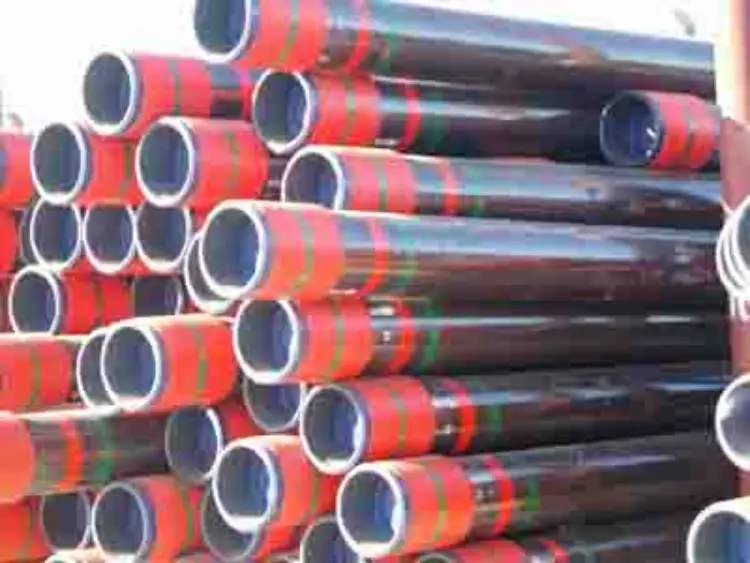
Q355GNH Weathering Steel Pipe
Q355GNH Weathering Steel Pipe: High-Strength, Atmospheric Corrosion-Resistant Structural Pipe (GB/T 4171)
Explore Q355GNH weathering steel pipe per GB/T 4171: a high-strength, low-alloy structural steel designed for superior atmospheric corrosion resistance. Ideal for bridges, buildings, and outdoor structures, it develops a protective rust patina that eliminates painting needs, reducing lifecycle costs.
Hot rolling, cold forming, welding, bending, cutting, punchin
- Phone : +8618037372205
- Email : [email protected]
- WhatsApp: Contact via Whtsapp
- WeChat: +8618037372205
Q355GNH Weathering Steel Pipe Introduction
Q355GNH is a high-strength, atmospheric corrosion-resistant structural steel standardized under GB/T 4171. The 'Q' designates yield strength, '355' indicates a minimum yield strength of 355 MPa, 'G' stands for 'high', 'N' for 'weathering', and 'H' for 'high weather resistance'. This steel contains alloying elements such as copper, chromium, and nickel, which promote the formation of a dense, adherent oxide layer (patina) that shields the base metal from further atmospheric corrosion.
- Excellent weldability and formability
- High tensile strength and toughness
- Eliminates or reduces painting requirements in many environments
- Suitable for long-term exposure in outdoor structural applications
Q355GNH Weathering Steel Pipe Chemical Composition
The chemical composition of Q355GNH conforms to GB/T 4171-2008. The key alloying elements — copper, chromium, and nickel — are added to enhance atmospheric corrosion resistance. Phosphorus is intentionally increased within a controlled range to improve weather resistance, while sulfur is kept low for cleanliness and toughness. Typical values are shown below, based on the standard's limits.
| Chemical Element | Specified Value (wt.%) | Remarks |
|---|---|---|
| Carbon (C) | ≤ 0.12 | Max |
| Silicon (Si) | 0.20 ~ 0.75 | Range |
| Manganese (Mn) | ≤ 1.00 | Max |
| Phosphorus (P) | 0.07 ~ 0.15 | Range, for atmospheric resistance |
| Sulfur (S) | ≤ 0.020 | Max |
| Copper (Cu) | 0.25 ~ 0.55 | Range, key corrosion resistance element |
| Chromium (Cr) | 0.30 ~ 1.25 | Range, promotes protective patina |
| Nickel (Ni) | ≤ 0.65 | Max, improves toughness and corrosion resistance |
| Nitrogen (N) | ≤ 0.012 | For fine-grain control (if added) |
| Titanium (Ti) / Niobium (Nb) / Vanadium (V) | May be added singly or in combination | Grain refinement and strength; total ≤ 0.22% if used |
Q355GNH Weathering Steel Pipe Physical Properties
The following physical properties are typical for weathering steels similar to Q355GNH. They are not mandated by GB/T 4171 but are representative for engineering calculations. Variations may occur depending on exact composition and processing. Room-temperature values are given unless a temperature range is specified.
| Property | Typical Value | Unit | Test Condition / Temperature |
|---|---|---|---|
| Density (ρ) | 7.85 | g/cm³ | 20°C |
| Elastic modulus (E) | 200 ~ 210 | GPa | 20°C |
| Shear modulus (G) | ~ 80 | GPa | 20°C |
| Poisson's ratio (ν) | 0.3 | — | 20°C |
| Thermal expansion coefficient (α) | 11.5 ~ 12.5 | 10⁻⁶/K | 20 ~ 100°C |
| Thermal expansion coefficient (α) | 12.5 ~ 13.5 | 10⁻⁶/K | 20 ~ 200°C |
| Thermal conductivity (λ) | ~ 45 | W/(m·K) | 20°C |
| Specific heat capacity (cp) | ~ 460 | J/(kg·K) | 20°C |
| Electrical resistivity (ρ_e) | ~ 0.20 ~ 0.25 | μΩ·m | 20°C |
Q355GNH Weathering Steel Pipe Mechanical Properties
Mechanical properties per GB/T 4171-2008 for thickness ranges typical of pipe (hollow sections). Values are for the as-delivered condition. Charpy V-notch impact energy is measured at -20°C for Q355GNH (high weathering grade). Bending test is mandatory for verification of formability. Specimen orientation: transverse for pipe and hollow sections.
| Property | Specified Requirement | Unit | Test Condition / Thickness |
|---|---|---|---|
| Yield Strength (ReH) | ≥ 355 | MPa | Thickness ≤ 16 mm |
| Yield Strength (ReH) | ≥ 345 | MPa | 16 mm < Thickness ≤ 40 mm |
| Yield Strength (ReH) | ≥ 335 | MPa | 40 mm < Thickness ≤ 63 mm |
| Tensile Strength (Rm) | 490 ~ 630 | MPa | Thickness ≤ 100 mm |
| Elongation after fracture (A) | ≥ 22 | % | Thickness ≤ 16 mm, transverse |
| Elongation after fracture (A) | ≥ 22 | % | 16 mm < Thickness ≤ 40 mm |
| Elongation after fracture (A) | ≥ 21 | % | 40 mm < Thickness ≤ 63 mm |
| Charpy impact energy (KV2) | ≥ 27 | J | -20°C, longitudinal, 10x10mm specimen |
| Bend test (bend diameter) | d = 2a | — | Thickness ≤ 16 mm, 180° bend |
| Bend test (bend diameter) | d = 3a | — | 16 mm < Thickness ≤ 100 mm, 180° bend |
Q355GNH Weathering Steel Pipe Fully Equivalent Standards and Replaceable Grades
| Country / Region | Standard | Grade | Remarks |
|---|---|---|---|
| China | GB/T 4171 | Q355GNH | Original grade |
| Europe | EN 10025-5 | S355J2W (1.8965) | High-strength weathering steel; Charpy at -20°C |
| USA (ASTM) | ASTM A588 | Grade B | Similar chemical composition and strength |
| Japan | JIS G3125 | SPA-H | For hot-rolled plate; often used for welded pipes |
| International | ISO 4952 | Fe510DM | Weathering structural steel with min 355 MPa yield |
Q355GNH Weathering Steel Pipe Application Introduction
Q355GNH weathering steel pipe is designed for outdoor applications where long-term atmospheric corrosion resistance is required. It self-protects by forming a stable rust-like patina that reduces maintenance. Typical uses include:
- Structural pipes and hollow sections for bridges and building frames exposed to weather
- Exhaust pipes and flue gas systems operating at moderate temperatures
- Architectural exposed steelwork, sculptures, and facades
- Rural and industrial outdoor piping that can operate for decades without painting
Product Applications: Weathering steel welded pipes and seamless pipes (structural and fluid transport), Hollow structural sections (HSS), Steel tubes for scaffolding and formwork, Decorative and functional structural elements, Pipe piles and foundation tubes
Processed into products: Bridge structural members: arches, trusses, support beams, Building frames and columns, Railway wagon and passenger coach components, Transmission tower legs and braces, Industrial chimney and ventilation ducts, Exhaust gas piping in cement, power and chemical plants, Sound barriers and crash barriers on highways
Application industries: Bridge and highway construction, Architectural and building construction, Railway rolling stock and infrastructure, Power transmission and telecommunication towers, Shipbuilding and port structures (above waterline), Industrial ventilating and exhaust systems
Q355GNH Weathering Steel Pipe Similar or Alternative Weathering Grades
| Country / Region | Standard | Grade | Remarks |
|---|---|---|---|
| China | GB/T 4171 | Q345GNH | Lower yield strength (345 MPa), similar weathering properties |
| China | GB/T 4171 | Q310GNH | Lower strength, basic weathering steel |
| Europe | EN 10025-5 | S355J0W (1.8959) | Similar strength, but Charpy at 0°C vs -20°C |
| USA | ASTM A242 | Type 1 | Classic weathering steel, lower strength (<345 MPa) |
| Japan | JIS G3114 | SMA570W | Higher tensile strength version of weathering steel |
Notes:
Welding: Q355GNH requires low-hydrogen welding consumables to match the corrosion resistance and strength. Pre-heating is usually not necessary for plate thicknesses below 30 mm, but low heat input is recommended for thicker sections to avoid grain coarsening. Patina formation: Accelerated weathering through wet/dry cycles (e.g., outdoor exposure) is needed for the protective patina to develop. In very humid or continuously submerged conditions, the steel may not achieve full protection and may require coatings. Forming: Good cold formability; the minimum bend radius is typically 2t (t = thickness) for longitudinal bends. Hot forming should be followed by normalizing to restore properties.
- Share



